









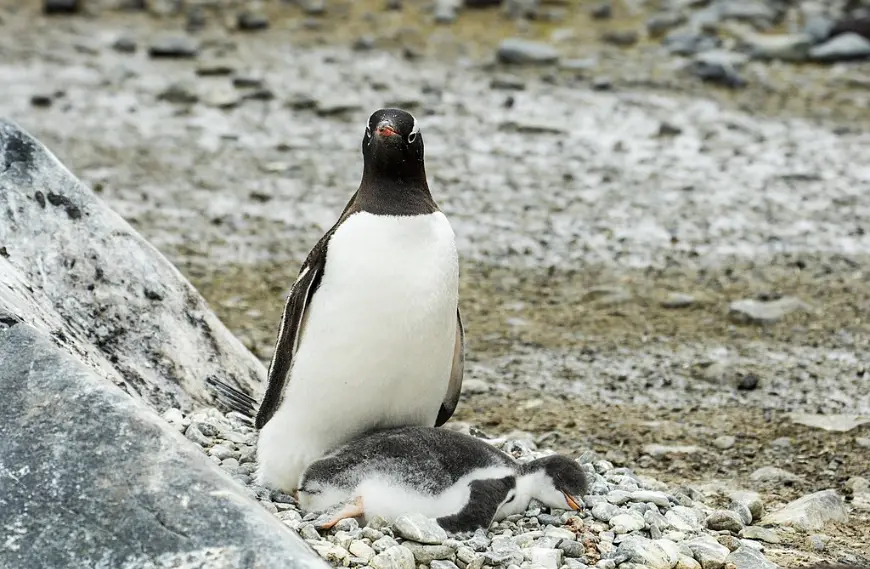
Among Earth’s most beloved birds are penguins, the charismatic tuxedoed icons of icy waters and rocky coasts. These remarkable creatures thrive where few animals dare, displaying unique adaptations for life in frigid oceans and complex social lives as fascinating as their waddling gaits.
Flightless but Fearless
While penguins can’t fly in the air, they are masters of underwater flight. Their flipper-like wings propel them through the sea at speeds over 20 km/h, chasing fish, squid, and krill with astonishing agility.
Their bones are solid rather than hollow, providing the density needed for diving. Emperor penguins can plunge over 500 metres deep and hold their breath for more than 20 minutes — the deepest and longest divers among birds.
Diversity and Distribution
There are 18 species of penguins, from the tiny 30 cm little blue penguin of New Zealand to the towering 1.2 metre emperor penguin of Antarctica.
Some species, like the Galápagos penguin, live near the equator thanks to cool ocean currents, proving penguins aren’t just creatures of snow and ice.
The Emperor’s Struggle
Emperor penguins are renowned for their extreme breeding behaviour. They lay eggs in the Antarctic winter, enduring blizzards and minus 60 degree Celsius temperatures. Males incubate eggs on their feet for over two months without eating, relying on fat reserves to survive.
When females return from feeding at sea, they regurgitate food for the newly hatched chick, taking turns in a delicate dance of survival.
Penguins in Culture
Penguins have charmed humans for centuries, appearing in countless books, cartoons, and films. But they’re also symbols of resilience and cooperation, their huddles in Antarctic storms embodying the power of unity.
In Indigenous stories from South America, penguins represent adaptability and resourcefulness.
Ecosystem Engineers
By eating tons of fish and krill, penguins help cycle nutrients through marine ecosystems. Their guano fertilises coastal and island soils, supporting unique plant communities and other seabirds.
Their populations also act as indicators of ocean health; declining penguin numbers often signal problems like overfishing or climate change.
Challenges Ahead
Penguins face serious threats:
- Climate change melts sea ice crucial for breeding and feeding, especially for emperors and Adélies
- Industrial fishing depletes fish stocks
- Oil spills, plastic pollution, and entanglement in fishing gear kill thousands of penguins each year
- Introduced predators on breeding islands, like rats and cats, decimate eggs and chicks
Organisations like the Global Penguin Society work with governments and communities to protect critical habitats, establish marine protected areas, and monitor populations.
As conservationist Dr Pablo García Borboroglu says, “Saving penguins means saving the oceans — and our own future.”


