









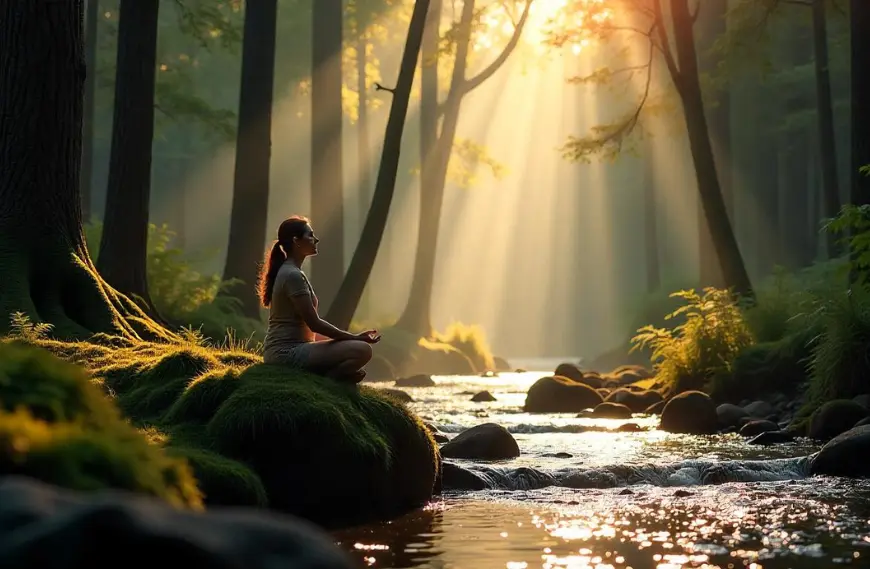
Soft light filters through emerald leaves. Footsteps on cushioned earth. A single breath of pine-scented air. This is Shinrin-yoku, or “forest bathing.” Not bathing in water, but bathing in the forest’s peace.
You walk. You pause. You listen. Birdsong drifts on the breeze. Your shoulders loosen. Your mind unwinds. No phone. No deadline. Just you and the trees.
“Forest bathing is medicine without a prescription,” says Dr Qing Li of the Nippon Medical School. “It lowers stress hormones. It boosts our immune cells.” He points to studies showing reduced cortisol after only twenty minutes among ancient cedars.
Why does it work? Trees exhale phytoncides—natural oils that protect them from pests. When we inhale those oils, we absorb calm. Our heart rate slows. Our focus sharpens. Our spirits lift.
Urban life rages on. We race trains. We juggle screens. Anxiety builds. Forest bathing offers an antidote. You don’t need to climb high peaks. A local park will do. Find a grove. Step off the path. Stand still. Feel the bark. Notice the patterns in moss. Breathe deeply.
In Japan, doctors now prescribe “nature walks.” In South Korea, forest clinics flourish. And here in the UK, the National Trust is creating more woodland trails. Research links each visit to lowered blood pressure and improved mood.
Try it yourself. Leave your watch behind. Let the forest measure your time. Drink tea by a stream. Sketch a leaf. Lie back against soft moss. It’s not selfish to pause. It’s survival.
Forest bathing is a revolution. A silent one. It reminds us of our place in nature’s web. It teaches patience. It restores our broken minds. And it shows that sometimes, true healing is found in the simplest act: being still among the trees.


