



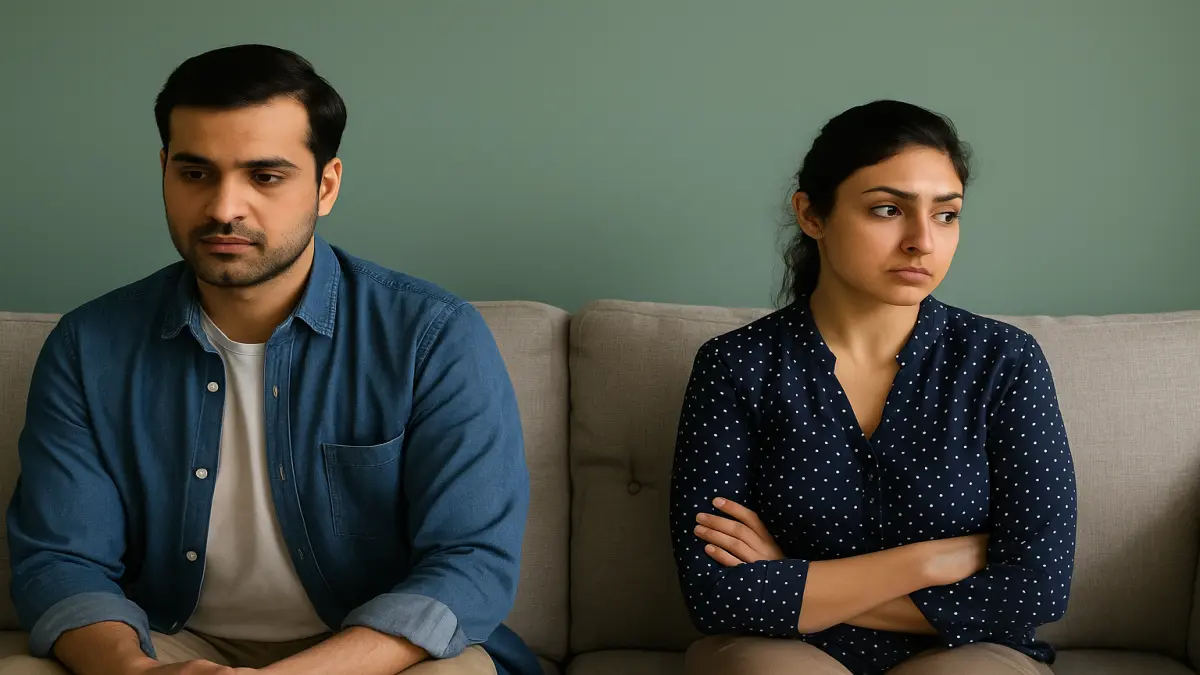
In Indian cities, something subtle yet historic is unfolding. The cry of a newborn, once a regular echo in every neighbourhood, is growing fainter. The latest National Family Health Survey reveals that India’s fertility rate has fallen to 2.0—below the replacement level of 2.1. On the surface, this might seem like a sign of development. But scratch deeper, and a more complex, emotional reality emerges. In cities like Mumbai, Delhi, Bengaluru, and Pune, many young couples are actively choosing not to have children—not later, but never.
Conversations with urban professionals reveal a striking shift in mindset. For generations, Indian society treated parenthood as a natural next step after marriage. Today, many educated urbanites no longer see it as mandatory. “Raising a child now costs as much as buying a flat,” says Shruti Mehra, a 32-year-old marketing executive from Gurgaon. “And it’s not just money. It’s emotional bandwidth, time, and mental health. I’m not ready to give all of that.” Her partner agrees. Both are career-focused and enjoy their current lifestyle. They’ve faced pressure from family, but they’re firm in their decision.
Financial strain is a dominant concern. A report by ET Wealth estimates that raising a child in a metro city from birth to class 12 costs at least ₹50 lakh. Add college, extracurriculars, and inflation, and the number easily doubles. In contrast, urban couples now live in expensive rental apartments, pay hefty EMIs, and chase demanding careers. Balancing a child with these realities feels daunting. Unlike earlier generations, there’s little extended family support in most metros, making childcare a solo struggle.
Career ambitions, particularly among working women, also play a key role. “I spent ten years building my legal practice,” says Adv. Nupur Kulkarni from Pune. “Taking a break now means starting from scratch. Maternity leave sounds nice, but the profession doesn’t wait for anyone.” Several women echoed similar concerns—about career stagnation, workplace bias, and the guilt of being a ‘less present’ parent. The invisible load of motherhood, often romanticised, remains deeply gendered.
Healthcare professionals have observed this shift closely. Dr. Veena Raj, a fertility expert in Bengaluru, explains that more women in their 30s now visit her clinic—not to conceive immediately, but to discuss egg freezing. “They want to keep options open,” she says. “But most are unsure if they even want children at all. What we’re seeing isn’t infertility; it’s indecision and intentional delay.” Egg freezing, IVF, and hormonal therapy may buy time, but they don’t resolve the core dilemma—do we want children, or do we just feel we should?
Culturally, this choice remains contentious. Parenthood is still seen as a duty in many Indian households. “Log kya kahenge?” is a constant question. Parents worry about their family line, grandchildren, and their own future support. But Gen Z and millennials aren’t driven by duty alone. They ask deeper questions: Will we be good parents? Can we afford this emotionally? What kind of world are we bringing a child into? In a climate-challenged, overcrowded world, some even call child-free living an ethical choice.
Social media adds another layer. On one hand, it romanticises parenting—chubby babies in pastel rompers, perfect birthday parties, and picture-perfect mothers. On the other, it gives voice to parental burnout, mental health struggles, and the cost of losing one’s identity. This digital duality influences young couples more than they realise. For some, it reinforces the desire to opt out.
The emotional landscape is evolving too. Earlier, children were seen as caretakers in old age. Today’s urban elderly invest in pensions, mutual funds, and friendships. “I want my daughter to live her own life,” says 65-year-old Sudha Menon from Navi Mumbai. “I raised her to be independent. Why should she have children just to fulfil tradition?” This generational empathy, still rare but growing, is helping many couples breathe easier.
Government policies are slow to catch up with this new reality. While India has long battled population growth, the drop in fertility may bring its own challenges—an ageing population, shrinking workforce, and pressure on social security. China and Japan are already grappling with this. Urban India may follow suit if trends continue. But any policy push must respect choice, not punish it. Forced incentives or cultural shaming will only deepen the divide.
The deeper truth is this: not every womb must be filled to build a strong nation. Parenthood is no longer a default setting. It’s a conscious, deeply personal choice. Couples deserve space to make it freely, without guilt, fear, or coercion. As India modernises, so must its understanding of family, fulfilment, and future.
At the same time, those who choose parenthood should be supported better—financially, socially, and professionally. Affordable childcare, workplace flexibility, and community networks can make parenting less punishing. If not, even the willing may start turning away.
This quiet revolution isn’t happening with protests or headlines. It unfolds in late-night conversations, gynaecologist’s waiting rooms, tax planners’ offices, and long drives. It’s shaped by anxiety, ambition, aspiration, and love. And it reminds us that the measure of a modern society is not how many children it produces, but how well it understands the ones who decide not to.
In a nation where motherhood is worshipped and fatherhood often overlooked, choosing to remain child-free can feel like rebellion. But it’s not rejection—it’s reflection. It’s not selfish—it’s self-aware. And maybe, in that awareness, lies a different kind of hope for India’s future.
