







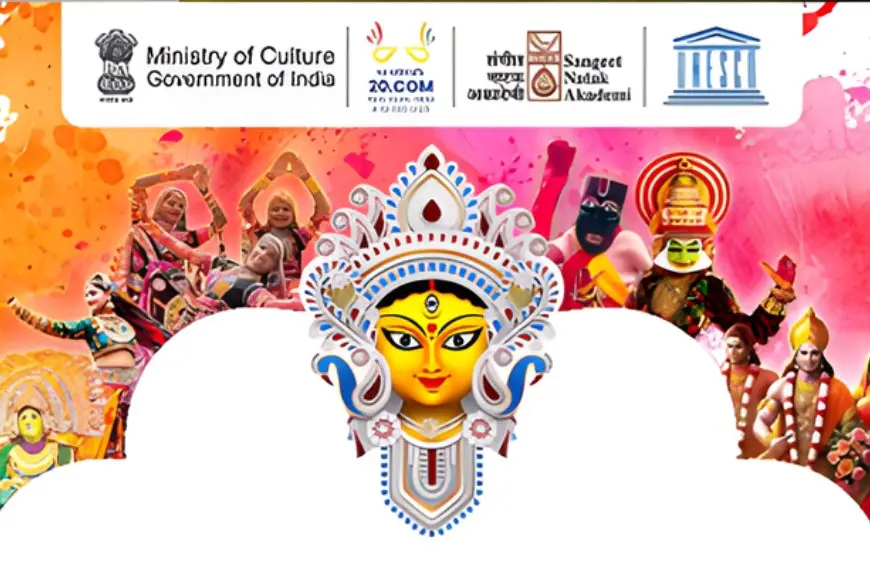
India Hosts UNESCO’s 20th ICH Session from 8 to 13 December 2025 in New Delhi, bringing global attention to the safeguarding of living cultural heritage. The event will take place at the iconic Red Fort, a UNESCO World Heritage Site, reflecting the union of India’s tangible and intangible heritage. It is the first time India is hosting the ICH Committee session. The meeting will be chaired by H.E. Vishal V. Sharma, India’s permanent delegate to UNESCO. The timing also marks 20 years since India ratified the 2003 Convention for the Safeguarding of the Intangible Cultural Heritage.
UNESCO defines intangible cultural heritage as the knowledge, practices, expressions, objects, and spaces that communities value as part of their cultural identity. Passed down through generations, these elements evolve over time and encourage cultural identity and diversity. The 2003 Convention was adopted during UNESCO’s General Conference in Paris to respond to global concerns over the decline of living traditions due to globalisation, social shifts, and resource limitations. The Convention recognised the role of communities, especially indigenous and local groups, as the custodians of living heritage. It promoted global cooperation, interdependence between tangible and intangible culture, and the need to raise awareness among young people. The Convention also established international frameworks for cooperation, assistance, and recognition, forming the basis for UNESCO’s ICH lists and the work of the Intergovernmental Committee.
The Intergovernmental Committee works to implement the 2003 Convention across Member States. It promotes and monitors the Convention’s goals, advises on best safeguarding practices, drafts operational directives, manages the Intangible Cultural Heritage Fund, and evaluates international requests related to inscription and assistance. The Committee also reviews periodic reports submitted by States Parties and compiles summaries for the General Assembly.
The Ministry of Culture and its autonomous organisation, the Sangeet Natak Akademi, are the nodal agencies responsible for organising the 20th ICH Committee Session at the Red Fort. The venue, known for its 17th-century architecture, palaces, museums, and gardens, holds deep historical and cultural value.
Through this global gathering, India aims to present its national safeguarding model that combines institutional support, community involvement, documentation, and national inventory efforts. The event seeks to boost international cooperation, joint safeguarding initiatives, resource sharing, technical collaboration, and capacity-building. Another goal is to increase global visibility for India’s intangible heritage, including local crafts, lesser-known festivals, regional traditions, and community practices, paving the way for new research, tourism, and resource mobilisation. India also intends to use the spotlight to strengthen domestic efforts, with a focus on documentation, inventorying, nomination dossiers, and youth participation. The session additionally enables cultural diplomacy by projecting India’s soft power and leadership in heritage preservation. It emphasises the link between cultural conservation and sustainable development, treating intangible heritage as a contributor to livelihoods, social cohesion, identity, and cultural tourism.
India’s intangible heritage is a living resource with social, economic, educational, and diplomatic value. It supports pluralism and social unity across linguistic, regional, ethnic, tribal, and religious communities. Traditional crafts, performing arts, craftsmanship, and cultural tourism enable livelihoods, especially in rural and marginalised areas. Indigenous knowledge, craftsmanship techniques, folklore, rituals, and ecological practices play a vital role in education and cultural continuity. Globally, India’s festivals, oral traditions, dance forms, and crafts strengthen cultural diplomacy and soft power. Hosting the 20th ICH Session reinforces India’s role in global heritage governance and positions the country as a strong advocate for inclusive and community-focused safeguarding.
To protect its cultural traditions, the Ministry of Culture launched the “Scheme for Safeguarding the Intangible Heritage and Diverse Cultural Traditions of India.” The initiative supports institutions, communities, artists, scholars, and organisations working to preserve living heritage. The Sangeet Natak Akademi conducts workshops to build awareness and train practitioners in safeguarding practices. The Scheme supports documentation, inventory creation, UNESCO nomination dossiers, training, performances, dissemination activities, integration of education and culture, and skill development under the National Vocational Educational Qualifications Framework.
India has 15 elements inscribed on UNESCO’s Representative List of the Intangible Cultural Heritage of Humanity. They include Kutiyattam, Chhau, Vedic Chanting, Ladakh’s Buddhist Chanting, Ramlila, Ramman, Sankirtana, the metalcraft of the Thatheras of Jandiala Guru, Kalbelia music and dance, the Kumbh Mela, Yoga, Durga Puja, Garba, and Novruz. This year, India has nominated Chhath Mahaparva and Diwali for inscription.
India Hosts UNESCO’s 20th ICH Session at a significant moment when heritage, identity, sustainability, and cultural diplomacy hold increasing global importance. The event offers India a platform to demonstrate leadership, share safeguarding models, and deepen worldwide collaboration. The success of the New Delhi session will reflect India’s commitment to protecting living cultural traditions and ensuring their transmission to future generations. India’s heritage is carried by its people—expressed in languages, arts, crafts, festivals, rituals, and belief systems—and this gathering celebrates that legacy while shaping its future.
Subscribe Deshwale on YouTube