



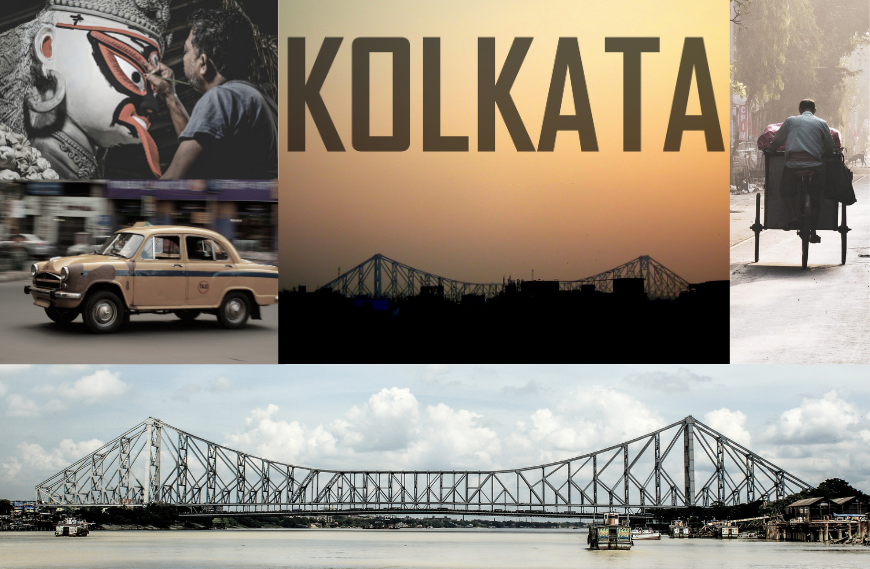
Once the radiant capital of British India, Kolkata, then Calcutta… stood as the subcontinent’s beating heart, a city where colonial grandeur met intellectual brilliance and bustling trade. Its port thrived, its streets buzzed with revolutionary ideas, and its cultural legacy shaped modern India. Yet, over the 20th century, Kolkata’s crown slipped, ceded to Delhi’s political dominance and Mumbai’s economic might. Today, the City of Joy is a poignant blend of faded glory and enduring spirit, grappling with its past while seeking a path to revival. Through historical insights, personal stories, and economic analysis, this article traces Kolkata’s decline, exploring the pivotal moments, political shifts, economic missteps, and social upheavals, that dimmed its light, and asks: can this faded jewel shine again?
The golden era: Kolkata’s reign as India’s capital
In the late 18th century, Kolkata emerged as the epicentre of British India. Established as the capital in 1773 by the East India Company, it became the administrative, financial, and cultural hub of an empire. By the 19th century, it was the second-most important city in the British Empire after London, as historian Ranajit Guha notes. Its port on the Hooghly River handled 60% of India’s exports—opium, indigo, and jute, fuelling wealth for European traders and Indian merchants like the Tagores. “My great-grandfather traded jute from Kolkata’s docks,” recalls Sunil Bose, a 70-year-old retiree. “The city was alive with money.”
Kolkata’s financial dominance was anchored by institutions like the Presidency Bank of Bengal (founded 1806), with a capital of ₹1 crore by 1860. It pioneered India’s first railway (1853), first metro (1984), and first stock exchange (1830s), laying the foundations of modern infrastructure. Culturally, the Bengal Renaissance produced luminaries like Rabindranath Tagore, Raja Rammohan Roy, and Satyajit Ray, making Kolkata India’s intellectual capital. “Kolkata was where ideas were born,” says historian Sugata Bose. Its universities, theatres, and newspapers drew India’s elite, cementing its status as a global city.
The first blow: Losing the capital to Delhi (1911)
The first crack in Kolkata’s supremacy came in 1911, when King George V announced at the Delhi Durbar that India’s capital would shift to Delhi. The decision was strategic: Delhi’s central location facilitated governance, its Mughal legacy lent imperial gravitas, and Kolkata’s growing nationalist unrest, marked by the Swadeshi Movement and 1905 Bengal Partition protests, made it a liability. ‘Calcutta was too turbulent,’ writes historian Bernard Cohn. ‘Delhi was a neutral seat of power.’
The relocation was devastating. Kolkata lost its political clout as bureaucrats, businesses, and investments gravitated to Delhi. The construction of New Delhi, designed by Edwin Lutyens, transformed the northern city into a modern capital by 1931, housing Parliament and the Viceroy’s residence. “My grandfather worked in the Writers’ Building,” says Anjali Mitra, a Kolkata schoolteacher. “When the capital shifted, he said the city felt orphaned.” By Independence in 1947, Delhi was India’s undisputed political centre, while Kolkata’s population of 1.5 million in 1911 grew without its former prestige.
The economic shift: Mumbai’s rise to financial dominance
As Delhi claimed political supremacy, Mumbai (then Bombay) seized Kolkata’s economic crown. In the 19th century, Bombay’s natural harbour and cotton mills made it a rival, employing 100,000 workers by 1900 compared to Kolkata’s jute-driven economy. The Bombay Stock Exchange (1875) outpaced Kolkata’s market, and by the 1920s, Bombay was India’s financial pulse. “Bombay was where you went to make money,” says historian Dwijendra Tripathi. “Kolkata was where you spent it.”
Post-Independence, Mumbai’s ascendancy accelerated. The Reserve Bank of India (1935) chose Bombay as its headquarters, and multinationals like Hindustan Lever set up shop. Bollywood’s rise added cultural allure, and by 1971, Bombay’s port handled 40% of India’s trade, surpassing Kolkata’s 25%. Kolkata’s jute industry, reliant on East Bengal’s raw materials, faltered after the 1947 Partition, which cut off its hinterland. “My father’s jute mill closed in the ’70s,” says Bose. “Kolkata’s factories were dying.” Mumbai’s diversified economy and entrepreneurial spirit, driven by Parsi and Gujarati communities, left Kolkata’s less adaptable industries in the dust.
Partition and its aftermath: A city overwhelmed
The 1947 Partition dealt a crippling blow. Kolkata, the economic hub of undivided Bengal, lost East Bengal (now Bangladesh), halting the supply of raw jute. The jute industry, a cornerstone of the economy, collapsed. Millions of refugees flooded the city, swelling its population and straining infrastructure. “The streets were choked, the power cuts endless,” recalls Mitra. By 1991, Kolkata’s population reached 4.5 million, but civic planning lagged, leaving the city’s colonial buildings and tramlines to decay.
The refugee influx and industrial decline eroded investor confidence. While Mumbai and Delhi modernised, Kolkata stagnated, its port struggling with silting and labour strikes. The eastern ports’ share of India’s trade fell to 12% by 2000, as Mumbai and Chennai surged. “Kolkata’s fall hurt India’s eastern balance,” says economist Bibek Debroy. “We lost a counterweight to the west and north.”
Political missteps: The left front’s long shadow (1977–2011)
Kolkata’s decline was exacerbated by post-Independence politics. The Left Front’s 34-year rule (1977–2011) prioritised labour rights but alienated industry. Frequent strikes and bandhs disrupted production, driving businesses to Mumbai, Bangalore, and Hyderabad. “The Left’s policies scared investors,” says economist Amartya Sen. The 1956 Freight Equalization Policy, which subsidised mineral transport, diminished West Bengal’s resource advantage, encouraging industries to relocate to Gujarat and Maharashtra. By 1980, West Bengal’s industrial output share fell from 25% in 1947 to 10%.
The 2008 Tata Nano factory exit from Singur, after land acquisition protests, was a turning point. “Singur was a nail in Kolkata’s coffin,” says Sen. The IT revolution bypassed Kolkata, as Bangalore and Hyderabad lured tech giants. Kolkata’s Salt Lake IT hub, launched in 2000, struggled with bureaucratic red tape. “We missed the tech boom,” says software engineer Ria Das. West Bengal’s GDP growth lagged at 4–5% annually in the 1990s, compared to Gujarat’s 7–8%.
Government neglect: A city left behind
Central and state government failures compounded Kolkata’s woes. While Delhi received funds for metro systems and urban renewal, Kolkata’s first metro (1984) was underfunded and slow to expand. The Jawaharlal Nehru National Urban Renewal Mission (2005) allocated ₹5,000 crore to Mumbai but only ₹2,000 crore to Kolkata. “The Centre saw Kolkata as a has-been,” says Debroy. State policies, including the Left’s land reforms, deterred industrial investment, and the Trinamool Congress (since 2011) has struggled to reverse decades of inertia.
Urban neglect left Kolkata’s infrastructure crumbling. Traffic congestion, pollution, and brain drain, to Mumbai, Delhi, or abroad, further dimmed its prospects. “My cousins all left for Bangalore,” says Das. “They said Kolkata had no future.”
The human cost: Dreams deferred
Kolkata’s decline was deeply personal. Factory closures in the 1970s and ’80s left workers jobless. “My father went from a mill supervisor to selling tea,” says Bose. “It broke him.” The middle class, once India’s intellectual elite, felt irrelevant. On X in 2024, @BongHistorian wrote, “Kolkata was India’s soul. Now it’s a museum of what could’ve been.” Nationally, West Bengal’s economic lag weakened India’s eastern flank, leaving Kolkata a shadow of its former self.
Cultural resilience: The soul endures
Despite its fall, Kolkata’s cultural vibrancy endures. Durga Puja, the Indian Museum, and literary hubs like College Street sustain its legacy. The city hosts India’s largest book fair, and its art and film scenes thrive. “We’re proud of our heritage,” says Mitra. “But pride doesn’t pay the bills.” Kolkata’s soul, its adda sessions, football passion, and artistic spirit, remains a beacon, even as economic revival lags.
A glimmer of hope: Signs of revival
Recent years show tentative revival. The Kolkata port, bolstered by the Farakka Barrage, handled 65 million tonnes of cargo in 2024. New Town and Rajarhat are emerging IT and residential hubs, attracting firms like TCS. The 2023 Bengal Global Business Summit secured ₹3 lakh crore in investments, though challenges, political instability, red tape, and infrastructure gaps, persist. “Kolkata has soul,” says Bose. “Mumbai has money, Delhi has power, but we have stories.”
A city at a crossroads
Kolkata’s journey from imperial capital to a city in the shadows is a tale of ambition, loss, and resilience. The shift to Delhi stripped its political power, Mumbai’s rise eclipsed its economy, and internal missteps, Partition’s fallout, Leftist policies, and government neglect, sealed its decline. Yet, Kolkata endures, its people carrying a legacy of culture and hope. As Tagore wrote, “The night is dark, but the stars are awake.” For Kolkata, the stars still shine, but reclaiming its crown will demand investment, vision, and a break from the past. Can the City of Joy rise again? Its people believe it can.
Key factors in Kolkata’s decline compared to Delhi and Mumbai
| Factor | Kolkata | Delhi | Mumbai |
| Political Status | Capital until 1911; lost to Delhi due to nationalist unrest. | Capital since 1911; central hub for government and diplomacy. | Never capital; focused on commerce. |
| Economic Role | Jute-based economy; declined post-Partition and Left rule. | Political economy; funded by central government projects. | Financial hub; diversified with textiles, banking, and Bollywood. |
| Port Trade (1971) | 25% of India’s trade; fell to 12% by 2000. | Minimal port activity; inland city. | 40% of India’s trade; dominant port. |
| Industrial Output | 25% of India’s output in 1947; 10% by 1980. | Limited industry; service-based growth. | Diversified industries; sustained growth. |
| Infrastructure | Crumbling colonial systems; slow metro expansion. | Modern metro, airports; central funding. | Better municipal management; private investment. |
| Cultural Legacy | Bengal Renaissance; Durga Puja, literature. | Historical Mughal legacy; modern cultural institutions. | Bollywood; cosmopolitan culture. |
