



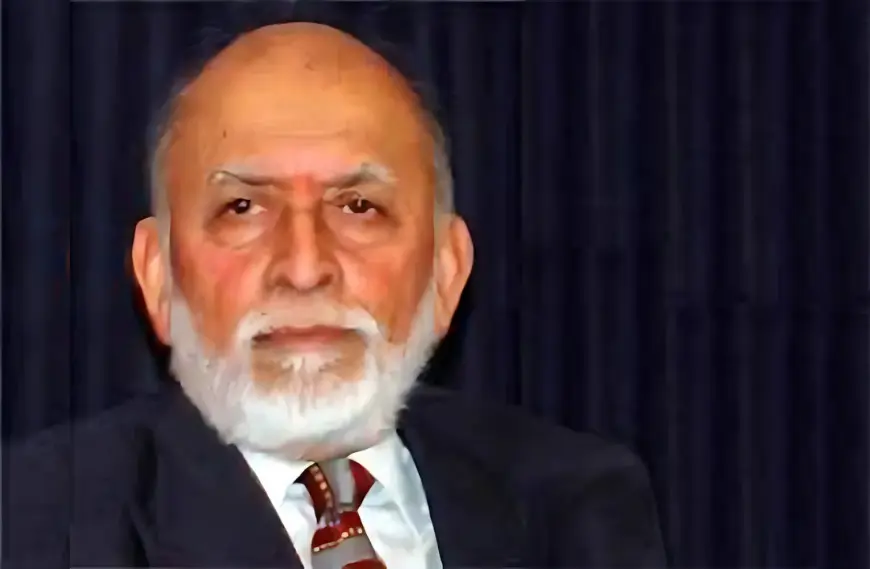
AEC chairman who built India’s atomic power dies in Ooty
M R Srinivasan, the architect of India’s nuclear energy revolution, passed away on Tuesday, 20 May 2025, in Ooty, Tamil Nadu. He was 95. A private hospital confirmed his death after a brief illness. He was cremated with state honours.
Born in Bangalore (now Bengaluru) on 5 January 1930, Srinivasan dedicated his life to shaping India’s atomic energy journey.
The man who built India’s reactors
Srinivasan began working with the Department of Atomic Energy in 1955. He was part of the early team mentored by Homi Bhabha. Over decades, he played a pivotal role in designing India’s first indigenous pressurised heavy water reactors. He was instrumental in building and commissioning major nuclear plants at Rajasthan, Kalpakkam (Madras), Narora, and Kakrapar — which became milestones in India’s self-reliance journey in energy.
Key role at Atomic energy commission
Between 1987 and 1990, Srinivasan served as Chairman of the Atomic Energy Commission. Under his leadership, India expanded its nuclear power capacity with a focus on domestic technology.
He also advised policymakers during crucial times, including after India’s nuclear tests in 1974 and 1998.
Architect of policy and progress
Srinivasan’s influence wasn’t limited to reactors. As a member of the Planning Commission in the 1990s, he helped draft key energy policies.
He served on various scientific advisory boards, often stressing the need for safety, transparency, and indigenous innovation in nuclear science.
Legacy of a scientific visionary
Srinivasan remained active in the scientific community for decades. He wrote articles, gave lectures, and simplified nuclear science for the public.
In 2015, he was honoured with the Padma Vibhushan, India’s second-highest civilian award.
Final days and tributes
He spent his final years in Ooty. After his death, leaders from science and politics paid tribute to his lifelong contributions. He is survived by his wife, a daughter, and a son. M R Srinivasan’s legacy lives on in every watt of nuclear energy that powers India today.
