







When you scroll through travel reels, it looks like every Indian is either lounging on a Goa beach or hiking through Himachal. But a new government survey tells a very different story.
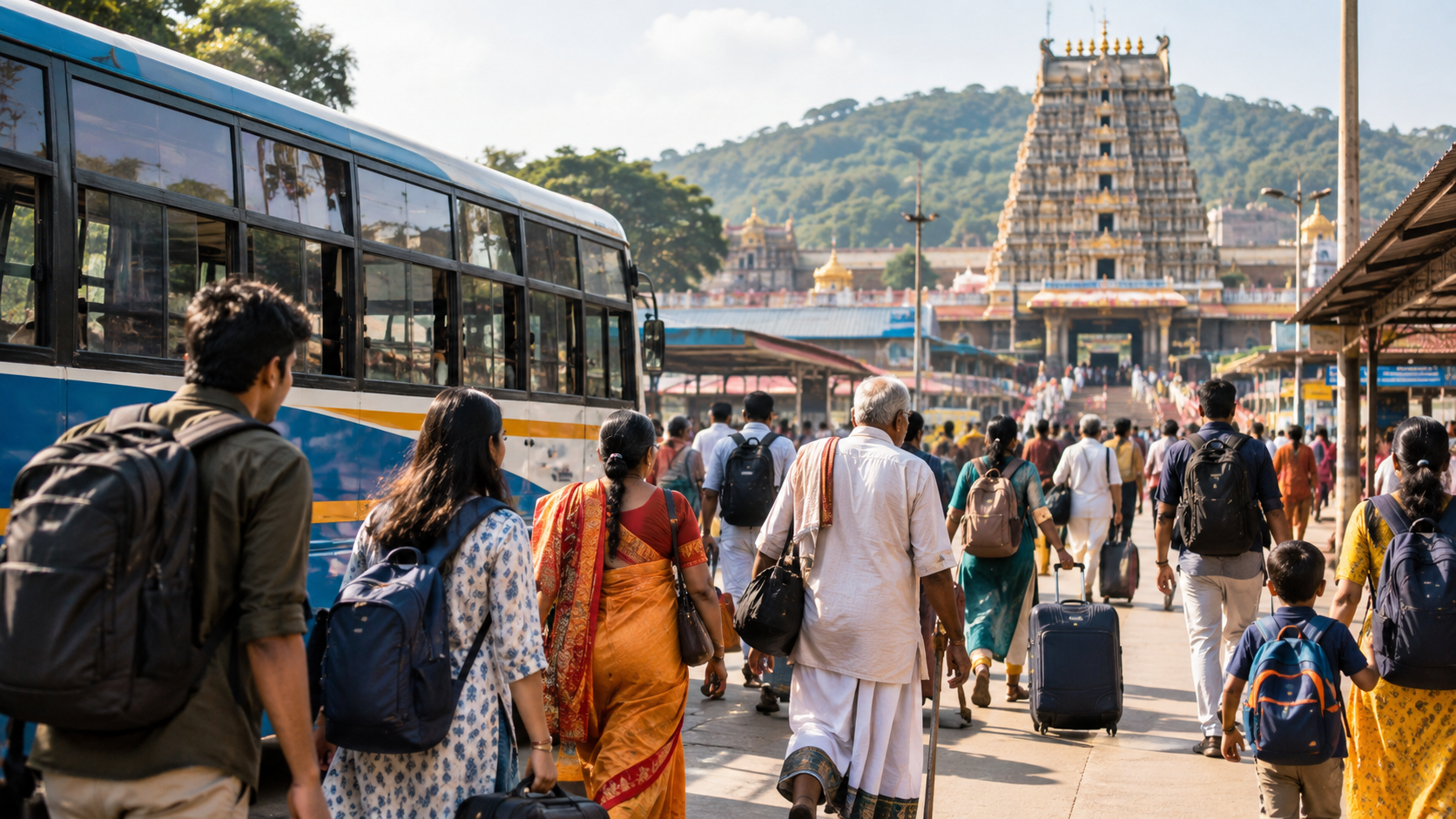
According to the Domestic Tourism Expenditure Survey (DTES) released by the Ministry of Statistics and Programme Implementation (MoSPI), pilgrimage and religious travel make up 48% of all domestic overnight trips in India. This holds true in both rural and urban areas. In other words, almost one out of every two overnight trips Indians take has nothing to do with holidays. It’s about faith.
The survey was conducted by the National Statistics Office (NSO) between July 2025 and June 2026, as part of the NSS 80th round. It looked at why Indians travel, how long they stay, how they get around, where they sleep, and how much they spend. And the numbers paint a picture that’s quite different from what social media suggests.
Faith beats everything else
Domestic trips in the survey were grouped by purpose: holidays, leisure, pilgrimage, health, shopping, and more. Out of all these, pilgrimage and religious travel came out on top by a huge margin, at 48%.
Holidaying, leisure and recreation, the category most of us associate with “travel”, didn’t even come second everywhere. In rural India, the second-biggest reason for overnight trips was health and medical travel, at 38.4%. It was only in urban India that holidays and leisure claimed the second spot, with a 36.4% share.
So while our Instagram feeds are full of beach photos and mountain views, the actual data suggests that temples, dargahs, gurdwaras and religious gatherings are the real reason most Indians pack a bag and leave home overnight.
For context, the survey defines an “overnight trip” as one where a person travels outside their usual home, stays away past midnight, and returns within 180 days.
Short trips, not long vacations
Interestingly, Indians don’t seem to be taking long, leisurely vacations either. The average trip involved just about 2 people travelling together. And close to 80% of all visitors stayed away for five days or less.
This fits with the idea of pilgrimage-driven travel. Most religious trips, whether it’s a weekend visit to a nearby temple town or a short trip during a festival, tend to be quick, in-and-out affairs rather than long, planned getaways.
How Indians travel and where they stay
The survey also revealed a clear divide between rural and urban travel habits. In rural India, buses were the most popular mode of transport, used for 32% of visitor trips. In cities, trains took the lead, accounting for 35% of trips.
Where people stayed also varied by region. In urban areas, hotels and guesthouses were the top choice, used in 36% of trips. In rural areas, “other non-commercial stays” made up the largest share, at 28%. This category is broader than it sounds. It includes staying at one’s own second home, temporary housing provided by an employer, or free accommodation offered by religious and missionary organisations, something very common during pilgrimages.
Uttar Pradesh is the country’s top travel magnet
If you’re wondering which state sees the most visitors, the answer is Uttar Pradesh. It accounted for 15.7% of all visitor trips in the country, counting both people travelling within the state and those coming from outside it.
Tamil Nadu came next, with a 13.4% share, followed by Rajasthan at 8%. Given how central places like Ayodhya, Varanasi and Mathura are to religious tourism, UP’s top position lines up neatly with the survey’s bigger finding: that faith, not leisure, is driving India’s travel numbers.
Health trips cost the most
Not every trip costs the same, and health-related travel turned out to be the most expensive of all categories, in both rural and urban India.
On average, rural households spent around Rs 29,454 on health and medical trips, while urban households spent Rs 41,649. These figures include both package and non-package expenses.
For holiday and leisure trips specifically, transport was the single biggest expense, more than stay or food, showing that getting there costs more than being there.
The bigger picture
The survey covered a massive sample size of 2,46,113 households across the country, including 1,42,603 rural and 1,03,510 urban households, making it one of the most detailed pictures we have of how India actually travels.
And the takeaway is clear. Despite what travel influencers and holiday ads might suggest, most Indians aren’t hopping on flights to Goa or Manali. They’re boarding buses and trains to temples, dargahs and pilgrimage towns closer to home, for shorter trips, and often for reasons rooted in faith rather than fun.
Subscribe Deshwale on YouTube


