







By: Hiren Gandhi
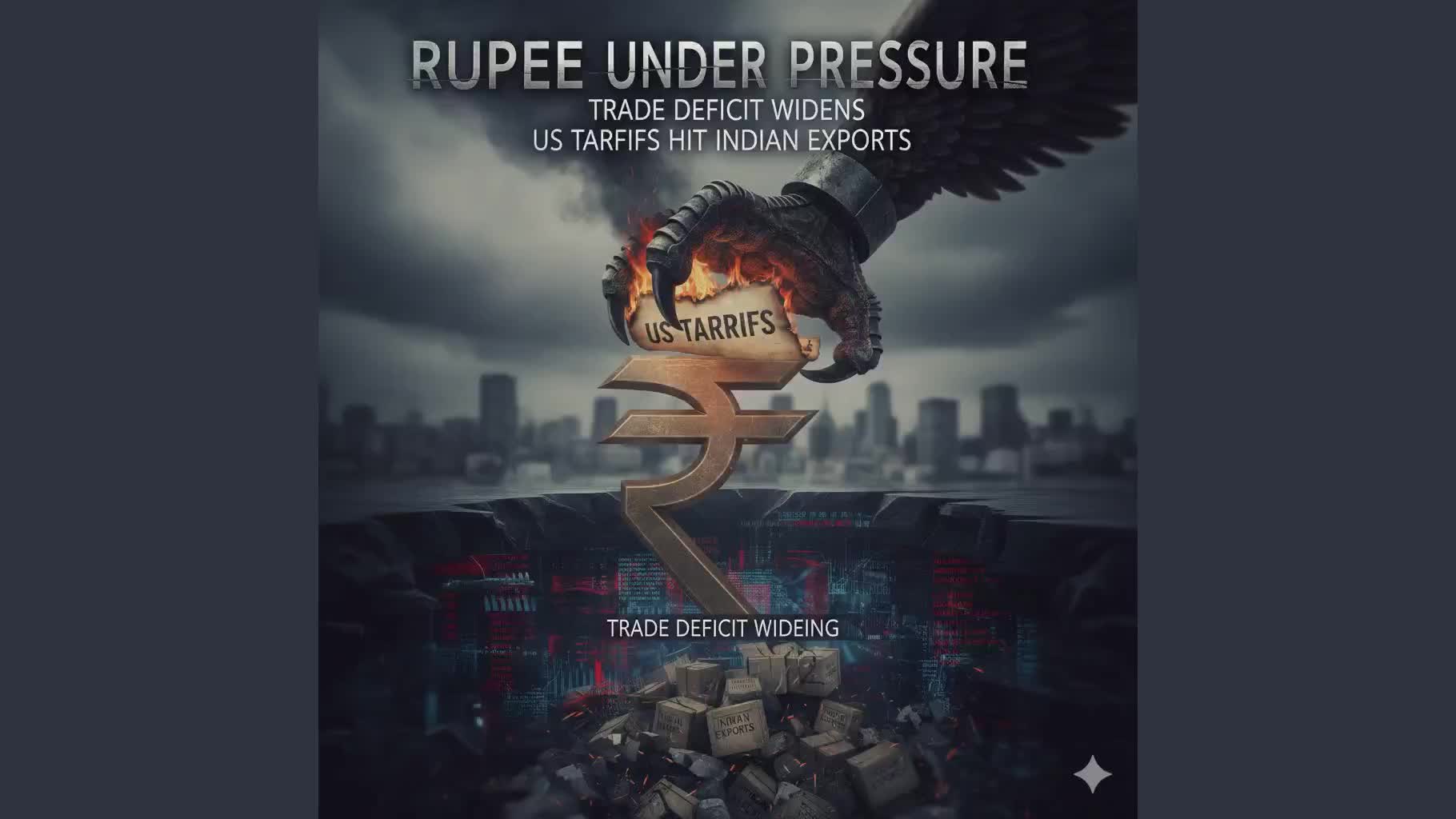
India’s currency continues to face intense pressure against the US Dollar as widening trade gaps, rising import costs, and declining foreign investments weaken the Rupee. The latest data shows India’s trade deficit touching USD 41.68 billion in October 2025, significantly higher than the USD 32.15 billion recorded just a few months earlier. The combination of expensive crude oil imports, heavy gold purchases, sluggish export growth, and reduced capital inflows has increased dollar demand and pushed the Rupee downward. Economists note that every rise in the oil bill directly translates to greater dollar outflow, tightening the pressure on the currency.
The situation worsened after the United States imposed a combined 50% tariff on steel and aluminum in 2025. Nearly USD 4.56 billion worth of Indian exports became costlier in the US market, hitting engineering goods, metal components, and MSME-driven industries the hardest. With Indian products suddenly becoming up to 50% more expensive abroad, export orders declined, reducing valuable dollar inflow. This has further intensified the strain on the Rupee at a time when India is already battling an inflated import bill.
Analysts say the US is using economic tools, strategic positioning, and diplomatic channels to maintain influence in Asia. Trade barriers, competitive pricing pressure, and decision-making in global forums are seen as methods that indirectly impact India’s economic space. At the same time, security cooperation and defense negotiations often create additional layers of dependency, complicating India’s ability to respond freely.
However, India is preparing a multi-layered response aimed at strengthening the economy and reducing reliance on the dollar. Officials highlight that India is expanding trade partnerships with Europe, Africa, Latin America, and the Middle East to limit dependence on the US market. The focus is also shifting toward value-added manufacturing, including electronics, engineering goods, machinery, and high-tech exports. MSMEs are being prioritized through credit support, technology upgrades, and export-linked incentives, acknowledging their role as India’s strongest export engine. India has also begun expanding rupee-based global trade through Vostro accounts with nearly 30 countries, an initiative expected to gradually reduce dollar dependence in the coming years.
Government planners have outlined a clear 2025–2030 roadmap aimed at stabilizing the Rupee. The targets include a 35% increase in exports, a major expansion of services exports, attracting INR 1.5 lakh crore in foreign investment, reducing crude oil import dependence by 15%, and lifting the manufacturing share of GDP from 17% to 23%. India is also positioning itself as a key player in the China+1 manufacturing strategy to attract multinational companies seeking alternatives to China. Simultaneously, Make in India and import substitution efforts are being intensified to save dollars and strengthen domestic production.
If India stays consistent with its economic strategy, projections indicate that the Rupee could stabilize between ₹78 and ₹84 by 2030. The trade deficit may narrow by 25%, foreign reserves could rise to USD 750 billion, and global confidence in the Indian economy may strengthen significantly. Despite the tariff shock and geopolitical pressure, experts believe India has multiple growth levers at its disposal—from export diversification and MSME support to INR-based trade and manufacturing expansion. The long-term view remains that while external factors may temporarily weaken the Rupee, India has the structural capability to reverse the trend and solidify its position as a rising economic power in Asia.


Secretary — InGlobal Business Foundation (IBF)
Director — ReNis Agro International LLP, Ahmedabad, India
Subscribe Deshwale on YouTube