




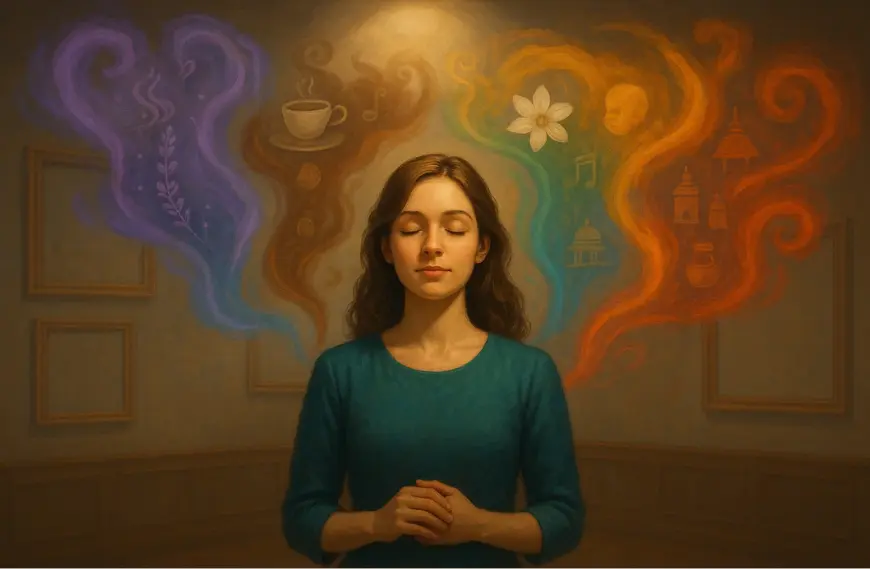
Imagine a gallery where scents paint emotions vividly. A whiff of rain-soaked earth enchants. Smells evoke deep memories. Could they become art’s new frontier? Perfumers and scientists craft olfactory masterpieces daily. This exploration dives into scent’s transformative power. It blends neuroscience, culture, and creativity seamlessly. From Paris ateliers to spice markets, scents captivate. Let’s inhale the future of art’s invisible canvas.
Smells trigger memories faster than sights or sounds. A 2024 Science study proved this. Olfactory bulbs link directly to brain’s emotion centers. A scent of jasmine recalls a childhood festival. Or coffee summons a cozy café in Rome. This power drives scent design’s rise. Perfumers in Grasse craft smells like symphonies. By 2050, olfactory art could rival paintings. This sensory shift excites, redefining creative expression. Global audiences crave this invisible beauty.
Scent artists blend chemistry with imagination. They distill essences from flowers, woods, spices. A 2023 Chemical Reviews study mapped scent molecules. Each note, like bergamot or musk, tells a story. In Tokyo, galleries host scent installations now. Visitors inhale forests or ancient libraries. These exhibits evoke universal emotions, crossing cultures. From Moroccan souks to New York lofts, smells unite. This art form feels intimate, yet boundless.
Technology elevates scent to new heights. AI, advanced by 2025, designs bespoke fragrances. A 2024 Nature Communications study showed AI predicting scent preferences. Wearable diffusers release moods on command. Imagine inhaling courage before a speech. Or calm during a Tokyo commute. By 2070, scent VR could immerse us fully. This tech merges science with human longing. It promises galleries where smells tell epic tales.
Culturally, scents hold sacred significance worldwide. Incense wafts through temples in Kyoto. Frankincense fills Ethiopian churches with reverence. A 2023 UNESCO report noted scents in rituals. They bind communities, from weddings to funerals. Scent art draws on this heritage. An exhibit might recreate a Cairo market’s aroma. Or a Himalayan meadow’s crisp air. This cultural resonance captivates global hearts. It weaves humanity’s stories into invisible threads.
Creating scent art faces unique challenges. Smells fade quickly, unlike visual works. A 2025 Journal of Sensory Studies noted diffusion issues. Precise delivery systems, like micro-sprays, are costly. Cultural differences shape scent perceptions too. Rose delights in Paris but overwhelms in Seoul. Yet, innovators persist, crafting universal aromas. By 2100, scent galleries could be common. This hurdle mirrors art’s eternal quest for connection. It inspires creators to push boundaries.
Scent’s emotional power transforms lives. A 2022 Psychology Today study linked smells to healing. Hospitals use lavender to calm anxious patients. In schools, citrus boosts focus, per 2024 trials. Scent art could amplify these effects. Imagine a gallery easing grief with sandalwood. Or sparking joy with mango essence. This potential touches hearts from Lagos to Lisbon. It makes scent art a global balm.
The future envisions scent as culture’s new language. By 2070, olfactory films could debut. A 2025 Tech Trends report predicted immersive scent media. Bollywood might release movies with monsoon aromas. Museums could offer scent tours of history. Imagine smelling ancient Rome’s markets. Or a Viking ship’s briny air. This innovation blends art with human memory. It invites global audiences to feel history’s pulse.
Philosophically, scent art questions sensory hierarchy. Sight dominates; smell often fades. A 2023 Philosophy of Mind study argued smells evoke deeper truths. They bypass reason, touching raw emotion. This shift challenges art’s visual bias. From Buddhist incense to Sufi rosewater, scents transcend. They invite humanity to rethink perception. This universal pondering sparks global curiosity.
Scent art weaves a future of invisible beauty. It merges science, culture, and human longing. From bustling cities to quiet villages, smells connect us. By 2100, galleries will breathe with stories. Smells will paint joy, sorrow, and wonder. Pause and inhale life’s fleeting aromas. Their art will redefine humanity’s creative soul.
