



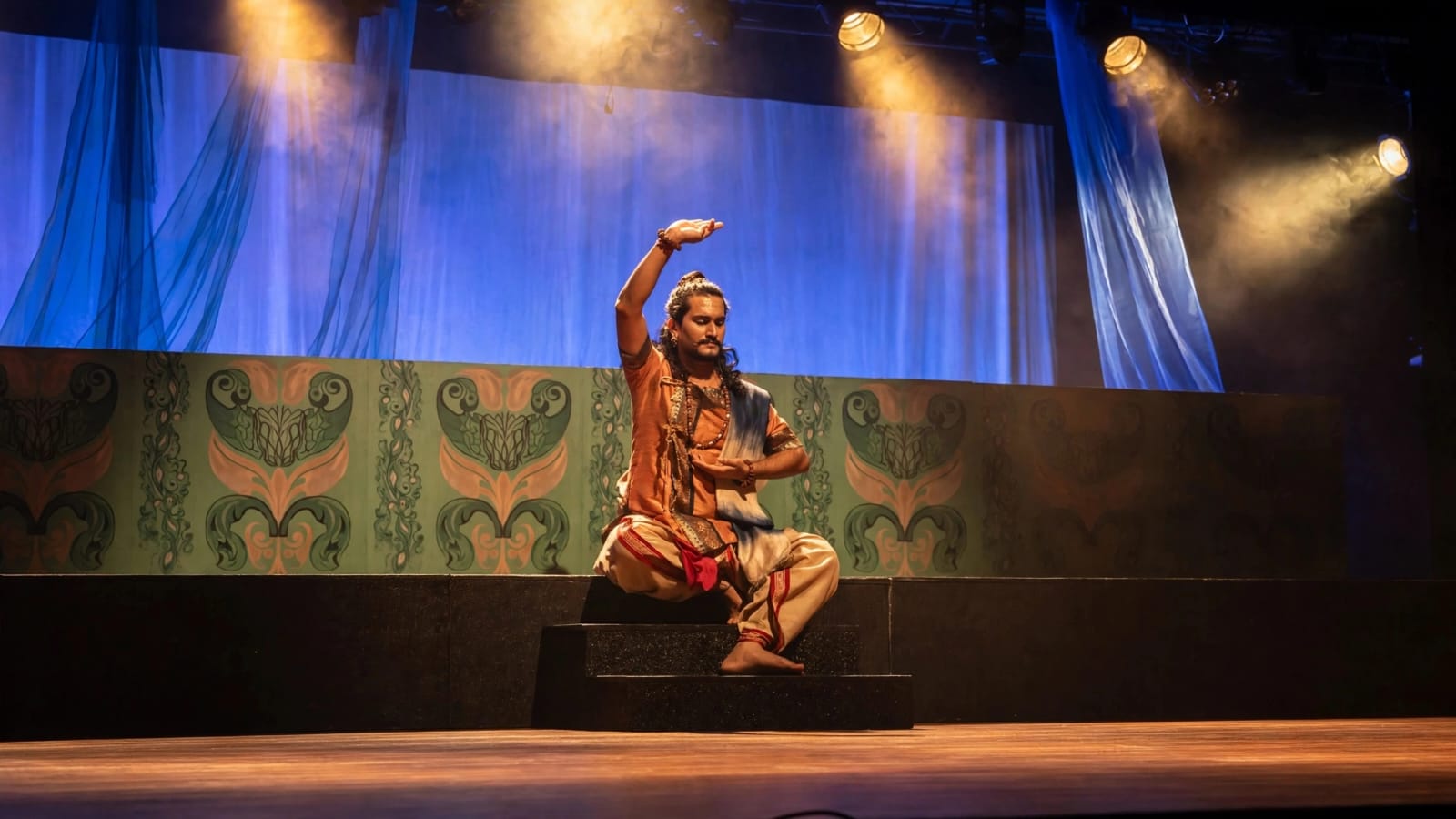
Shahana (Tagore Centre for Indian Music and Culture) brought its year-long 51st-anniversary Golden Jubilee celebrations to a grand close with an evocative cultural evening at the packed Veer Savarkar Auditorium in Dadar. Bringing together classical dance, theatre, Rabindra Sangeet and poetry, the finale celebrated India’s rich artistic traditions while revisiting the timeless ideas of Nobel laureate Rabindranath Tagore.
The evening’s biggest highlight was ‘Rajendranandini – The Warrior Princess’, an innovative adaptation of Tagore’s celebrated work Chitrangada. Directed and choreographed by Shahana’s Honorary Creative Head Anusree Bonnerjee, the production offered audiences a fresh interpretation of the iconic story while retaining its central themes of identity, equality and inner beauty.
Speaking about Tagore’s universal relevance, Bonnerjee emphasized that his works transcend linguistic and regional boundaries. “Tagore is not only for Bengalis, Tagore is for India and for the world,” she said. Her words underlined the enduring appeal of Tagore’s philosophy, particularly his progressive portrayal of women and his belief in equality beyond conventional social roles.
At the centre of the production was Chitrangada, portrayed by Manipuri dance exponent Purbita Mukherjee. Her graceful movements and emotionally layered performance brought the warrior princess’s journey to life, capturing her struggle between outward appearance and inner strength.
Bharatanatyam and Rabindrik exponent Anilkumar Singh took on the role of Arjun. His performance complemented Mukherjee’s portrayal and added depth to the central relationship of the narrative. Reflecting on his experience, Singh said, “The most powerful moment was realizing that Arjun’s greatest victory was not on the battlefield, but within.”
The interpretation of Chitrangada resonated strongly with the evening’s larger message that true strength and beauty lie beyond physical appearance and social expectations. Through dance, theatre and music, the production brought Tagore’s vision of a more equal and inclusive society to a contemporary audience.
The Golden Jubilee finale also featured ‘Alokdhara’, a soulful Rabindra Sangeet tribute dedicated to Shahana’s founders Indrani Acharya, Sunanda Majumdar and Snigdha Basu. The segment paid homage to the people whose vision and dedication helped shape the institution’s journey and its contribution to Indian music and culture.
The musical presentation featured performances by Shramana Chattopadhyay, Megh Ghosh and Palashi Ghosh, bringing the emotional richness of Rabindra Sangeet to the stage. Poetry by Upamanyu Bhattacharya added another artistic dimension to the evening, while Arup Chowdhury provided the musical direction.
With its combination of dance, theatre, music and poetry, Shahana’s Golden Jubilee finale became more than a celebratory event. It served as a reminder of the institution’s commitment to preserving and presenting India’s diverse cultural heritage while keeping its artistic traditions relevant for contemporary audiences.
The evening at Veer Savarkar Auditorium concluded the Golden Jubilee celebrations on a fitting note, reaffirming Tagore’s timeless vision of equality, human dignity and the power of art to connect people across boundaries.
Subscribe Deshwale on YouTube
