








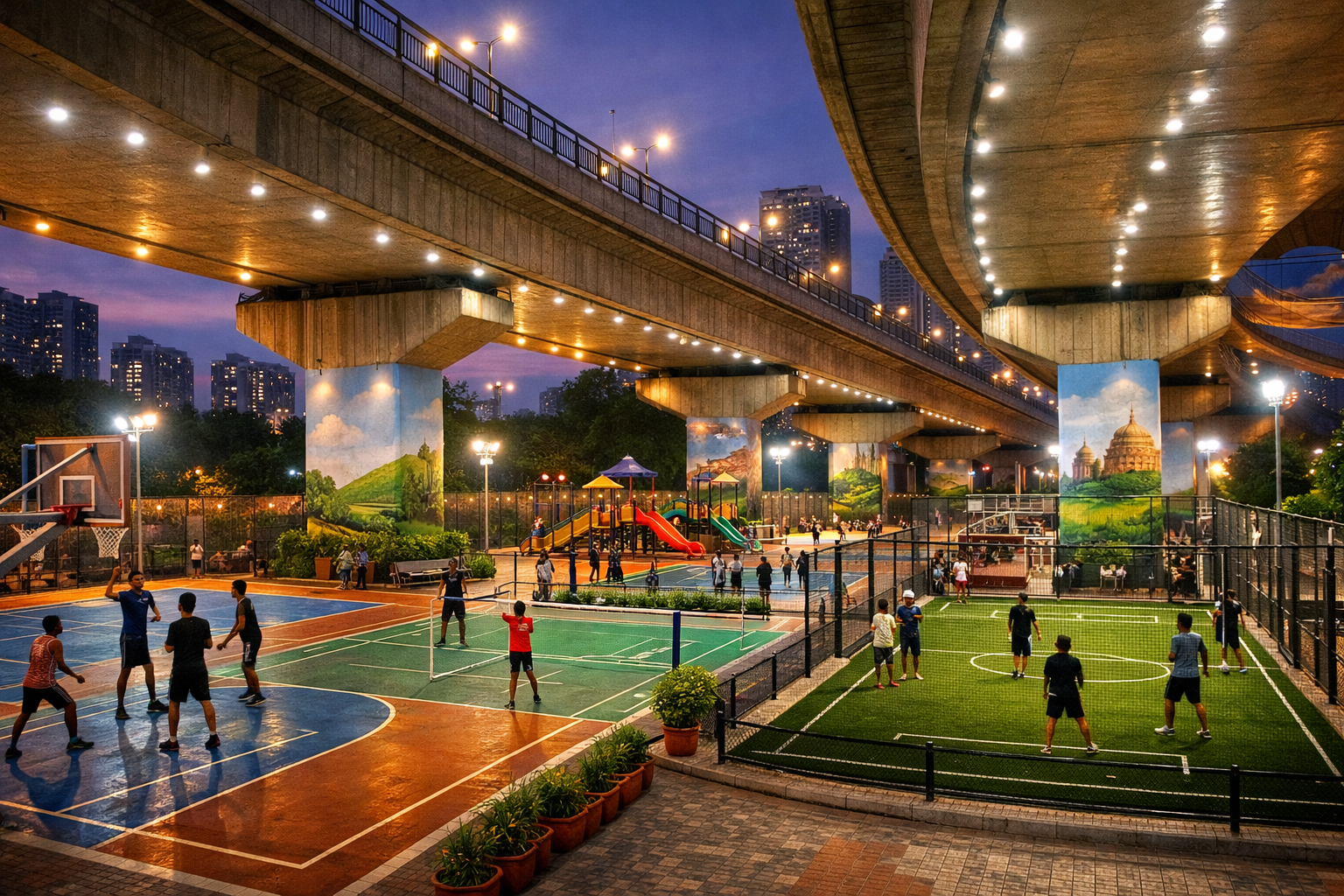
Across India, the space beneath bridges and flyovers has long been treated as an afterthought. These shadowed stretches often become dumping grounds, illegal parking zones or areas vulnerable to anti-social activity. In recent years, however, several cities have begun reimagining these neglected pockets as sports complexes and playgrounds. The results suggest that such interventions can improve urban aesthetics, strengthen community life and enhance public safety when thoughtfully planned and maintained.
India’s urban open space deficit makes this conversation urgent. The Urban and Regional Development Plans Formulation and Implementation (URDPFI) Guidelines recommend 10 to 12 square metres of open space per person in cities. Many Indian metropolitan areas fall far short of that benchmark, often providing less than 3 square metres per capita. In dense neighbourhoods, especially informal or rapidly expanding ones, children frequently lack safe, accessible playgrounds within walking distance.
From Delhi and Mumbai to Indore, Lucknow and parts of Chennai, municipal authorities and development agencies have experimented with converting under flyover areas into basketball courts, skating rinks, badminton courts and children’s play zones. Navi Mumbai’s sports facility beneath the Sanpada flyover gained attention for its clean design and steady community use. In Indore, sections under bridges have been transformed into recreational spaces that combine sports infrastructure with greenery and lighting. Similar initiatives have appeared in Coimbatore and Ghaziabad, particularly in densely populated neighbourhoods where access to open land is limited.
The aesthetic impact of these projects is significant. Well designed courts with painted surfaces, seating areas and proper illumination replace dark, dusty expanses with visually appealing public spaces. Murals and landscaping further soften the harsh concrete surroundings. Instead of becoming urban blight, these zones can contribute to a city’s image as progressive and people friendly. In land constrained cities, such adaptive reuse is also a practical solution. Acquiring new land for parks is expensive and often contentious, whereas under bridge spaces are already publicly owned.
Beyond appearance, the social dimension is equally important. Regular sporting activity attracts children, teenagers and families, creating natural surveillance that can deter petty crime and substance abuse. While no urban design measure alone can eliminate drug use or criminal activity, active public spaces tend to discourage misuse more effectively than abandoned ones. As several urban planners argue, well designed public spaces succeed not because of concrete and paint, but because they invite consistent community participation.
Internationally, the concept is not new. Toronto’s Bentway project transformed the space beneath an elevated expressway into a multi use public area hosting skating, cultural events and recreational programs. In the Netherlands, urban planners in Zaanstad developed sports and community facilities under a motorway, turning an unused corridor into a vibrant public asset. Parts of New York and London have also seen creative reuse of underpass areas for skate parks and community activities. Reception in these cities has generally been positive, particularly where projects are integrated with broader urban renewal efforts and supported by consistent maintenance budgets.
The question then arises whether more such complexes are needed across India. Given rapid urbanisation and shrinking playgrounds, the answer appears to be yes, but with caution. Municipal authorities should allocate substantial and sustained funds for construction, lighting, drainage, safety and long term maintenance. Poorly maintained facilities can quickly deteriorate and lose public trust. Funding should therefore prioritise quality design, community involvement and partnerships with local sports groups rather than one time beautification drives.
Sports complexes and playgrounds under bridges are not a cure all for urban challenges, but they represent an intelligent use of scarce space. When executed responsibly, they can enhance aesthetics, promote health and foster safer neighbourhoods, helping Indian cities become more inclusive and liveable.
Subscribe Deshwale on YouTube


