









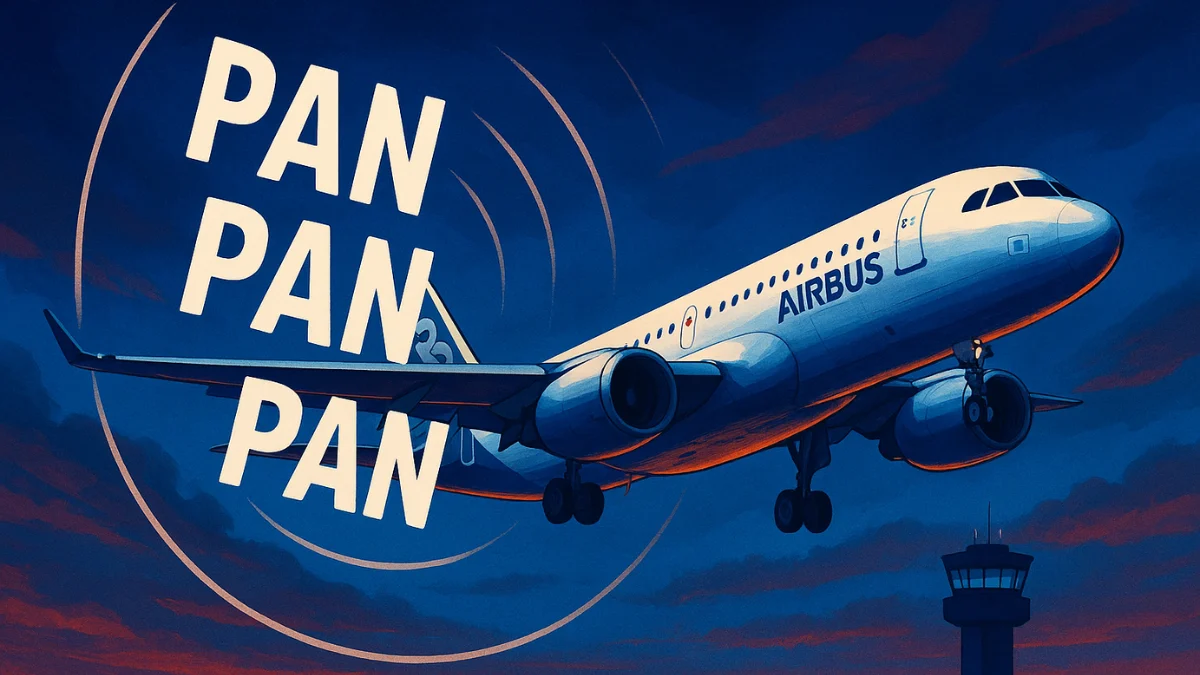
Aviation depends on precision, especially when things go wrong. Among its most critical tools is a lesser-known but life-saving radio signal: “PAN PAN PAN”. This distress call recently helped avert a major crisis when IndiGo Flight 6E-6271, flying from Delhi to Goa, suffered an engine malfunction and safely diverted to Mumbai. The calm handling of the situation underscores the role of this coded phrase in modern flight safety. But what exactly does “PAN PAN PAN” mean, and why is it so crucial?
What Does ‘PAN PAN PAN’ Mean?
The phrase “PAN PAN PAN” comes from the French word panne, meaning a breakdown. Pilots use this international radio call to signal an urgent situation that is serious but still under control. It is not as severe as a “Mayday” call, which indicates a life-threatening emergency. Instead, “PAN PAN PAN” covers events like a single engine failure, an onboard medical emergency, or navigation issues.
By repeating the phrase three times, pilots ensure clarity on crowded or noisy radio frequencies. This repetition also prompts air traffic controllers and nearby aircraft to prioritise the message and respond swiftly. While the situation may not be critical, it still demands immediate attention.
Why It Matters: Precision Under Pressure
“PAN PAN PAN” sits in the middle ground between a routine report and full-scale emergency. It allows pilots to request priority landing or support on the ground without causing unnecessary panic. The call ensures that air traffic control can clear runways, coordinate fire services, or provide medical help while giving the pilot space to keep flying the aircraft safely.
Experts view this call as a key pillar in aviation safety. It supports a layered response system. For instance, a twin-engine aircraft losing one engine is alarming but not catastrophic. With the right response from the ground and a composed crew, such a flight can still land safely, just as IndiGo Flight 6E-6271 did.
IndiGo 6E-6271: A Real-Life Example
On 15 July 2025, IndiGo Flight 6E-6271 was flying from Delhi to Goa when the pilot reported an engine malfunction about 100 nautical miles north of Bhubaneswar. The aircraft was an Airbus A320neo, known for its fuel efficiency and twin-engine design. The pilot quickly issued a “PAN PAN PAN” call to Mumbai ATC and informed passengers that the flight would be rerouted for technical reasons.
Mumbai’s Chhatrapati Shivaji Maharaj International Airport acted immediately. Emergency vehicles including ambulances and fire trucks were mobilised. Thanks to the crew’s training and the timely call, the aircraft landed safely. All 191 passengers and crew disembarked without harm. IndiGo later provided an alternate flight to Goa, while the grounded aircraft underwent inspection.
The Directorate General of Civil Aviation (DGCA) is now investigating the technical fault. However, the prompt use of the distress call and smooth coordination between pilot and ground teams ensured passenger safety.
Broader Lessons and Aviation Preparedness
The IndiGo incident is not an isolated case. Interestingly, on the same day, another IndiGo flight from Indore to Raipur had to return mid-air due to a separate technical issue. These back-to-back events raise questions about fleet maintenance and oversight, which the DGCA will need to address.
Even so, the effectiveness of the “PAN PAN PAN” call in the 6E-6271 incident remains clear. It prevented panic, initiated a focused response, and demonstrated the power of clear communication in aviation.
The “PAN PAN PAN” call is more than a technical phrase. It is a bridge between routine operations and emergencies, giving pilots and air traffic controllers a structured way to manage risks. In the case of IndiGo Flight 6E-6271, it helped transform a potential disaster into a well-managed diversion.
This call stands as a quiet hero in aviation, seldom heard by passengers but critical behind the scenes. As aircraft take off daily across the world, knowing that such protocols exist should give us all a little more peace of mind.


