










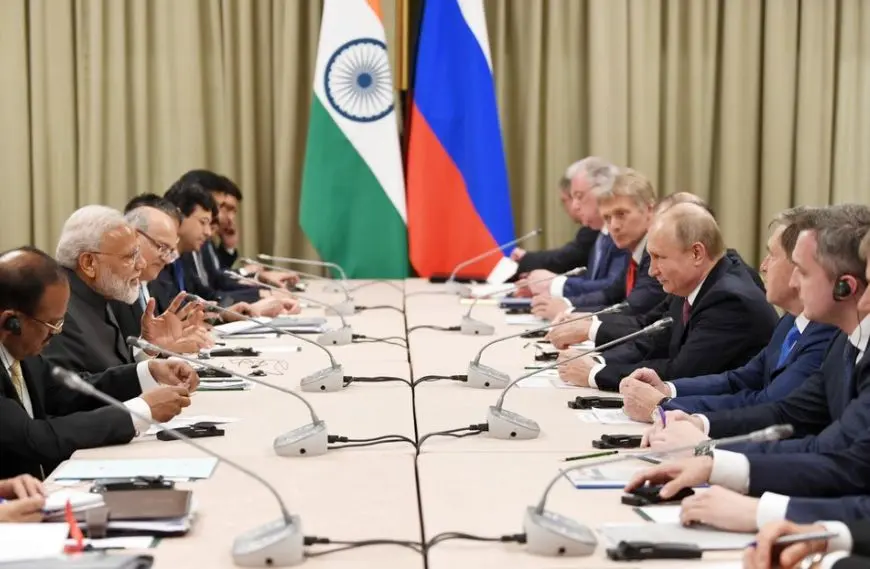
When global politics shifts, markets shift too. And honestly, The Race to Rewrite the Future Economy is no longer only about oil and military deals. Today India and Russia want something more permanent. You know, they want new industries, shared supply chains and strong consumer markets that can survive a world full of sanctions, trade wars and unpredictable superpower rivalries.
It is easy to see why this matters now. The war has pushed Russia out of Europe. Trade tensions and shifting tariff policies in the West have complicated things, clearly affecting global exports, including India’s. The old trade routes feel shaky. So the thing is, both countries are trying to build something new and stable before the world rewrites the rules without them.
India is now one of the fastest growing major economies in the world. It also has a massive young workforce and a growing consumer class. For Russia this is not just attractive. It’s practically necessary.
Russia is seeking long-term trade partners and markets that provide stability even during sanctions and geopolitical pressure. Believe it or not, it also needs fresh investments and skilled workers to support its industries. India fits that requirement perfectly. Guess what, that is why Russia now talks about long term economic cooperation rather than short term energy deals.
Why Russia still matters to India
India does not want to depend on one superpower. It wants choices. It wants autonomy. Let’s be clear, a country that stays independent in global politics also stays independent in business.
Russia gives India access to resources and technology that can’t always come from the West. And actually, India also sees an opportunity to place its products in a market that will recover and expand after the war. Phones, medicines, garments, electronics and food may soon become major Indian exports to Russia. If that happens, it could balance trade in a way never seen before.
Moving beyond oil and weapons
Oil and defence have defined India–Russia trade for decades. But then, this partnership is changing shape.
There are talks about joint ventures in digital technology, space research, satellite navigation, cybersecurity and energy infrastructure. There is interest in building supply chains that run from Indian factories to Russian markets without passing through Europe or the US. Look, this approach protects both sides from economic pressure.
This shift feels strategic. To be honest, it also feels personal. Both countries want to prove that they can build modern growth without depending on Western approval.
New consumer market on the horizon
One of the most interesting ideas in The Race to Rewrite the Future Economy is the rise of a new consumer market. Russia wants everything from apps to fresh foods to medical products. India can supply them. The only missing link, logistics. Both sides are now planning faster shipping routes and smoother payment systems so trade can scale without delays.
Investors should watch this space closely. When supply chains are built, businesses grow quickly. Think about it, startups could enter the Russian market. Retail brands could find a new audience. Tech companies could expand without facing the US–China bottleneck.
A new era of global trade might be developing right in front of us. And guess what, if India and Russia succeed, they could set a new blueprint for non-Western economic cooperation. This partnership might inspire other Asian and Global South countries to follow a similar route. Ultimately this could reshape global markets in the next decade.
So the story here is not about two leaders shaking hands. It is about two large economies trying to secure their futures in a world that is changing fast. And if we’re being real, the countries that adapt first will gain the most.
Because in the end, The Race to Rewrite the Future Economy is not just about winners and losers. It is about who builds first and who gets left behind. That’s the truth.
Disclaimer: This article discusses present developments and future possibilities in India–Russia economic cooperation. Since global politics and markets keep changing, some outcomes may evolve differently over time.
Subscribe Deshwale on YouTube


