



In India, approximately 1 in 10 adults have a thyroid disorder, and around 1 in 11 adults live with diabetes. However, the overlap between these two conditions is significant—about 1 in 4 people with type 2 diabetes also have hypothyroidism. This connection is not coincidental; both conditions influence how the body uses energy.
How they’re connected
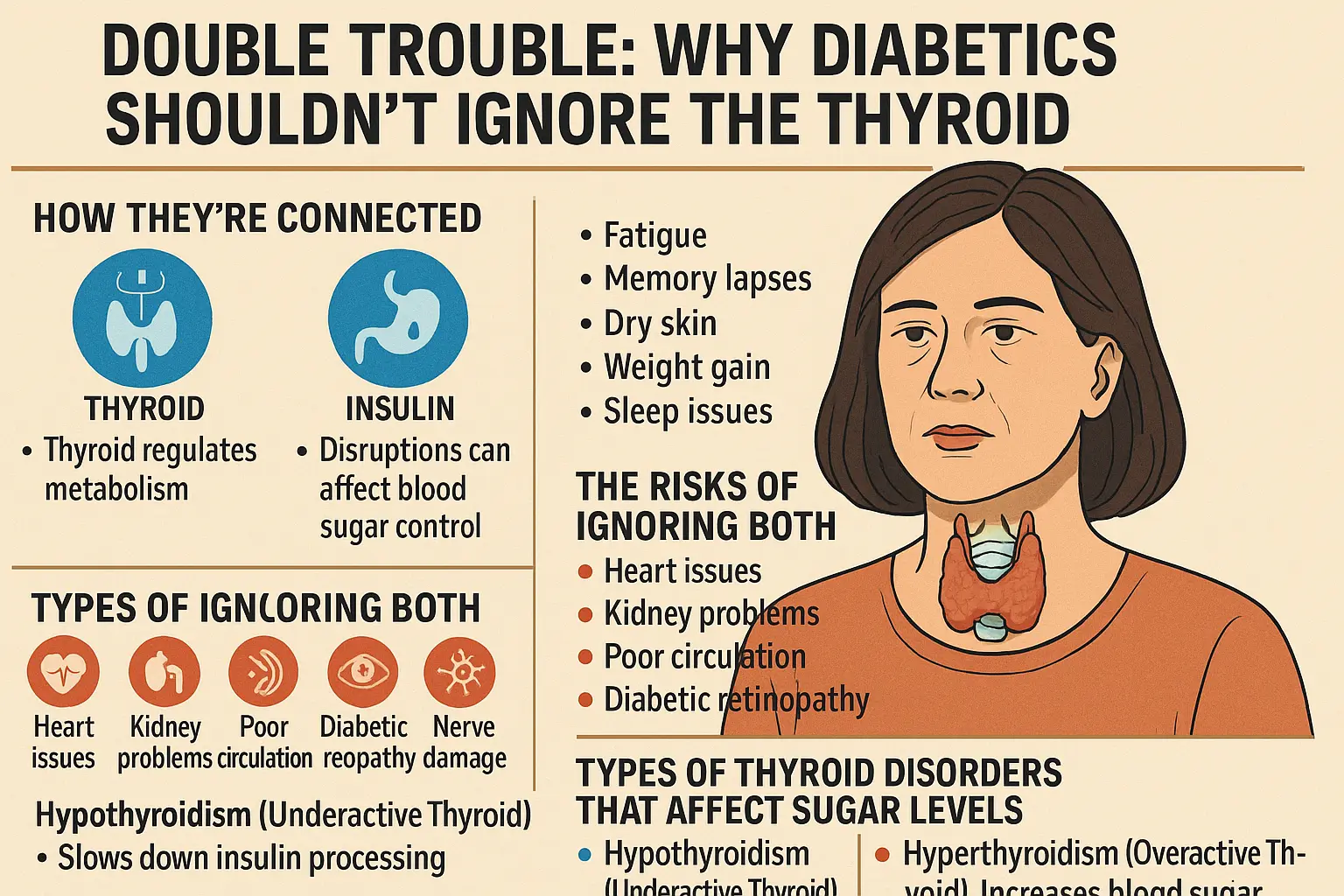
The thyroid, located at the base of the neck, regulates metabolism—the process that turns food into energy. It works alongside insulin, the hormone that manages blood sugar levels. When thyroid function is disrupted, it can affect blood sugar control, and vice versa. A malfunctioning thyroid can make it more challenging to manage diabetes effectively.
Common but overlooked
Many individuals monitor their blood sugar but overlook symptoms of thyroid disorders. Signs such as fatigue, memory lapses, dry skin, weight gain, and sleep issues can indicate thyroid problems. These symptoms are easy to miss, especially when managing diabetes. Undiagnosed thyroid issues are prevalent, making regular screening essential—particularly for those with type 2 diabetes.
The risks of ignoring both
Research indicates that coexisting diabetes and thyroid disorders increase the risk of:
- Heart issues
- Kidney problems
- Poor circulation
- Diabetic retinopathy
- Nerve damage
Neglecting both conditions can lead to serious health complications.
Types of Thyroid disorders that affect sugar levels
Hypothyroidism (Underactive Thyroid):
Hypothyroidism slows down how the body processes insulin, causing insulin to remain in the bloodstream longer than necessary, which can lead to unexpected blood sugar crashes. It also slows metabolism, often resulting in weight gain and increased insulin resistance. This makes it harder to maintain stable blood sugar levels. Among people with diabetes, subclinical hypothyroidism—a condition where the thyroid isn’t functioning normally but shows no clear symptoms—is common. Even without obvious signs, it can still impact blood sugar control.
Hyperthyroidism (Overactive Thyroid):
Hyperthyroidism speeds up metabolism, causing the body to absorb glucose from food more quickly. However, it also makes cells less responsive to insulin, leading to higher blood sugar levels. This can make it challenging for individuals with diabetes to manage their glucose effectively.
Managing the double diagnosis
Managing both thyroid and diabetes involves:
- Regular check-ups
- Doctor-prescribed medication
- A balanced diet
- Daily exercise
- Proper sleep
Catching thyroid changes early can significantly impact diabetes control.
The takeaway
If you have diabetes, don’t overlook your thyroid. Both are energy-related conditions that affect your entire body. Regular testing, active living, and informed care can keep both in check—and help you feel like yourself again.
