








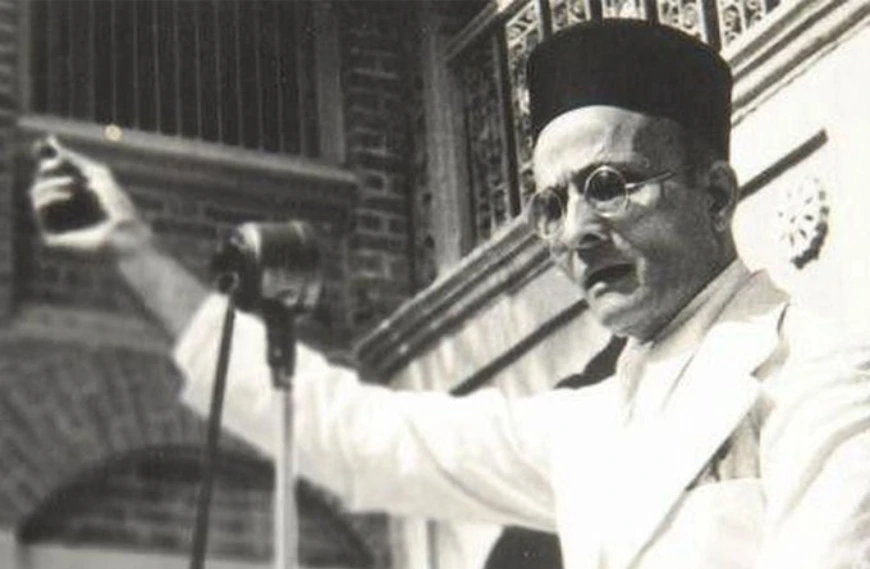
“Vinayak Damodar Savarkar, popularly known as Veer Savarkar, is remembered on his birth and death anniversaries.”
His role in the freedom struggle often overshadows another legacy. In 2025, his work as a social reformer shines brightly. Savarkar challenged caste oppression, sowing seeds for equality. His bold steps, from building an inclusive temple to promoting rational thought, speak to today’s India.
A temple for all: breaking caste barriers
Caste once ruled every facet of Indian life. Savarkar rebelled. While interned in Ratnagiri from 1924 to 1937, he founded the Patit Pavan Mandir in 1931. This temple welcomed all Hindus, including those branded “untouchable.” It was a radical defiance of tradition. “The caste system is a disease that divides us; its eradication is the cure for a united India,” Savarkar declared in Jatyuchchedak Nibandh. His words fueled his vision of unity.
The temple’s impact was real. A local Dalit farmer, once barred from sacred spaces, wept as he entered Patit Pavan Mandir for the first time, welcomed as an equal. Such moments made the temple a beacon of hope. Savarkar also hosted sahabhojan, inter-caste dining events. People shared meals across divides. These acts broke prejudices, forging a stronger, united community.
Education and rationality as tools for change
Superstition, Savarkar believed, chained India. Education was his key to freedom. He empowered marginalized groups through knowledge. His Jatyuchchedak Nibandh (Essays on the Abolition of Caste) called caste a “disease” that weakened India’s core. In Vidnyannishtha Nibandh (Essays on Scientific Temper), he pushed for reason over outdated customs.
He also championed bold causes. Supporting widow remarriage, Savarkar challenged a society that shunned widows. His advocacy for women’s rights and equality built a foundation for modern India. These were not just ideas—they were urgent calls to action.
A legacy that resonates in 2025
India, in 2025, debates reservation policies and social justice. Savarkar’s reforms offer timeless guidance. His Ratnagiri work proved change could triumph over resistance. Unity and rationality shaped his vision. They remain vital now. The Port Blair airport, renamed Veer Savarkar International Airport in 2002, reflects his enduring legacy. His reforms teach us: progress lies in breaking barriers, building bridges.
In 2025, how can we carry forward Savarkar’s dream of a united, equitable India?


