



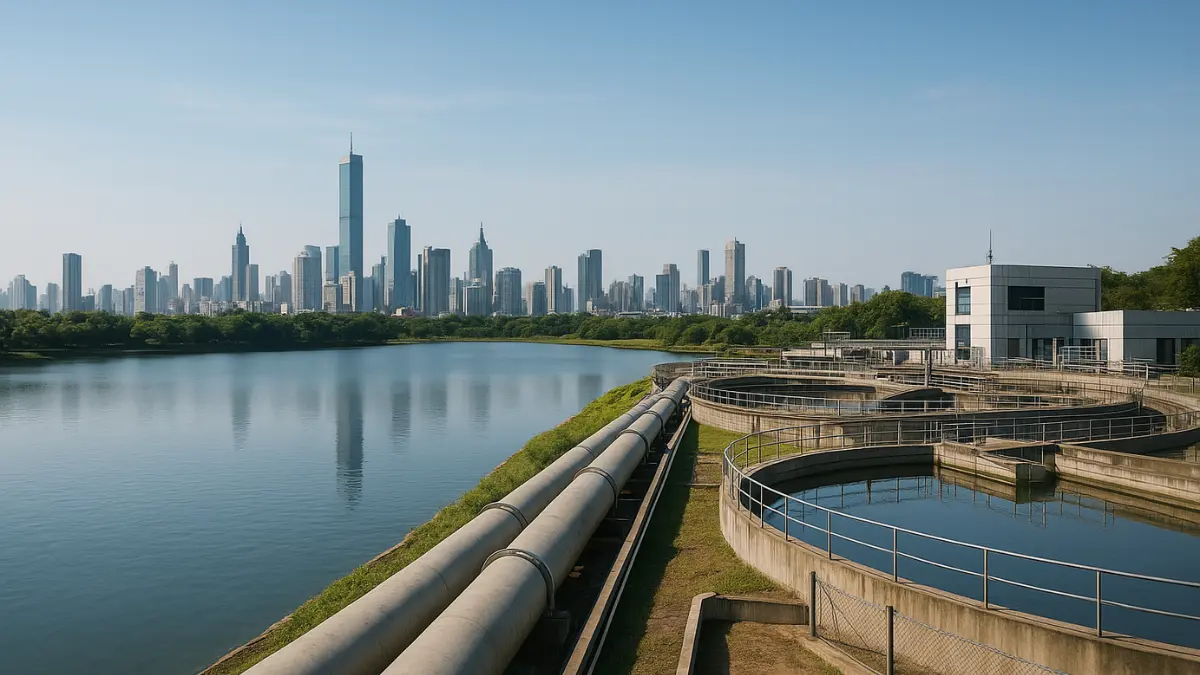
In the world’s largest cities, millions of people turn on their taps each day without realising the effort behind it. The water that flows so easily often travels hundreds of kilometres, undergoes several stages of treatment, and passes through an intricate network of pipes and tunnels. This everyday convenience is the result of one of the most complex urban systems ever created, and it becomes noticeable only when it stops working.
Where Does the Water Come From?
Megacities rely on distant rivers, reservoirs, and underground aquifers to satisfy their vast water demands. For example, New York City draws its water from pristine reservoirs located up to 200 kilometres away in the Catskill and Delaware watersheds. Mexico City, built over a former lake, pumps its supply uphill from rivers and aquifers nearly 60 kilometres away. This system is increasingly strained as the city faces persistent shortages. Cape Town, shaped by its 2018 water crisis, now adds desalinated water and groundwater to its sources.
Transporting water across these long distances involves a careful balance between supply and demand. Large tunnels, high-capacity pipelines, and major pumping stations make it possible to keep cities hydrated.
Making Water Safe to Drink
Before reaching households, water passes through treatment plants where sediment is removed, harmful microorganisms are destroyed using chlorine, ozone, or ultraviolet light, and chemical levels are adjusted to prevent pipe corrosion. Singapore has taken this further with its pioneering NEWater programme. It recycles treated sewage using advanced membrane technology to produce ultra-pure water, an essential part of its move towards water independence.
Challenges in Distribution
Once treated, water still faces challenges on its way to taps. In Jakarta, around 40 percent of treated water is lost because of leaking pipes, illegal connections, and ageing infrastructure. Many cities, particularly in the Global South, struggle to maintain systems that match their rapid population growth. London’s Victorian-era water mains continue to pose challenges, and the city is gradually replacing and relining them to manage demand and reduce pressure losses.
Coping with Growing Scarcity
Climate change, overuse, and rising populations are making water security a growing concern. Los Angeles relies heavily on the Colorado River, which is shrinking because of long-term drought. To adapt, cities are adopting smart meters to track consumption, reusing greywater for non-drinking purposes, and implementing rainwater harvesting to reduce dependence on distant sources.
Towards a Resilient Future
Urban water systems can no longer be treated as invisible background services. As Veena Srinivasan, a water researcher at ATREE Bangalore, points out, cities must value every drop at each stage, from the source to the tap and beyond. Building resilience will require investment in infrastructure, diversification of sources, and a strong effort to involve citizens in responsible water use.
