



By: Pratyush Bardoliwala
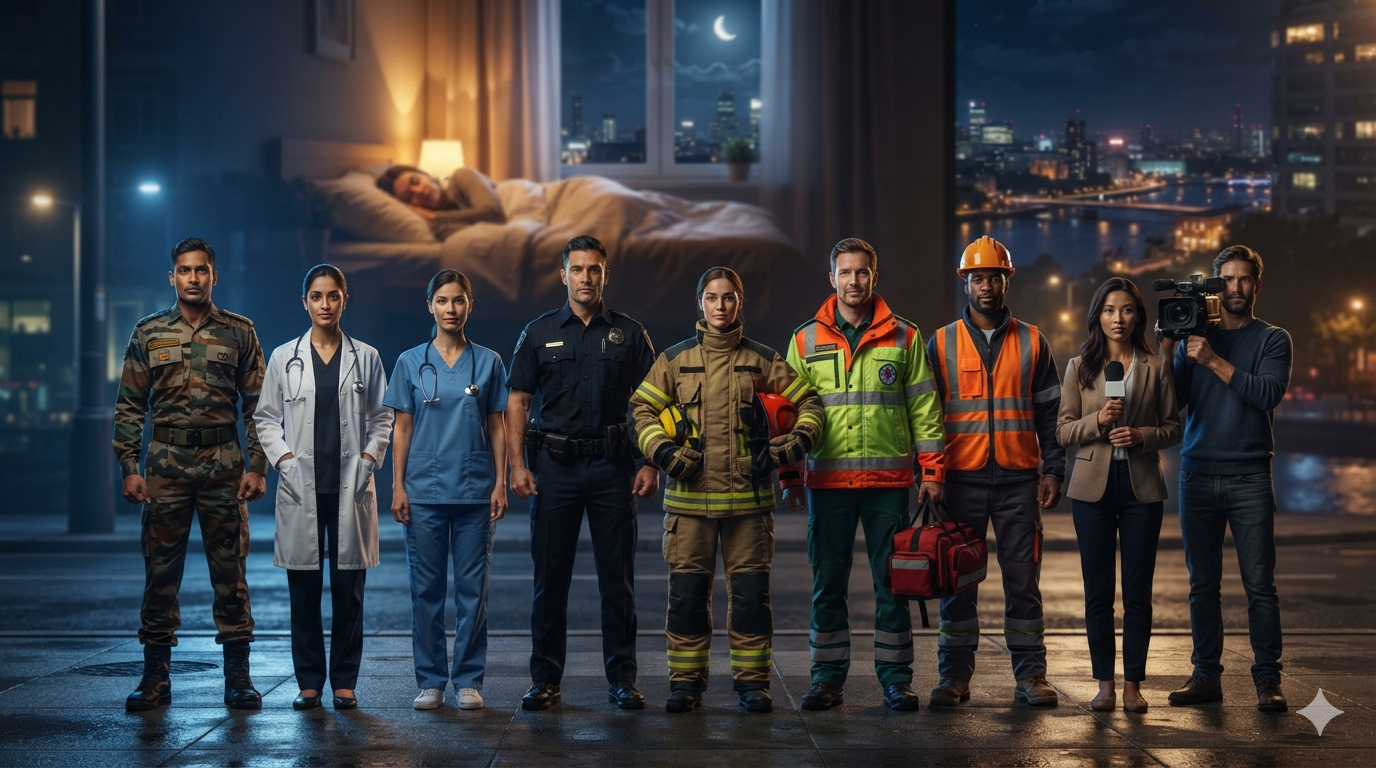
Once night falls, most of us simply go to bed, watch a show or scroll through our phones. But while we sleep, thousands of people continue working. They sacrifice their sleep, comfort and time with their families to protect, serve, inform and care for the rest of us.
Many of them rarely receive recognition for what they do. Their work often goes unnoticed because we usually notice its importance only when something goes wrong.
From soldiers guarding the nation’s borders to doctors treating patients through the night, from police officers responding to emergencies to journalists bringing us the news, their responsibilities continue long after most of us have gone to bed.
Soldiers
While most of us sleep without giving much thought to what lies beyond our borders, soldiers remain on duty to protect the country from potential threats. Whether it is freezing cold, scorching heat, heavy rain or difficult terrain, they are expected to remain alert and carry out their responsibilities. They often spend long periods away from their homes and families, putting duty before their own comfort. Their commitment allows the rest of us to live our daily lives with a greater sense of security.
The risks they face should not be overlooked. Soldiers serve in environments where danger can be part of their duty, often knowing that their decisions and actions can have serious consequences. They put themselves in harm’s way to protect the country and its people. For most of us, a peaceful night is something we simply experience. For them, protecting that peace can come with real personal risk.
Doctors and Nurses
Hospitals do not close when the rest of the city goes to sleep. Doctors and nurses continue treating patients, responding to emergencies and caring for people who may need immediate attention. Their shifts can be long and exhausting, but patients cannot simply wait until morning to receive care.
Their work also comes with its own pressures and risks. They deal with medical emergencies, difficult decisions and situations where a patient’s condition can change within minutes. Despite the stress and exhaustion, they remain there when people need them most, helping save lives and care for those who are at their most vulnerable.
Emergency Services
When someone needs immediate help, emergency services have to be ready. Police officers, firefighters and ambulance crews remain available around the clock, responding to accidents, medical emergencies, fires, crimes and other situations where every second can matter. While most people are asleep, they continue working under pressure, often entering uncertain and difficult situations to help people they may have never met.
Police Officers
Police officers continue patrolling streets, responding to calls and dealing with emergencies while much of the city is asleep. They may have to step into unpredictable and sometimes dangerous situations at any hour. Their work requires them to stay alert and make quick decisions, often under pressure, to protect people and maintain public safety.
Firefighters
Firefighters can be called into action at any time, whether it is a building fire, road accident or another emergency. They enter dangerous environments to rescue people and control situations that can quickly become life-threatening. The job demands physical courage, training and the ability to remain calm when others are in danger.
Ambulance Workers
For ambulance crews, every call can be urgent. They transport patients to hospitals and provide necessary care during the journey, often working against time when someone’s condition is critical. Their work continues through the night because medical emergencies do not follow a schedule, and reaching a patient quickly can make a crucial difference.
Utility Workers
Essential services also have to keep running after most of us have gone to bed. Electricity, water, telecommunications and other basic services require constant monitoring, maintenance and repairs. When a power line fails, a water supply is disrupted or a communication network develops a problem, utility workers may have to respond at any hour. They often work in difficult conditions and at short notice to restore services that millions of people rely on every day, even if most of us rarely think about the people behind them.
Journalists and News Workers
While most people are asleep, journalists and newsroom teams may still be following breaking developments, verifying information, speaking to sources and preparing reports. News does not follow a nine-to-five schedule, and major events can happen at any hour. Reporters, editors, photographers and other newsroom staff often work late into the night so that people can wake up informed about what happened while they were asleep.
The next time you go to bed, remember that while you sleep, countless others are still working. Their efforts may often go unnoticed, but they help keep our country safe, our cities running and our lives moving forward.
Subscribe Deshwale on YouTube
