 Deshwale
Why Do We Keep Things We Never Use? The Emotional World of Collecting and Hoarding
In brief · AI summary People often keep unused objects because they carry emotional meaning, such as memories of loved ones or past happiness, even when they have little practical value. The article distinguishes this from hoarding, a disorder that can make it very hard to discard possessions and can interfere with everyday life. It suggests keeping what truly matters, such as a few meaningful photographs or one special item, and letting go of the rest.
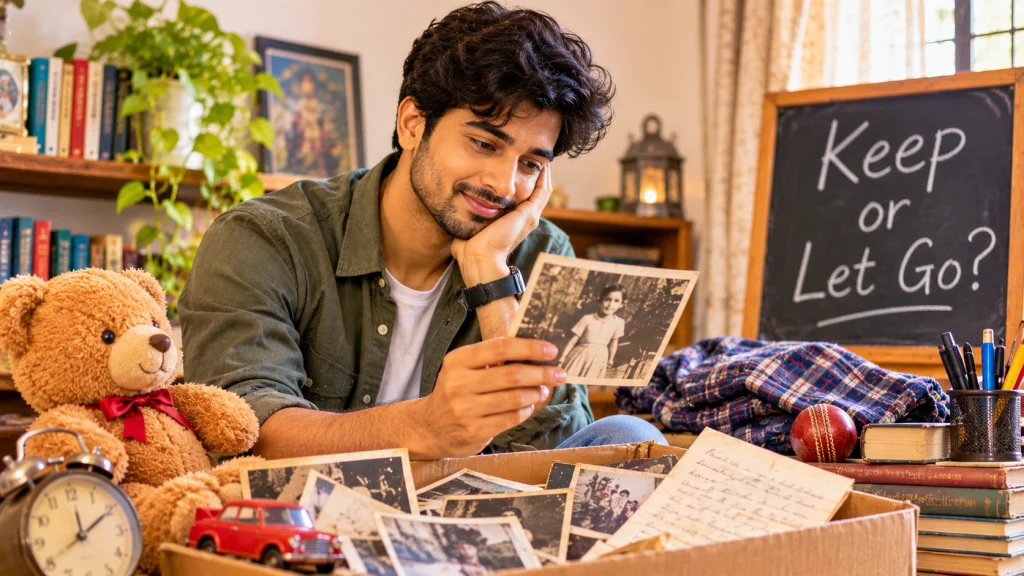
There are things in our homes that have not been touched for years, yet we cannot bring ourselves to throw them away. An old greeting card, a child’s first drawing, a watch that stopped working or a dress we have not worn in a decade. We know they are taking up space. We know we may never use them again. Yet, when someone suggests throwing them away, we hesitate. Perhaps the real question is not why we keep these things, but what we are afraid of losing when we let them go.
At first glance, it may seem like a simple problem of clutter. But the reasons we hold on to things are often much deeper. Sometimes, we are not keeping an object because of what it is. We are keeping it because of what it reminds us of.
When an Object Becomes a Memory
Think about an old birthday card written by a parent, a child’s first drawing or a letter from a friend who now lives far away. These objects may have little practical value, but their emotional value can be enormous.
A photograph takes us back to a moment. A familiar piece of clothing reminds us of someone. An old toy brings back the happiness of childhood. Throwing such things away can feel almost like throwing away the memories attached to them.
This difference often becomes visible when families clean their homes. One person may see an opportunity to make space, while another sees a collection of memories being threatened. A parent may want to preserve an old school report, while a child may wonder why it is still being kept. Neither is necessarily wrong. They are simply attaching different meanings to the same object.
In a world where photographs and messages are increasingly stored on phones and computers, physical objects still have a special quality. We can touch them, hold them and feel connected to the past.
The Things We Keep for a Future That Never Comes
Not everything we store has sentimental value. Some things are kept because we believe they might become useful one day.
An old mobile phone, a damaged appliance, clothes we hope to fit into again, containers saved for future use and cables from devices we no longer own often fall into this category.
There is also a psychological comfort in keeping things. Throwing something away can create the feeling that we may need it tomorrow and regret our decision. So we postpone it. Tomorrow becomes next month, and eventually, the object becomes a permanent resident of a cupboard.
Sometimes, we keep things because they remind us of the person we once hoped to become. The guitar we never learnt to play, the books we promised ourselves we would read or the exercise equipment we bought with great enthusiasm. Discarding them can feel like admitting that certain plans may never happen. In this way, our cupboards sometimes become storage spaces for unfinished dreams.
Collecting Is Not the Same as Hoarding
There is an important difference between collecting and hoarding.
Collectors usually keep things they genuinely value, such as stamps, coins, books, antiques or souvenirs. They may organise their collections, take pride in them and enjoy sharing them with others.
Hoarding, however, can be much more complicated. A person experiencing hoarding disorder may find it extremely difficult to discard possessions, regardless of their actual value. Over time, the accumulation can make rooms difficult to use, affect relationships and interfere with everyday life. It is not simply a matter of being untidy or lazy. Professional help may be needed.
Understanding this difference matters. We should not casually label everyone who keeps old belongings as a hoarder.
Can We Keep the Memories Without Keeping Everything?
Perhaps the answer is not to throw away everything we do not use, nor is it to preserve every object from our past. It is to understand why we are keeping something.
A few meaningful photographs can preserve years of memories. We can keep one special item instead of an entire cupboard of things connected to the same occasion. We can photograph children’s drawings before deciding which ones to preserve. We can also pass useful belongings to someone who genuinely needs them.
Most importantly, we should learn to ask ourselves a simple question: Does this object add value to my life today, or am I keeping it only because I am afraid to let it go?
There is nothing wrong with cherishing the past. Our memories, relationships and experiences make us who we are. But we do not have to preserve every object to preserve every memory.
Perhaps the secret is to understand that letting go of an object does not mean letting go of the person, the moment or the experience connected to it. After all, our homes should have space not only for the lives we have lived, but also for the lives we are still living.