








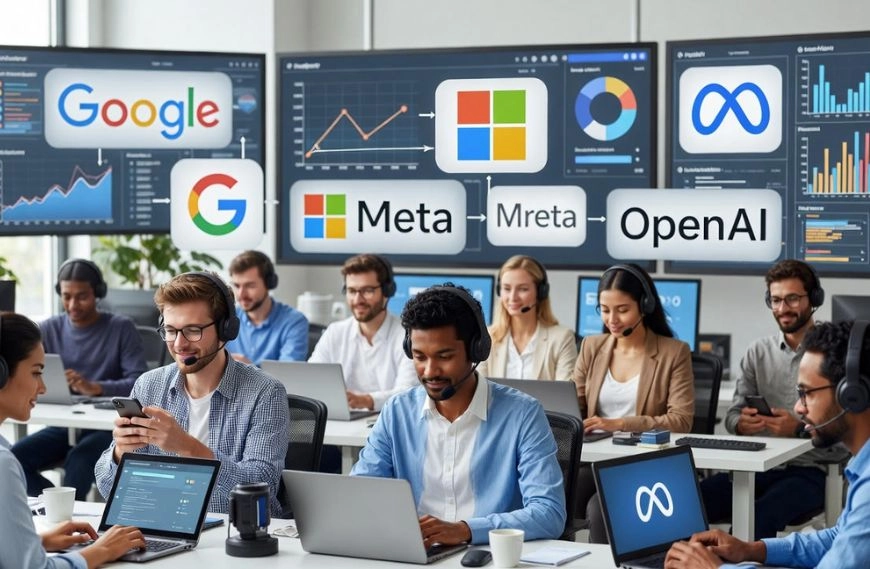
Artificial Intelligence (AI) tools have become a part of everyday life. From writing assistants and photo editors to chatbots and voice tools, millions of people in India are now using them daily. Most of these tools are free, and that makes them even more attractive. But have you ever wondered how these big tech companies make money if they offer everything for free? The truth is that ‘free’ often comes with hidden costs.
When you sign up for a free AI service, you often share something valuable with your data. This includes your name, email, voice, writing style, preferences, and even the kind of tasks you perform. Companies use this information to train their AI systems, improve accuracy, and sometimes to develop paid products later. In short, your data helps them make their tools smarter and more profitable.
Big companies like Google, Microsoft, Meta, and OpenAI are not offering free AI tools just out of kindness. These tools help them reach millions of new users quickly, especially in large markets like India. Once users get used to a free version, many may later pay for premium features. It’s a smart business strategy to build trust first, then earn revenue later.
For example, Microsoft offers a free version of its AI Copilot, but advanced users need a paid plan. Similarly, OpenAI’s ChatGPT is free to use, but its most powerful version, GPT-4, is available only through a subscription.
Every time you use a free AI tool, it learns from you. Your interactions help the AI understand human behaviour better. This training data is what makes future AI models more accurate. Some companies may also use aggregated data not tied to individual users to develop ads or personalised recommendations.
While most firms follow privacy rules, users often don’t realise how much information they share while using free tools. Reading the terms and privacy policies can give you a clearer idea of what happens to your data, though few people take the time to do so.
There’s no doubt that free AI tools make technology more inclusive. Students, small businesses, and everyday users can access tools that once required expensive software. This helps bridge the digital gap in countries like India. But awareness is equally important. Users should understand that when something online is free, they might be paying with their data instead of money.
The goal is not to stop using free AI tools, but to use them wisely. Always check what permissions the app asks for, avoid sharing sensitive information, and be cautious about uploading private data. Over time, as governments strengthen data protection laws and companies improve transparency, users will have more control over how their information is used.
Free AI tools are changing how we learn, work, and create. But behind every free tool is a business model that values your data. Knowing this helps you make smarter choices about what to share and what to keep private.
Subscribe Deshwale on YouTube