






By Sanjay Shah
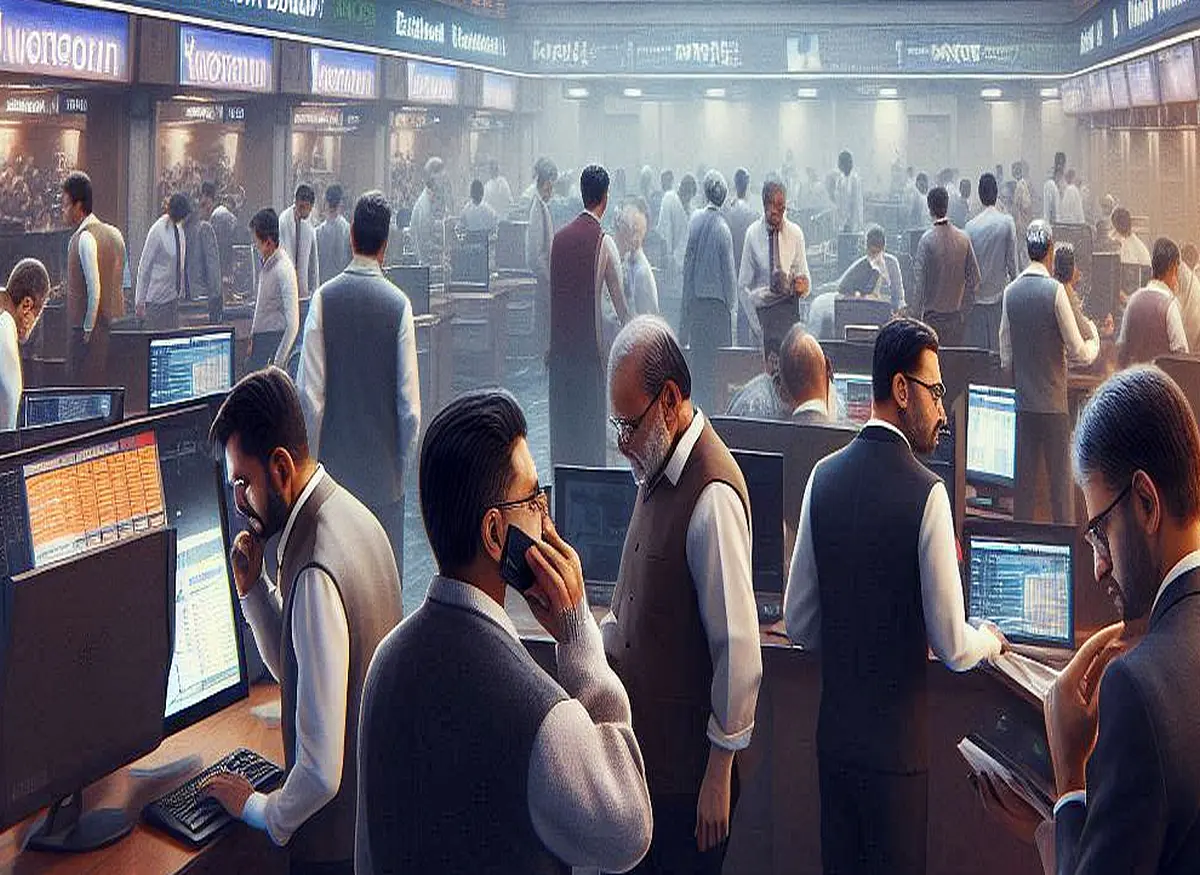
Budget day always brings drama, but Sunday, February 1, 2026, turned into a full-blown storm. Sensex crashed over 1,500 points in the special session, closing down 1,547 at 80,723. Nifty shed nearly 500 points to end at 24,825. This was one of the worst Budget-day performances in six years. Traders were stunned. Brokers panicked. Social media was filled with angry posts. But why exactly did the market react so sharply? Let us break it down logically, without hype.
The main trigger was clear. Finance Minister Nirmala Sitharaman raised the Securities Transaction Tax (STT) on futures and options. STT on futures jumped from 0.02% to 0.05%, a 150% increase. On options premium and exercise, it rose from 0.1% and 0.125% to 0.15%, up 50% and 20% respectively. This change hits from April 1, 2026.

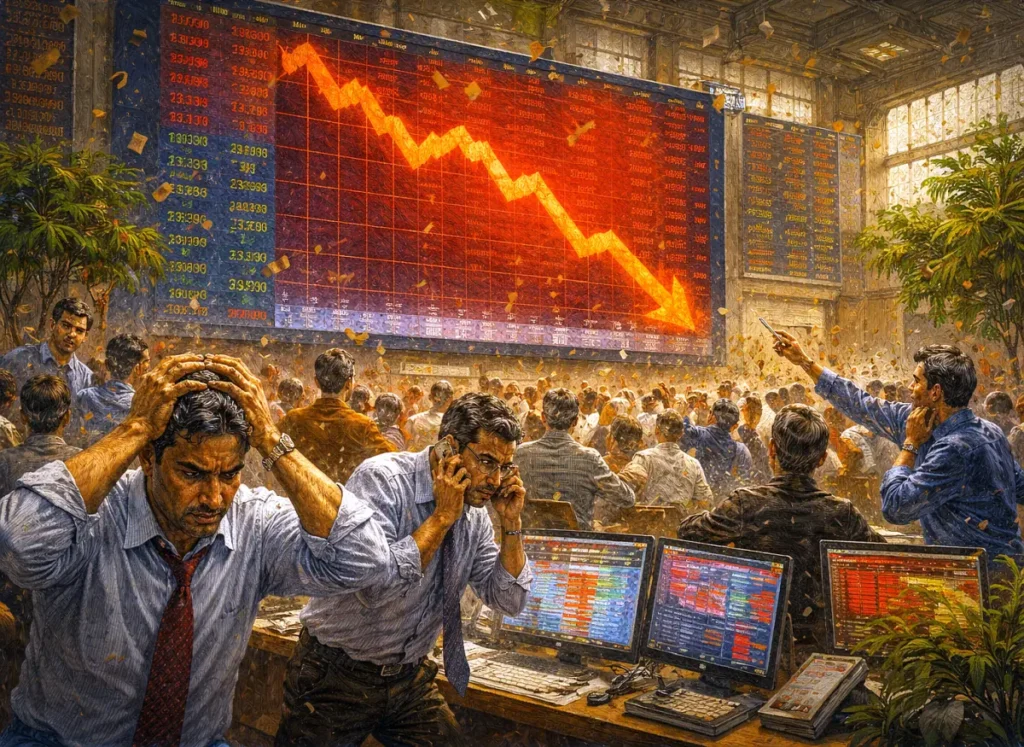
India’s F&O market is the world’s largest by volume. Daily turnover often crosses Rs 400 lakh crore. Retail traders, hedgers, arbitragers and high-frequency players… all operate here. Higher STT means higher transaction costs. Break-even points widen. Profit margins shrink. Many retail participants already struggle with losses in derivatives. Now costs rise further. No wonder brokerage stocks like Angel One, Upstox-linked names and exchange-related counters fell 10-18% in minutes.
Experts called it a knee-jerk reaction. The markets expected capital gains tax relief. Instead, they got this surprise hike. Hopes were priced in. When reality differed, selling followed. An analyst noted the move curbs excessive speculation. Another pointed out it raises impact costs for traders and hedgers. Volumes may drop 20-30% in coming months. Liquidity could thin. Volatility might rise short-term.
But STT was not the only reason. Expectations were high. Markets wanted bold moves. Clear signals on privatisation and faster disinvestment. Relief on long-term capital gains tax was also expected. Simpler rules for foreign investors too were a silent wish. Instead, the Budget chose continuity. The fiscal deficit stayed at 4.3% of GDP. Debt-to-GDP dipped slightly to 55.6%. Capex rose to Rs 12.2 lakh crore, good for the long term. But no big consumption boosters were announced. No major tax cuts for the middle-class were in sight. No strong pull for FIIs either, who have already pulled out over Rs 41,000 crore in January alone amid global headwinds like US tariffs.
Global factors added pressure. US bond yields high. Geopolitical risks. Currency pressures. FIIs stayed sellers. The budget did not offer fresh incentives to reverse that flow. High valuations were already a worry. Nifty PE ratio hovered elevated. Any disappointment triggered correction.
The absence of big reforms hurt sentiment too. Markets dislike boredom as much as uncertainty. This Budget felt safe and politically neutral. No shocks, no big bang. In an election-sensitive year, that made sense for the government. But for traders chasing momentum, it felt flat. Yet, even in this negativity, opportunities exist. Not everything is gloomy.
First, capex push remains strong. Rs 12.2 lakh crore allocation means infra stocks like L&T, Adani Ports, IRB Infrastructure will benefit over time. The multiplier effect on jobs and growth is real.
Defence got Rs 7.85 lakh crore, highest ever. Modernisation focus means HAL, BEL, Bharat Dynamics look attractive for long-term holders. PSU defence names held up better than the broader market.
Railways capex pegged at Rs 2.93 lakh crore. High-speed corridors, station upgrades, new trains. Stocks like IRCON, RVNL, Titagarh Rail could see buying on dips.
Healthcare and pharma gain indirectly. 17 cancer drugs to become duty-free. 5 medical tourism hubs with AYUSH integration planned. Apollo Hospitals, Max Healthcare, Sun Pharma, Dr Reddy’s may attract attention.
Green energy exemptions on critical minerals. Solar, EV and battery plays like Tata Power, Mahindra, Exide get tailwinds.
Tourism push is also there. Trekking trails, guide training, heritage sites. Hospitality and travel stocks like Indian Hotels, EaseMyTrip could see gradual upside.
Long-term investors should view this dip as an entry point. In all, fundamentals remain solid. GDP growth assumption around 7%. Fiscal path prudent. Reforms in small doses continue. Short-term pain from STT may fade as volumes adjust and new participants enter.
Markets often overreact on Budget day. History shows recovery follows. In 2020 and earlier years, sharp falls reversed in weeks. This time too, knee-jerk selling may give way to bargain hunting.
Bottom line? The unhappiness is real. The STT hike hurt traders directly. Muted reforms disappointed broader sentiment. But the Budget is not anti-market. It is cautious. Growth-oriented in capex and sectors like defence, infra, health. Opportunities hide in the noise. Patience will reward those who look beyond headlines.
Disclaimer: This article is for informational and educational purposes only and contains a general analysis of the Union Budget 2026-27. Any stocks, sectors or companies mentioned are cited purely for illustrative/reference purposes in the context of budget announcements and do not constitute investment advice, buy/sell/hold recommendations, solicitation to buy or sell securities, or a personal recommendation to any reader. The views expressed are those of the author alone and do not represent any investment advisory service.
Investing in securities involves risks, including the possible loss of principal. Past performance is not indicative of future results. Readers should conduct their own due diligence and consult a qualified financial advisor, registered investment advisor, or other professional before making any investment decision based on this content. The author, publisher, and platform disclaim any liability for any loss or damage arising from the use of this information.