







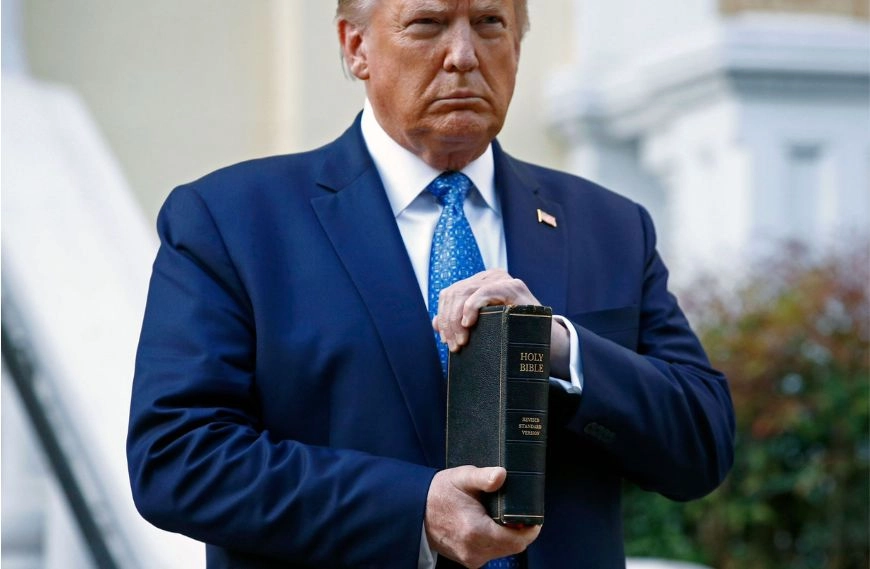
The world is once again talking about nuclear testing after former US President Donald Trump announced that the United States would ‘immediately’restart testing its nuclear weapons. The declaration has sparked both concern and confusion. Does this mean the world will see actual nuclear explosions again, or is it something less dramatic but still serious?
To understand this, it is important to know that nuclear testing can mean different things. Traditionally, tests involved full nuclear detonations above or underground, creating mushroom clouds and spreading radioactive fallout. The US last carried out such a test in 1992. However, officials now say that the current plan focuses on non-explosive testing, checking warhead systems, delivery mechanisms, and overall readiness without detonating a bomb. In simpler terms, it is more about testing technology and less about creating an explosion.
Trump justified his move by saying the US must keep pace with countries like China and Russia, which are modernising their nuclear weapons. He argued that the US cannot be the only major power not conducting tests. Analysts, however, point out that while China and Russia are upgrading their systems, neither country has conducted an explosive nuclear test in decades. So, this decision is as much about political messaging as it is about science.
The risks of restarting full-scale nuclear testing are serious. First, it could trigger a new global arms race, pushing other countries to resume their own explosive tests. Second, the environmental and health dangers are undeniable. Past nuclear tests left behind long-term radiation damage, contaminated land, and caused illnesses among people living near test sites. Third, resuming explosive testing could undermine decades of international agreements aimed at limiting nuclear activity, such as the Comprehensive Nuclear-Test-Ban Treaty. Although the US has signed the treaty, it has never ratified it, meaning this decision could weaken global non-proliferation efforts.
Experts also say that even if the US wanted to resume full-scale testing, it would not happen overnight. Rebuilding test sites and preparing for detonations could take months or even years. More likely, the immediate tests will involve smaller, contained experiments to assess weapon safety and reliability rather than producing massive blasts.
Still, even the idea of ‘testing’ changes the global mood. It sends a powerful political signal that nuclear weapons are back at the centre of global strategy. This move could affect international relations, arms-control talks, and the fragile balance of global security.
In short, the world may not yet return to seeing glowing skies and mushroom clouds, but the renewed focus on nuclear testing is already reshaping the conversation. Whether or not the tests go explosive, the reality is clear the nuclear age is stirring once again, and the risks that come with it are no longer just history.
Subscribe Deshwale on YouTube