









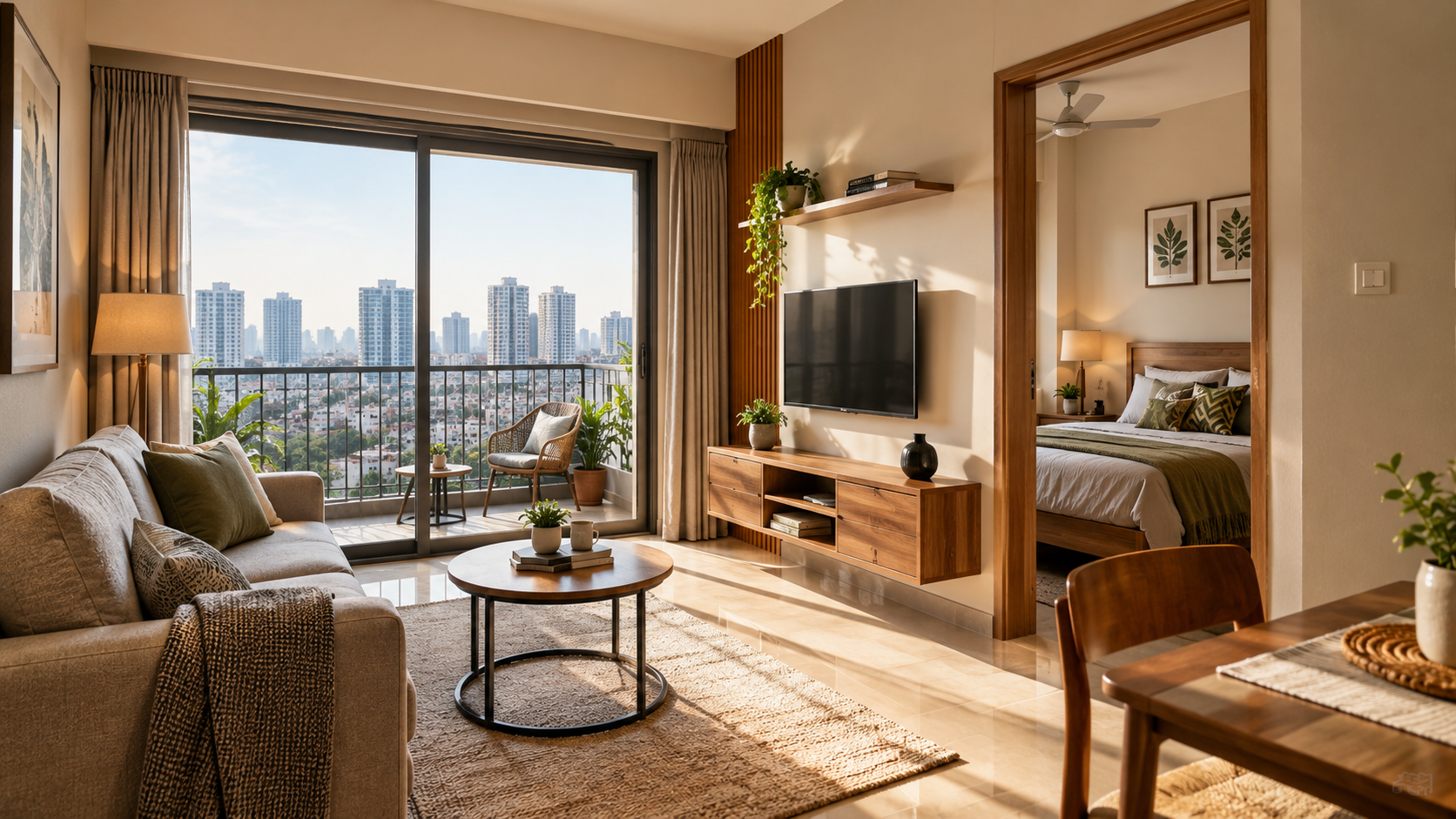
For years, the 1 BHK has carried a quiet stigma in India’s housing market. It’s the home people settle for, not the one they dream about. Buyers see it as a starter home, something to move out of once life gets bigger, a bigger family, a bigger salary, a bigger sense of arrival.
But there’s an irony hiding in plain sight. The very people who bought a 1 BHK because it was all they could afford may be sitting on an asset that is about to become far more valuable than they ever imagined.
Here’s why.
Recent housing market data shows a strange mismatch. Buyer demand for 1 BHKs is far higher than the number of such homes actually being built. In percentage terms, the gap is significant far more people want a 1 BHK than the number currently available in the market. That’s not a small anomaly. That’s a supply crunch in the making.
And the reason isn’t that people have stopped wanting compact homes. It’s that developers have stopped wanting to build them.
Think about how a real estate project works. The cost of land doesn’t change based on the size of the apartments built on it. Approvals, lifts, common areas, and amenities all cost roughly the same whether a developer builds a hundred 1 BHKs or a hundred 3 BHKs. But a 3 BHK sells for a much higher price. So naturally, builders have shifted almost all their focus toward larger homes, where the profit margins are simply better.
This means fewer 1 BHKs are entering the market with every passing year. And when a certain type of asset becomes harder to build and harder to find, basic economics kicks in and scarcity tends to push value upward over time.
This is where the story gets interesting for anyone who already owns a 1 BHK.
If the new 1 BHK supply keeps shrinking while the buyers who want first-time homeowners, single professionals, young couples just starting out keep showing up, then existing 1 BHKs in the resale market suddenly become far more attractive. Buyers who can’t find a new 1 BHK in their preferred location will have no choice but to look at resale options. That shift in buyer behaviour is exactly what tends to drive up resale values.
There’s another advantage that often gets overlooked. Smaller homes are also easier to rent out. A 1 BHK appeals to a much wider pool of tenants, students, young employees, single earners, couples without children compared to a 3 BHK, which usually appeals to a narrower, more specific set of renters. This means 1 BHK owners often enjoy steadier rental demand, which adds another layer of financial value beyond just resale price.
Put these two factors together, shrinking new supply and consistently strong demand from both buyers and renters and you get a housing segment where existing owners may benefit simply by holding onto what they have.
What makes this especially interesting is that most 1 BHK owners never bought their home with this in mind. Very few people walked into a property office thinking about scarcity economics or future appreciation. Most bought a 1 BHK simply because it fit their budget at the time. It was a practical decision, not a calculated investment move.
Yet the market may be quietly rewarding that practical decision. The buyer who chose affordability over size a few years ago may now be holding an asset that is becoming harder to replace with each passing year.
Of course, this isn’t a guarantee that every 1 BHK will automatically increase in value. Location still matters enormously. A 1 BHK in a well-connected, developing part of a city will always perform differently from one in a stagnant or poorly connected area. The reputation and construction quality of the builder also plays a role in how well a property holds or grows its value over time.
Scarcity creates a favourable environment, but it doesn’t override the basic rules of real estate. It simply tilts the odds a little more in favour of those who already own a compact home in a decent location.
So the next time someone jokes about owning a “small” 1 BHK, it might be worth pointing out something they haven’t considered. In a market where builders are actively moving away from smaller homes, the person holding onto one might not be settling for less. They might simply be sitting on something more valuable than they realise.
Subscribe Deshwale on YouTube


