



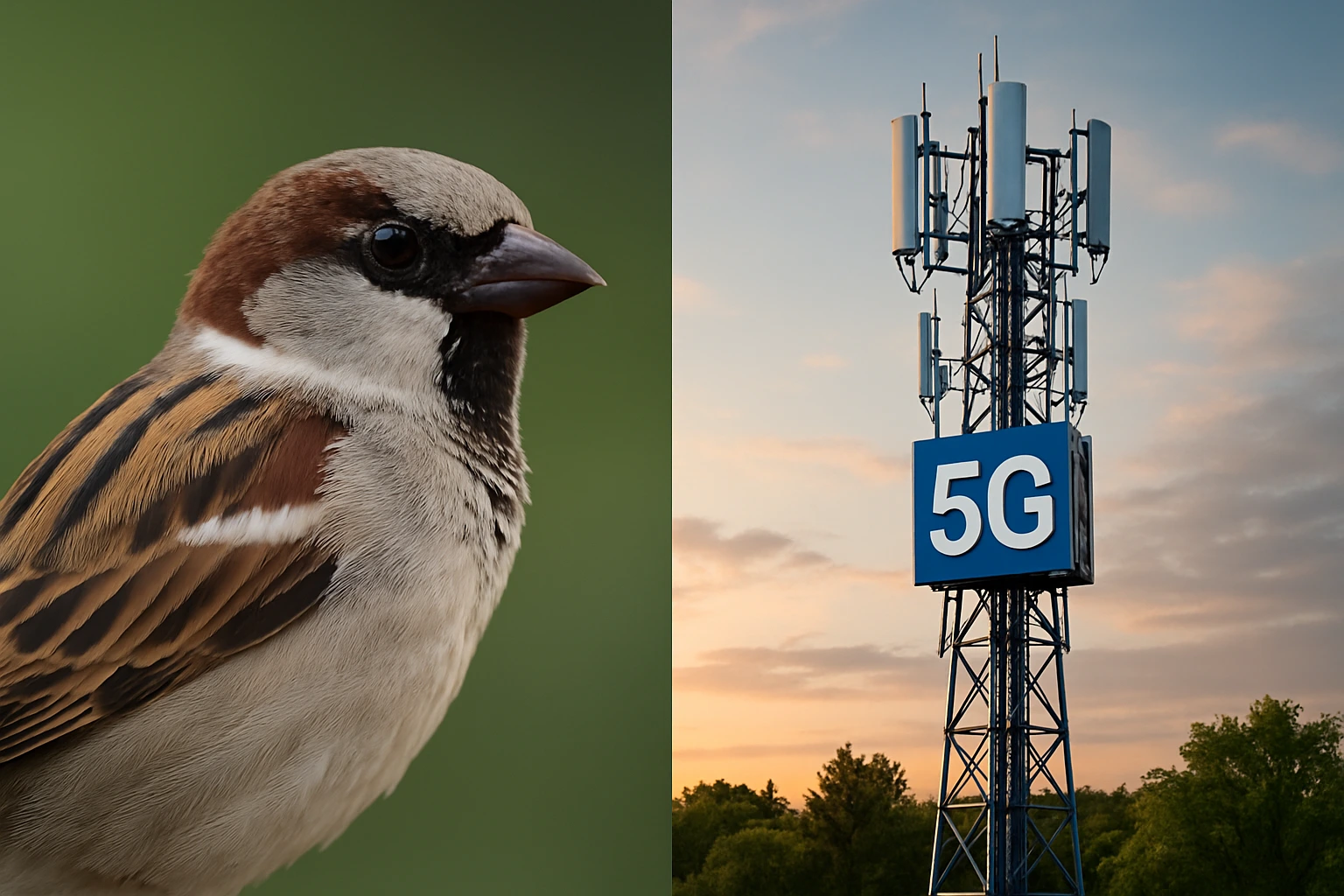
You’ve probably heard the buzz that 5G technology might be harming birds. It’s everywhere on social media – “5G waves frying birds,” or “The new network is wiping out wildlife.” But what’s really going on? Is the next generation of mobile tech a threat to our feathered friends, or just another internet myth?
Let’s break it down. First off, 5G is the latest upgrade in mobile networks promising faster internet and more reliable connections. It uses higher frequency radio waves than older generations, but these waves are still part of the non-ionising spectrum. What does that mean? Simply put, 5G waves don’t carry enough energy to damage cells or DNA directly, unlike harmful ionising radiation such as X-rays.
So, scientifically speaking, there is no clear evidence that 5G radio waves harm birds. Several studies have looked into this and so far, the findings do not support the idea that 5G causes harm to wildlife. Birds have lived alongside various sources of electromagnetic fields for decades, from radio towers to TV signals, without showing widespread negative effects.
What about the claims that birds are dropping dead near 5G towers? Some of these stories link sudden bird deaths to 5G testing sites. However, experts say these incidents usually have other explanations, such as disease, pollution, or natural causes. There isn’t any verified case where 5G has been confirmed as the culprit.
Another angle to consider is how the rollout of 5G might affect bird habitats indirectly. The installation of new cell towers and infrastructure can sometimes disturb nesting areas or natural landscapes. While this is more about construction than radio waves, it is worth being mindful about how technology expansion interacts with nature.
Environmental organisations are paying attention to these concerns and urging proper assessments before building new towers in sensitive areas. This way, we can balance progress with protecting wildlife.
It is understandable to worry about the unknown, especially with something as new and complex as 5G. But science helps us separate facts from fear. Current research shows that the radio waves used by 5G are not a threat to birds’ health.
Of course, ongoing studies continue, as technology and its impact on the environment keep evolving. If you’re keen to support bird life, simple actions like planting native trees, reducing pollution, and keeping cats indoors are proven ways to help far more than worrying about 5G.
In the end, 5G promises a world of technological benefits, and with careful planning, it can coexist with nature. So, next time you hear that 5G is frying birds, remember to check the facts before hitting share.
