



Green Dreams, Chopped Reality?
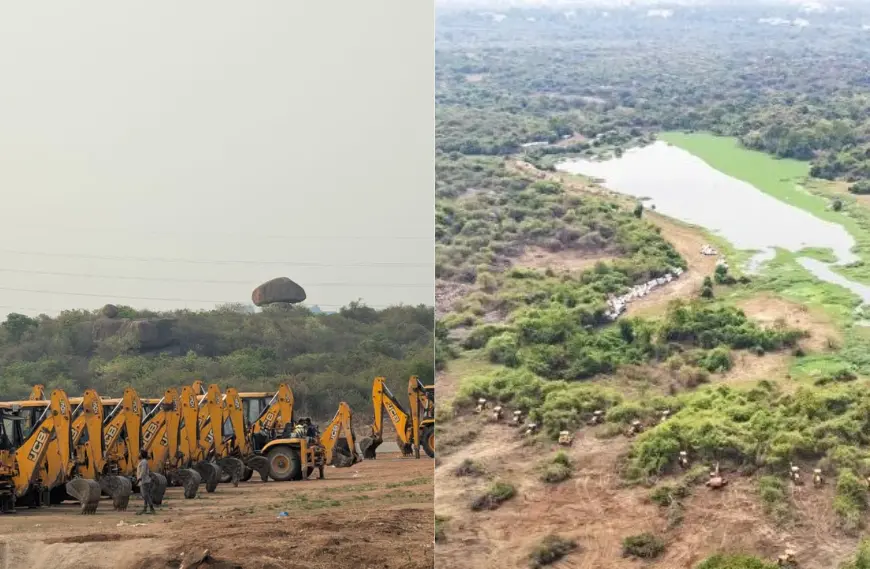
A controversial land development plan in Hyderabad has ignited public outrage and drawn national attention. The Telangana government’s proposal to auction 400 acres of green space in Kancha Gachibowli for development has sparked a fierce debate between urban growth and environmental preservation.
Auction Announcement and Forest Clearing
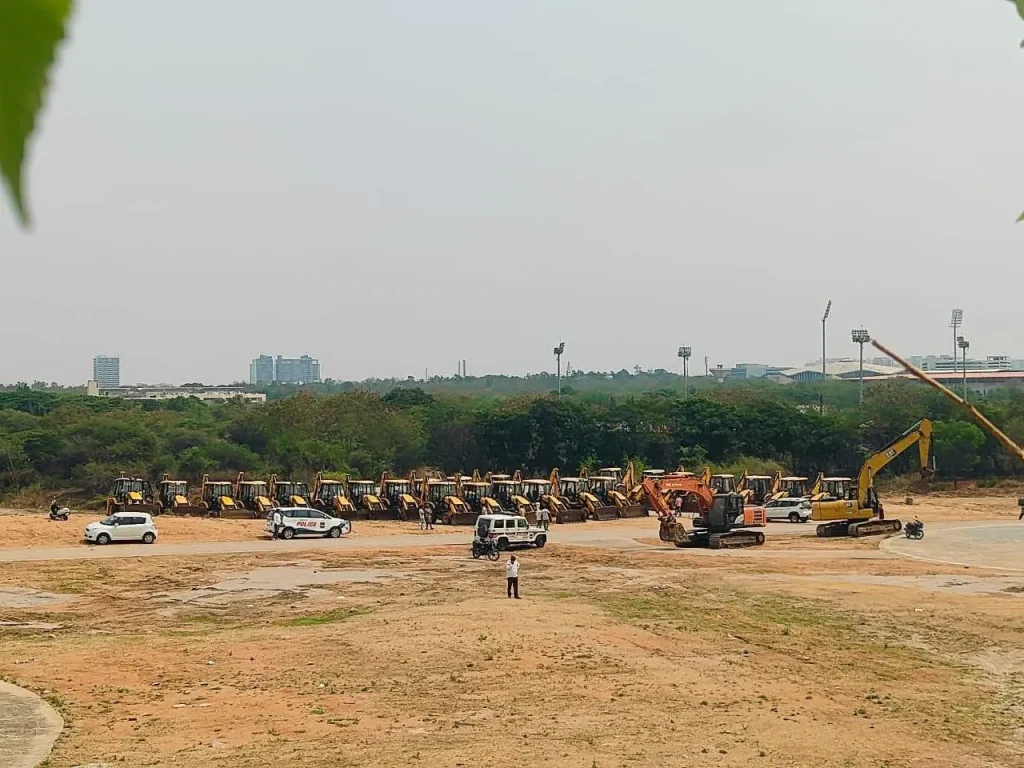
The Telangana government, through the Telangana State Industrial Infrastructure Corporation, announced plans to auction 400 acres of land in Kancha Gachibowli. This land, located near the University of Hyderabad, is considered an urban forest — home to diverse flora and fauna including over 237 bird species, spotted deer, and Indian star tortoises.
Officials stated the auction would generate over ₹10,000 crore and boost infrastructure development in Hyderabad’s western corridor. However, critics argue that the ecological cost is far too high.
Students and Activists Raise Alarm
Students and faculty from the University of Hyderabad raised strong objections to the project. They described the forested land as a biodiversity hotspot and essential green buffer in a rapidly urbanizing city. Social media campaigns gained momentum with hashtags like #SaveKanchaGachibowli and #SaveCityForest, and protesters circulated drone footage and field surveys showing dense tree cover and wildlife activity.
Activists and environmental groups questioned the logic of clearing a forest to create “eco-development,” calling it a contradiction in terms.
Legal Battle and Government Response
Amid growing protests, legal petitions were filed against the auction. The Telangana government clarified that the land is state-owned and not part of the university campus or protected forest. The government also stated that no lakes or major rock formations would be harmed.
At the time of writing, there has been no official stay issued by the Supreme Court to halt the auction or development. However, the matter continues to receive widespread public and media attention, and further legal developments remain possible.
What Lies Ahead?
The Kancha Gachibowli controversy has become a flashpoint in the ongoing conversation about sustainable urban planning. Supporters of the project argue that planned development can still include green elements, while critics insist that true sustainability means preserving existing ecosystems.
As discussions and legal proceedings continue, one question remains at the heart of the debate:
Can development be truly eco-friendly if it begins by destroying an actual forest?
