



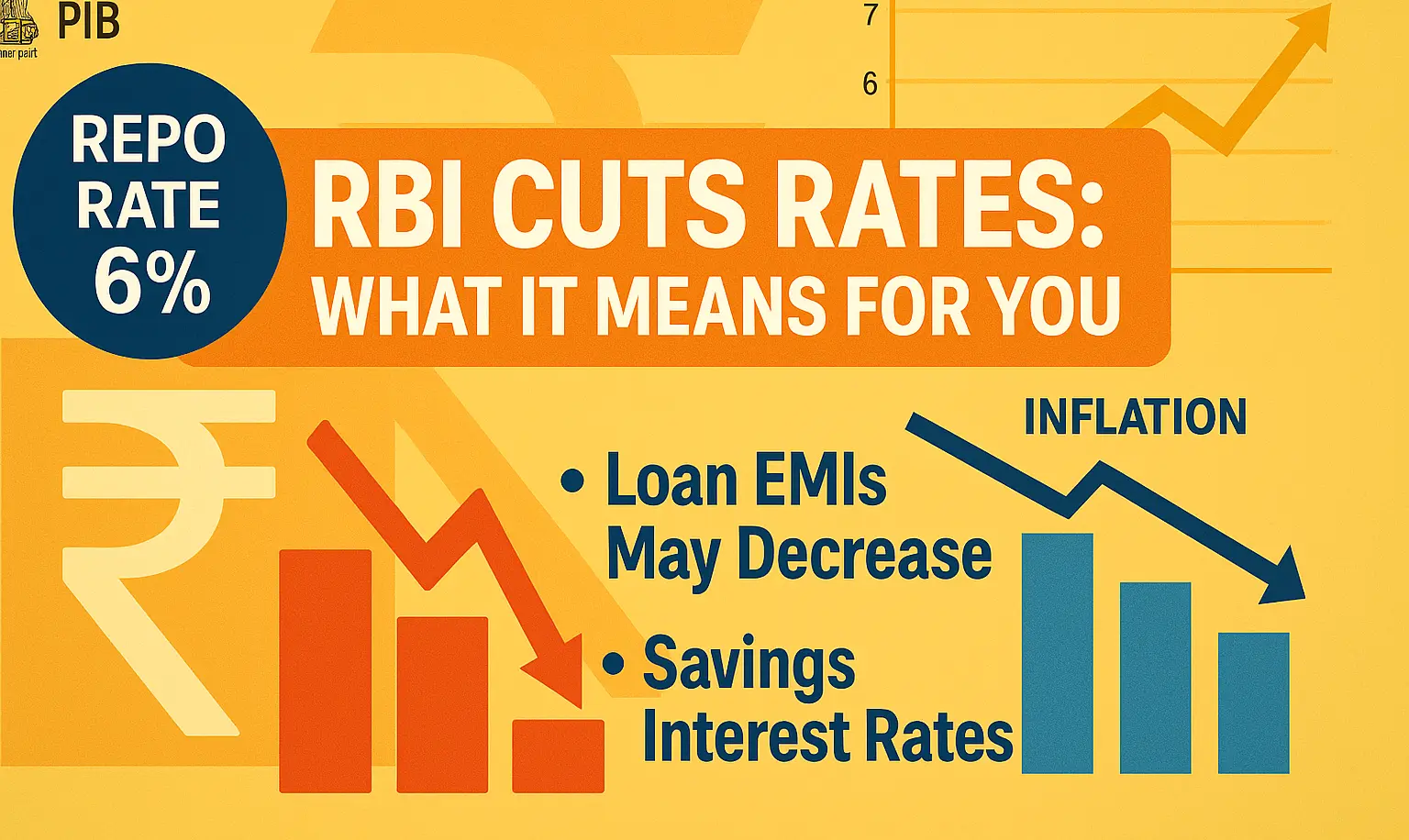
In a move to stimulate economic growth, the Reserve Bank of India (RBI) has reduced the repo rate by 25 basis points, bringing it down to 6%. This decision, announced during the 54th meeting of the Monetary Policy Committee (MPC), aims to make borrowing cheaper for businesses and individuals, encouraging spending and investment.
Key Highlights:
- Repo Rate Reduction: The repo rate, which is the rate at which the RBI lends money to commercial banks, has been cut to 6%. This means banks can borrow funds at a lower cost, potentially leading to reduced interest rates on loans for consumers.
- GDP Growth Projection: The RBI projects a 6.5% growth in the Gross Domestic Product (GDP) for the financial year 2025–26. This optimistic outlook reflects expectations of a recovering economy.
- Inflation Trends: Recent data indicates a decline in food inflation, offering relief to consumers. The RBI aims to maintain the Consumer Price Index (CPI) inflation around 4%, within a flexible band of ±2%.
Implications for Consumers:
With the reduction in the repo rate:
- Loan EMIs May Decrease: Borrowers might benefit from lower Equated Monthly Installments (EMIs) on home, auto, and personal loans as banks pass on the benefits of reduced borrowing costs.
- Savings Interest Rates: On the flip side, interest rates on fixed deposits and savings accounts might see a slight dip. Savers should stay informed and consider diversifying their investment portfolios.
Global and Domestic Context:
The rate cut comes amid global economic uncertainties, including fluctuating crude oil prices and trade tensions. Domestically, the RBI observes improvements in the agricultural sector and a revival in manufacturing, contributing to a positive economic outlook.
