



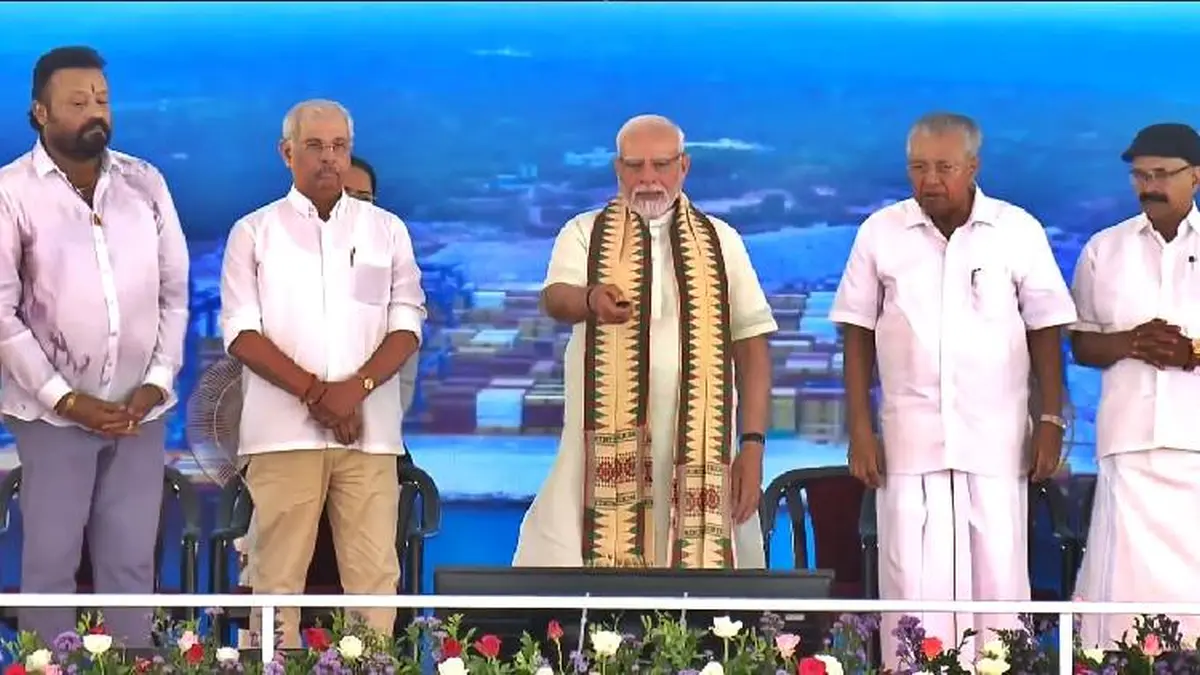
Prime Minister Narendra Modi inaugurated the Vizhinjam International Seaport in Kerala, marking a major milestone in India’s maritime ambitions. Touted as the country’s first fully dedicated transshipment port, Vizhinjam is expected to reshape cargo logistics in South Asia.
The inauguration ceremony drew attention from across the country. Modi highlighted the port’s strategic significance, stating it would reduce India’s dependency on foreign ports for container transshipment. He called Vizhinjam a “symbol of new-age development.”
What Makes Vizhinjam Special?
Located near Thiruvananthapuram, the port lies just 10 nautical miles from international shipping lanes. This geographical advantage allows large cargo ships to dock without the need for dredging. Its natural depth and breakwater protection reduce maintenance and operational costs.
Another unique feature is its capability to handle Ultra Large Container Vessels (ULCVs), making it competitive with international ports like Colombo, Singapore, and Dubai.
Phase One: A ₹8,900-Crore Launchpad
Constructed at a cost of ₹8,900 crore, the first phase of Vizhinjam port includes a container terminal, quay wall, and berths. Operated under a public-private partnership with Adani Ports, the facility is equipped to handle more than one million TEUs (twenty-foot equivalent units) annually.
Cargo operations will begin from June 2025. The first mother vessel, ‘San Fernando,’ arrived earlier this week, signalling the start of pre-operational trials.
Economic Ripple Effect
The port is expected to create thousands of direct and indirect jobs. It will also benefit sectors like logistics, warehousing, ship repair, and supply chain services.
Modi stated the project would transform Kerala into a global maritime hub. Experts believe the port will help India save billions in transshipment costs annually, boosting trade efficiency and export competitiveness.
Amaravati Revival in Andhra Pradesh
During the same South India visit, Modi relaunched the stalled capital development project in Amaravati, Andhra Pradesh. Addressing a public gathering, he announced ₹15,000 crore worth of infrastructure initiatives, including roads, housing, and public utilities.
Modi emphasised the central government’s commitment to balanced regional development, stating that both coastal and inland projects are vital for India’s progress.
Strategic Timing, Political Messaging
The twin inaugurations in Kerala and Andhra Pradesh come just months ahead of the general elections. Both states have seen political churn and public unrest over stalled infrastructure plans. Modi’s move to relaunch Amaravati and operationalise Vizhinjam is being seen as both a developmental push and a strategic outreach to southern voters.
What’s Next?
With Vizhinjam now active and Amaravati revived, the government aims to fast-track complementary projects, including inland waterways and multimodal logistics parks. The success of Vizhinjam may also inspire similar ventures along India’s east coast.
As India aims to become a $5 trillion economy, maritime infrastructure like Vizhinjam will play a crucial role in driving growth, reducing logistics costs, and strengthening global trade links.
