



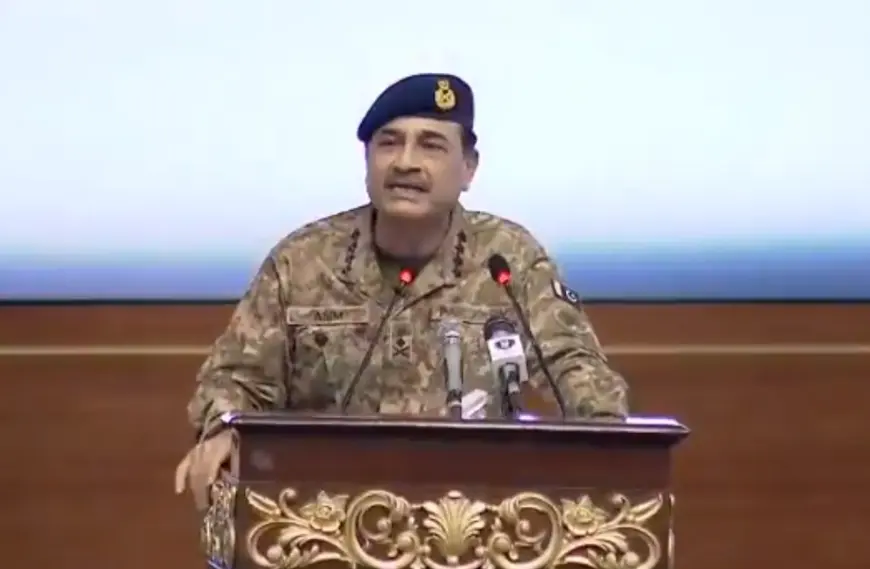
Pakistan’s history is marked by a powerful military that has often overshadowed its civilian leadership. Today, General Syed Asim Munir, the Chief of Army Staff (COAS) since November 2022, holds the reins more tightly than any other figure in the country’s political landscape. This profile delves into Munir’s rise, his leadership style, and the controversies that have ignited both admiration and fear within Pakistan and beyond.
The making of Asim Munir: from intelligence to the top
General Asim Munir’s journey to the top was shaped by his intelligence acumen and loyalty to the military institution. Unlike many of his predecessors, Munir did not hail from an elite military family, yet his strategic prowess and discipline catapulted him through the ranks.
- Early career: Munir was commissioned into the 23rd Frontier Force Regiment, serving along the tense borders of Kashmir and earning a reputation for discipline and efficiency.
- ISI and MI leadership: His significant rise began with leadership roles in Pakistan’s intelligence agencies. From heading Military Intelligence (MI) to a brief and controversial tenure as Director-General of the Inter-Services Intelligence (ISI) from 2018 to 2019, Munir’s name became synonymous with strategic, if sometimes controversial, decision-making.
- Controversy with Imran Khan: His abrupt removal as ISI chief in 2019 is believed to be linked to his strained relations with then-Prime Minister Imran Khan, who dismissed Munir over allegations of corruption involving Khan’s wife. This tension would later influence the military’s role in Khan’s ouster in 2022.
The economic overlord: control beyond the military
Since becoming army chief, Munir has expanded the military’s influence far beyond the army, embedding itself deep into Pakistan’s struggling economy. Critics have accused him of micromanaging key sectors to the military’s advantage.
- Running the Economy: Munir’s unprecedented engagement with business leaders, alongside his influence on the rupee-dollar exchange rate and economic policies, has led many to view him as the de facto finance minister.
- Business Empire: Under Munir, the military has tightened its grip on various industries, including real estate (DHA), agriculture (FFC), and even everyday items like food products (Askari Foods). Any opposition to this military-run economic system is met with heavy suppression.
Political engineering: the Munir Doctrine
Asim Munir has followed in the footsteps of past military rulers, but his approach to politics is even more direct. His doctrine of political engineering has steered Pakistan’s political future toward military dominance.
- Imran Khan’s Downfall: Munir’s backing of a political coalition to remove Imran Khan, alongside the subsequent crackdown on his party, Pakistan Tehreek-e-Insaf (PTI), marked a pivotal moment in Pakistan’s political landscape. Arrests, defections, and media blackouts have ensured that opposition parties remain weak.
- 2024 Elections: Evidence of widespread rigging and interference suggests that Munir’s military-backed political order will continue, ensuring that Pakistan’s future remains under the military’s control.
Foreign policy: A hardline stance
On the international front, Munir’s approach to foreign policy has been more aggressive than his predecessors, particularly in dealing with regional tensions.
- Afghanistan and India: Munir has taken a hardline stance on both Afghanistan and India. His push for the deportation of Afghan refugees has worsened relations with the Taliban, while his antagonistic rhetoric towards India over Kashmir has kept the region on edge.
- China and the US: While Munir has maintained strong ties with China, Pakistan’s deepening debt crisis continues to raise concerns. His relations with the United States have cooled, marked by a refusal to visit Washington, unlike previous military leaders.
Controversies and criticisms
Munir’s leadership has been marred by several controversies:
- Media Suppression: Journalists, like Imran Riaz Khan, have been detained without trial, and social media campaigns against critics have been widespread.
- Economic Mismanagement: Despite soaring inflation (40%), Munir has prioritized military spending while Pakistan faces a dire economic crisis, exacerbating the country’s financial instability.
- Crackdown on Dissent: The suppression of dissent within the military ranks and the civilian sphere has become a hallmark of Munir’s regime. Even retired generals face backlash for speaking out against his policies.
General Asim Munir – Biodata
| Field | Details |
|---|---|
| Full Name | General Syed Asim Munir Ahmed Shah |
| Date of Birth | 1960 (estimated) |
| Hometown | Rawalpindi, Pakistan |
| Military Career | – Commissioned in 23rd Frontier Force Regiment – DG Military Intelligence (MI) – DG ISI (Oct 2018 – Jun 2019) – Corps Commander Rawalpindi (2021–22) |
| Appointed COAS | 29 November 2022 |
| Controversies | – Abrupt removal as ISI chief – Alleged role in Imran Khan’s ouster – Crackdown on media & opposition |
| Key Policies | – Military-led economic interventions – Hardline stance on Afghan refugees – Political engineering |
Pakistan’s Unelected Ruler
General Asim Munir is not just Pakistan’s army chief; he is the most powerful figure in the country, wielding authority over its politics, economy, and foreign policy. While his supporters view him as a stabilizer, his critics argue that his authoritarian style is only deepening Pakistan’s crises.
His legacy will be shaped by whether he seeks to secure Pakistan’s future or simply maintain military control over the nation’s fate. For now, the shadow of GHQ looms larger than ever.
