



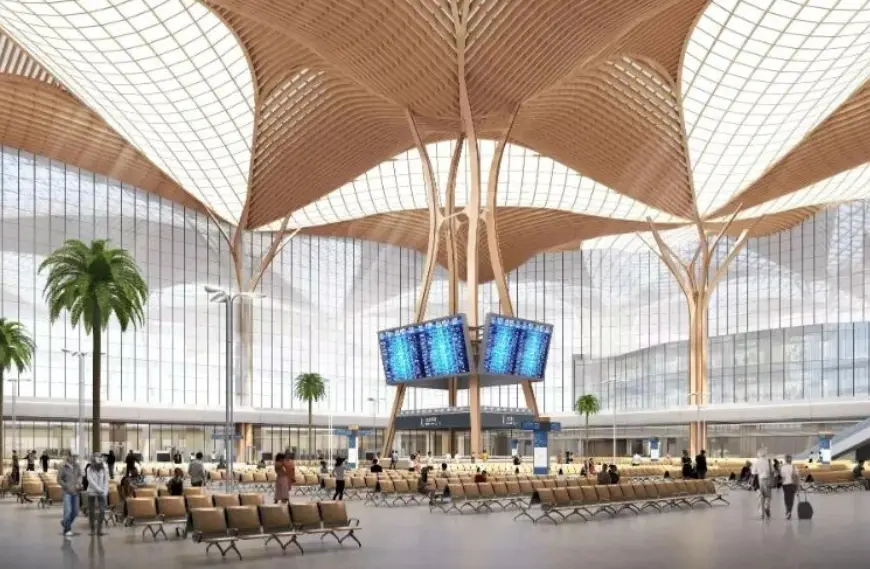
China’s new Chongqing East Railway Station is a marvel of modern engineering. With a construction area of 1.22 million square metres, it sprawls across an area equal to about 170 football fields. Built in just 38 months from the moment the blueprints were drawn up in May 2022, it stands today as the largest high-speed rail station in western China. It has 15 platforms and 29 tracks, and the building rises eight storeys high.
One of the features that make this station especially futuristic is its roof. It covers around 120,000 square metres and weighs about 16,500 tonnes. In scorching summer heat temperatures regularly reach 40 °C this roof posed serious safety and construction challenges. Engineers could not risk human-only labour for many tasks.
To overcome those challenges, robotics and automation were used extensively. Laser-guided bots handled ground leveling with millimetre precision and worked at about three times the speed of human crews. Glass installation robots lifted and placed heavy 800-kilogram glass panels with precise robotic arms. Patrol robots monitored safety on site checking for hard hats, misplaced vehicles, and inspecting quality at all hours. Welding and overhead pipe joints were also done by omni-directional welding robots capable of very fine accuracy. All of this helped cut labour costs, reduce waste, and significantly lower safety risks.
The station’s construction also responds to Chongqing’s rugged terrain. The city is mountainous, making large flat surfaces scarce. Building a massive transport hub that must connect multiple high-speed lines, serve thousands of passengers, and still fit into the urban fabric means engineers had to be smart about structure, drainage, foundations, and materials. Robotic work helped here too, particularly where manual work would be dangerous or imprecise.
Chongqing East is more than a station; it’s a landmark. Its scale, speed of construction, use of technology, and architectural ambition mark it as a structure built for the future. Its role in boosting connectivity linking to high-speed rails like the Chongqing-Xiamen line, among others means it will be more than just large: it will be useful. This “megastructure” sets new standards in safety, craftsmanship, and what modern infrastructure can achieve when innovation meets ambition.
