



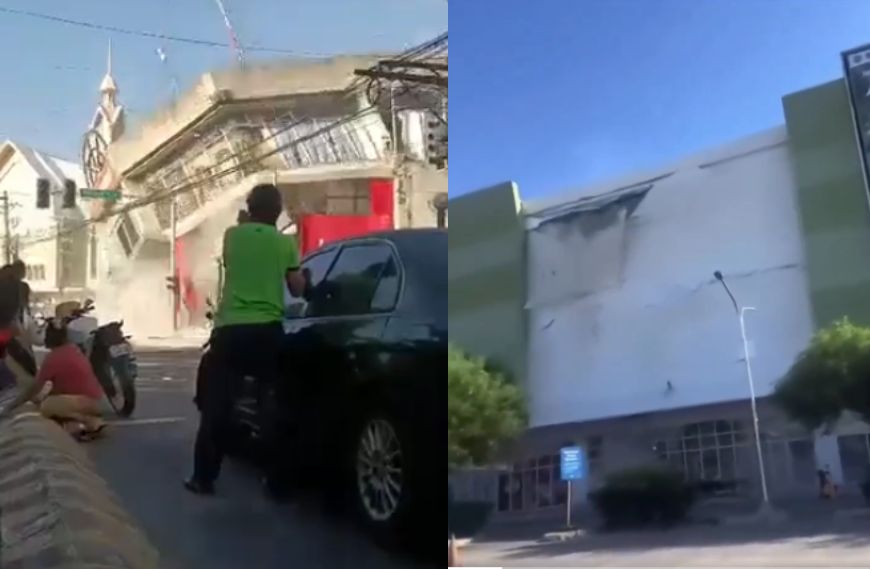
At exactly 7:37 a.m. on Monday, June 8, 2026, the ground beneath southern Mindanao in the Philippines ripped apart. A magnitude 7.8 earthquake struck offshore of Sarangani province the strongest to hit the country since 1990. Buildings cracked, roads split, and in General Santos, a commercial city of over 700,000 people, structures began to collapse. But within minutes of the shaking, something else was set in motion: a chain of warnings that would reach across Asia and tell millions of coastal residents to run.
The warning came within minutes
PHIVOLCS detected the quake at 7:37:41 a.m. and issued a tsunami warning within minutes wave heights of more than one metre above normal tides expected, arriving between 7:37 a.m. and 9:37 a.m. Nine coastal provinces were put on immediate alert: Sarangani, Davao Occidental, Tawi-Tawi, Sulu, Basilan, Zamboanga del Sur, Zamboanga Sibugay, Sultan Kudarat, and South Cotabato. President Marcos said: “Move to higher ground now. Life is more important than anything left behind.”
A regional warning that crossed borders
The Pacific Tsunami Warning Center warned of waves up to 3 metres for the Philippines and 1 metre for Indonesia and Malaysia. BMKG issued warnings for Maluku Islands, Sulawesi, and Borneo. Japan alerted its Okinawa coast. Hawaii was confirmed safe.
This coordination was built on lessons from the 2004 Indian Ocean tsunami, which killed nearly 228,000 people across 15 countries (corrected from 220,000 and 14 countries) partly because no such warning network existed at the time.
What the waves actually did
Waves of approximately 1 metre were monitored in Sultan Kudarat and Sarangani, with a 1.4-metre wave recorded at Kiamba town in Sarangani. An 83-centimetre tsunami was measured off Indonesia’s Sulawesi island, and 30-centimetre waves were recorded in Palau. The threat largely passed about five hours after the quake. Death toll: at least 19 dead, 200+ injured, 138 aftershocks recorded with the strongest at magnitude 6.7.
Why this region is so vulnerable
On August 17, 1976, a magnitude 8.0 earthquake (clarified to USGS figure) struck the Moro Gulf and generated waves as high as 9 metres, devastating 700+ kilometres of coastline. Between 5,000 and 8,000 died, 10,000 were injured, 90,000 left homeless. According to PHIVOLCS’ own official records, the tsunami caused 85% of deaths, 65% of injuries, and 95% of those reported missing because in 1976, there were no warnings.
The difference a warning system makes
On June 8, 2026, the system that did not exist in 1976 worked. Over 3.2 million students were affected across five regions. Buildings collapsed. But the tsunami did not become a mass casualty event.
Move. now. higher ground.
The ground will shake again in the Philippines. It always does. What matters is whether, when it does, the warning reaches people in time and whether they listen.
Subscribe Deshwale on YouTube
