



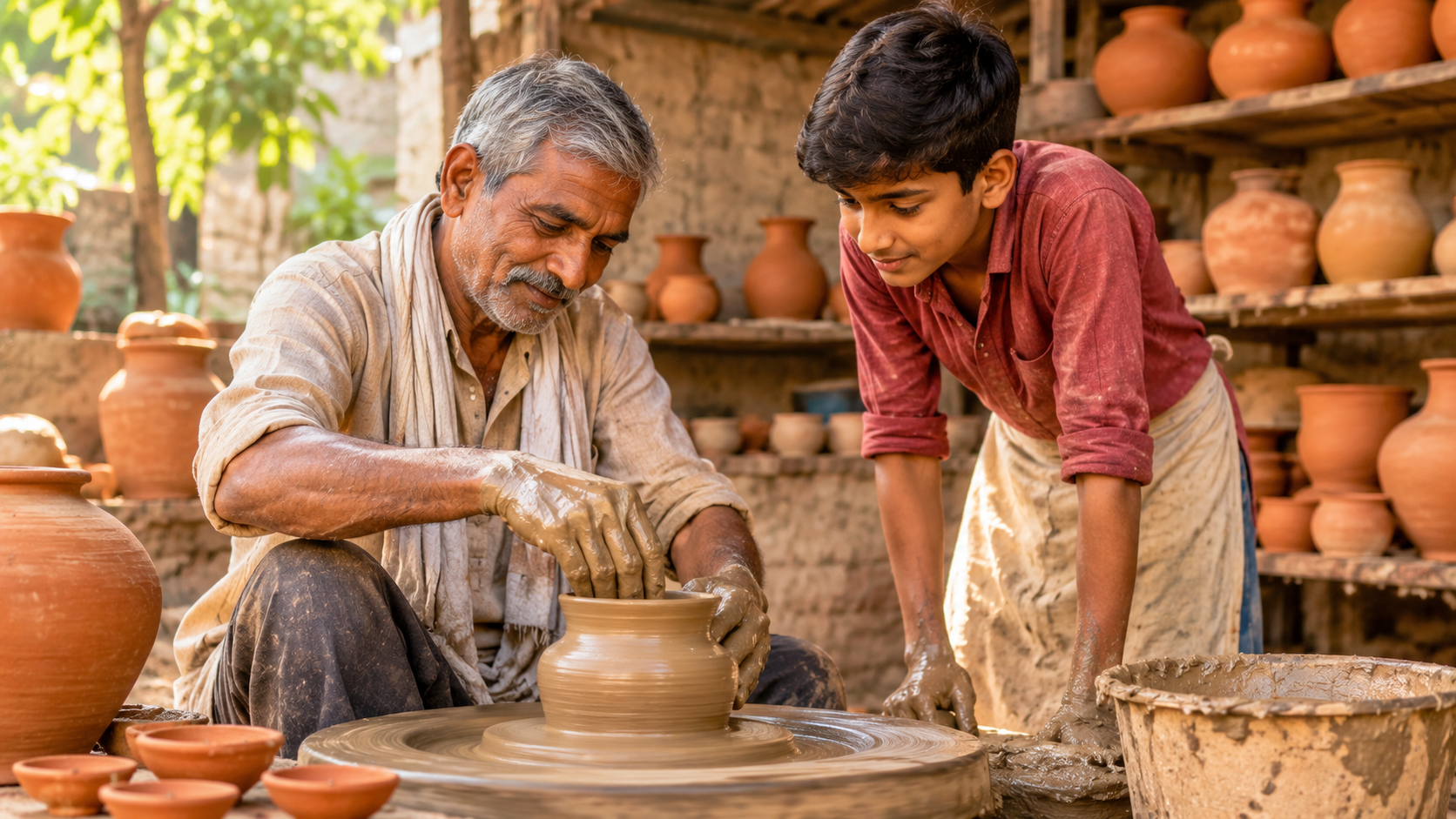
Before the sun is fully up, a potter’s wheel starts to turn in many small lanes across India. A lump of wet clay is placed at the center, wet hands press into it, and within a minute a pot begins to rise. For the families who do this work, clay is not only a material. It is how they earn a living, the skill they inherited, and the story they pass on.
The work begins long before the wheel. Clay is dug from riverbanks, ponds, or other water bodies. It is then dried, cleaned of impurities, and kneaded until it becomes smooth and ready to shape. This part is slow and tiring, and few people ever see it. A buyer in the market sees only the finished pot, but the family knows how many hours of effort sit inside it.
In most potter households, nobody works alone. A father or grandfather often sits at the wheel, while others in the family shape smaller items, decorate them, or set them out to dry. Children learn at home, first by watching and then by helping. There are no certificates and no classrooms. The skill passes from one pair of hands to the next, and over the years a potter’s fingers learn to feel when the clay is too wet or too dry.
Once shaped, the pots must be dried slowly and evenly. If they dry too fast, they can crack. Then comes the firing, which is the most uncertain part of the craft. If the heat rises too fast or burns unevenly, pots can crack or break. Even experienced potters sometimes lose part of a batch. Working by hand means accepting that some effort will not survive the fire.
The range of things they make is wide. Matkas and surahis keep water cool in summer, kulhads serve tea, and diyas light homes at Diwali. Potters also make planters, storage jars, cooking pots, and clay idols for festivals. Much of this work follows the calendar. Diwali is the busiest season for diya makers, and summer brings more demand for earthen pots and clay cups, so a family’s income can rise and fall with the seasons.
Life around clay is not easy. Plastic, steel, and factory-made goods are widely available, and they have pushed many potters out of the trade. Costs have gone up, and in many places good clay has become harder to find and more expensive. Some potters say landowners no longer let them dig, and others say the clay they now get has sand mixed into it. Many young people from potter families see little future in the work and look for steadier jobs elsewhere. Some families now make fewer pots than their parents did, or have stopped altogether.
Even so, there are reasons for hope. More people today prefer natural, handmade, and plastic-free products. Kulhads and earthen cookware are finding new buyers, and the ban on single-use plastic cups in some places has raised demand. Some potters now reach customers through online platforms. Government-supported electric wheels have made the physical work lighter for some families, although many older potters still prefer their traditional wheels.
A handmade pot carries something a factory product cannot. It may bear a faint mark of the maker’s thumb, and it is never exactly like the one beside it. These small differences are signs that a person made it. The craft also teaches patience, because clay cannot be rushed, and humility, because the fire has the final say. Everything the potter makes comes from the earth, and in time it returns to the earth.
If these families fade away, the loss will be more than economic. A body of knowledge passed down by hand for generations will go with them. So the next time you sip tea from a clay cup or drink water from an earthen pot, remember that a family somewhere shaped it, and that for many of them the wheel is still turning.
Subscribe Deshwale on YouTube
