








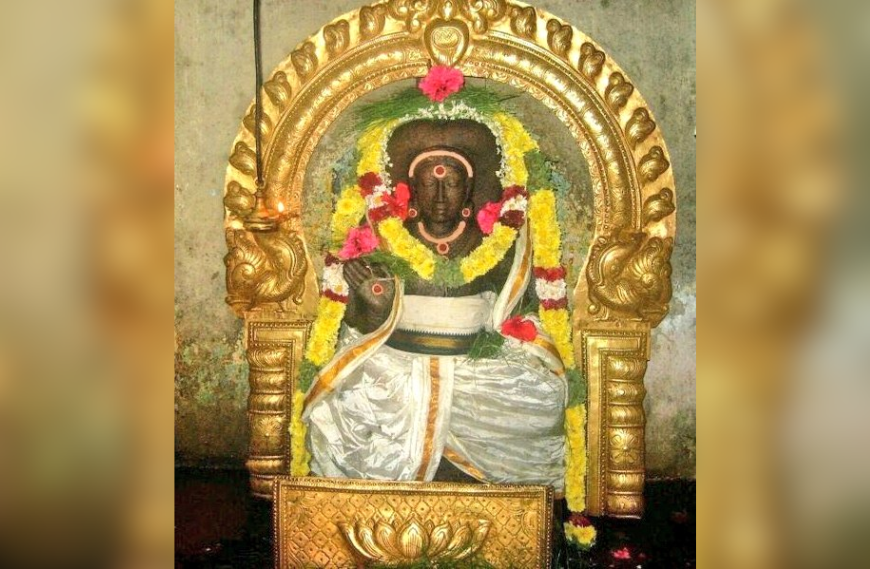
Imagine walking into a Ganesha temple expecting to see the familiar elephant-headed deity, only to find a divine form with a human face. It may sound surprising, but this rare form of Lord Ganesha is worshipped in Tamil Nadu.
Known as Adi Vinayaka or Nara Mukha Vinayaka, this unusual form is associated with the shrine near Muktheeswarar Temple at Thilatharpanapuri. Nara means human and Mukha means face, making Nara Mukha Vinayaka literally the “Human-Faced Vinayaka”.
For millions of devotees, Ganesha is instantly recognisable by his elephant head. Yet Hindu mythology describes a time when Ganesha had a human form.
The story behind the human face
According to Hindu tradition, Goddess Parvati created Ganesha in human form to guard her while she bathed. When Lord Shiva arrived and Ganesha stopped him from entering, the two became involved in a fierce confrontation. Shiva eventually beheaded Ganesha.
Parvati was heartbroken and demanded that her son be brought back to life. Shiva then sent his attendants to find the head of the first living being they encountered facing north. They found an elephant, and its head was placed on Ganesha’s body.
This is how Ganesha came to be known in his familiar elephant-headed form. The Adi Vinayaka shrine, however, represents the deity in the human-headed form described as existing before that transformation.
What makes the shrine particularly fascinating is that the idol does not merely look unusual. It gives devotees a visual connection to an earlier chapter of Ganesha’s story, making a familiar myth feel different when seen through a physical form.
A sacred place for ancestors
Thilatharpanapuri is also closely associated with ancestral rituals. Its name is derived from thil, meaning sesame, and tharpana, a ritual offering made to ancestors.
Another local tradition connects the place with Lord Rama. It is believed that Rama came here while performing the last rites for his father, King Dasharatha. According to the legend, the pindams offered during the ritual transformed into four Shiva lingams.
The place is therefore regarded as significant for devotees performing ancestral rites and seeking relief from what is traditionally known as pitr dosh.
There is something deeply human about why people continue to visit such places. Beyond rituals and mythology, temples connected with ancestors often become spaces where families pause, remember those who came before them and seek a sense of peace.
Adi Vinayaka is not simply a rare depiction of Lord Ganesha. The human-faced deity offers a different way of looking at one of Hinduism’s most familiar gods.
Sometimes, seeing a familiar divine figure in an unfamiliar form can make an age-old story feel new again.
Subscribe Deshwale on YouTube


