









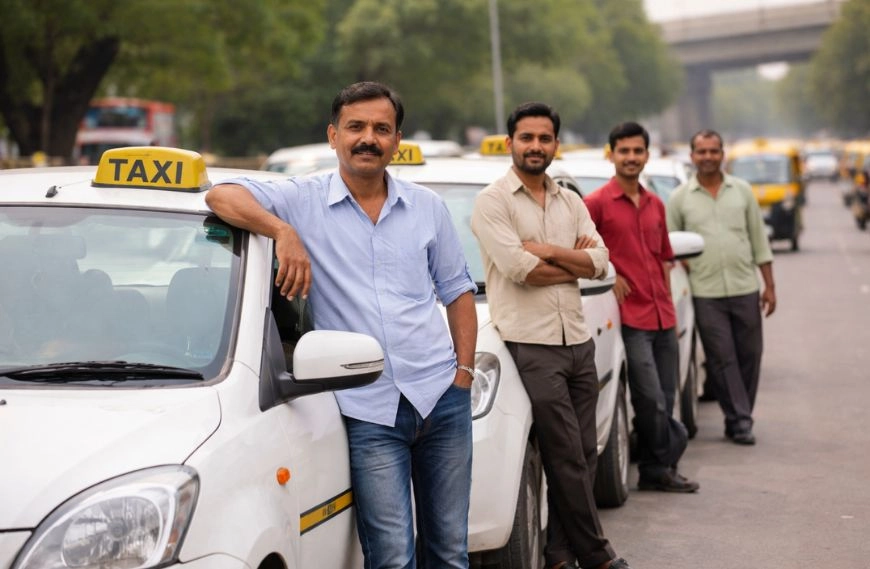
India’s crowded ride-hailing market has a new entrant, and this one is trying to change the rules rather than simply compete on price. Bharat Taxi, launched this week in Delhi, is being pitched as a platform built by drivers and for drivers, at a time when many cab operators feel increasingly squeezed by rising costs and shrinking margins. Unlike established ride-hailing companies, Bharat Taxi is structured as a cooperative, where drivers are not treated as contractors but as stakeholders in the business.
The idea behind the app is simple but ambitious. Drivers who join the platform become members of the cooperative by purchasing shares, giving them ownership and a say in how the service operates. There is no commission charged on rides, a major departure from existing platforms that typically take a significant cut from drivers’ earnings. For many drivers, this model offers something they have long demanded, greater control over their work and income.
The app was formally launched by Union Home and Cooperation Minister Amit Shah, who described it as part of a wider effort to strengthen cooperative enterprises in the country. Bharat Taxi has begun operations in select cities including Delhi-NCR, Ahmedabad, and Rajkot, and aims to gradually expand its footprint. During its early trial phase, the platform onboarded thousands of drivers and completed a limited number of rides, though usage remains modest compared to market leaders.
Some drivers who have signed up say bookings are still few, but they remain optimistic. Many see the app as a long-term investment rather than a quick alternative. The sense of ownership, they say, sets it apart from other platforms where policy changes often arrive without explanation or consultation. For passengers, the app promises transparent fares and protection from sudden price surges, though winning customer trust will be a gradual process.
The road ahead will not be easy. India’s ride-hailing sector is intensely competitive, dominated by companies with deep pockets, strong brand recognition, and established user bases. Technology, customer support, and reliability will be critical if Bharat Taxi hopes to scale beyond a niche audience. Industry observers note that cooperative ventures succeed only when execution matches intent.
Still, Bharat Taxi represents an important experiment in India’s digital economy. At a time when the gig workforce is questioning fairness and sustainability, the app raises a larger question about whether technology platforms can be built on shared ownership rather than extraction. Whether it becomes a viable challenger or remains a symbolic effort, Bharat Taxi has already started a conversation the industry can no longer ignore.
Subscribe Deshwale on YouTube


