









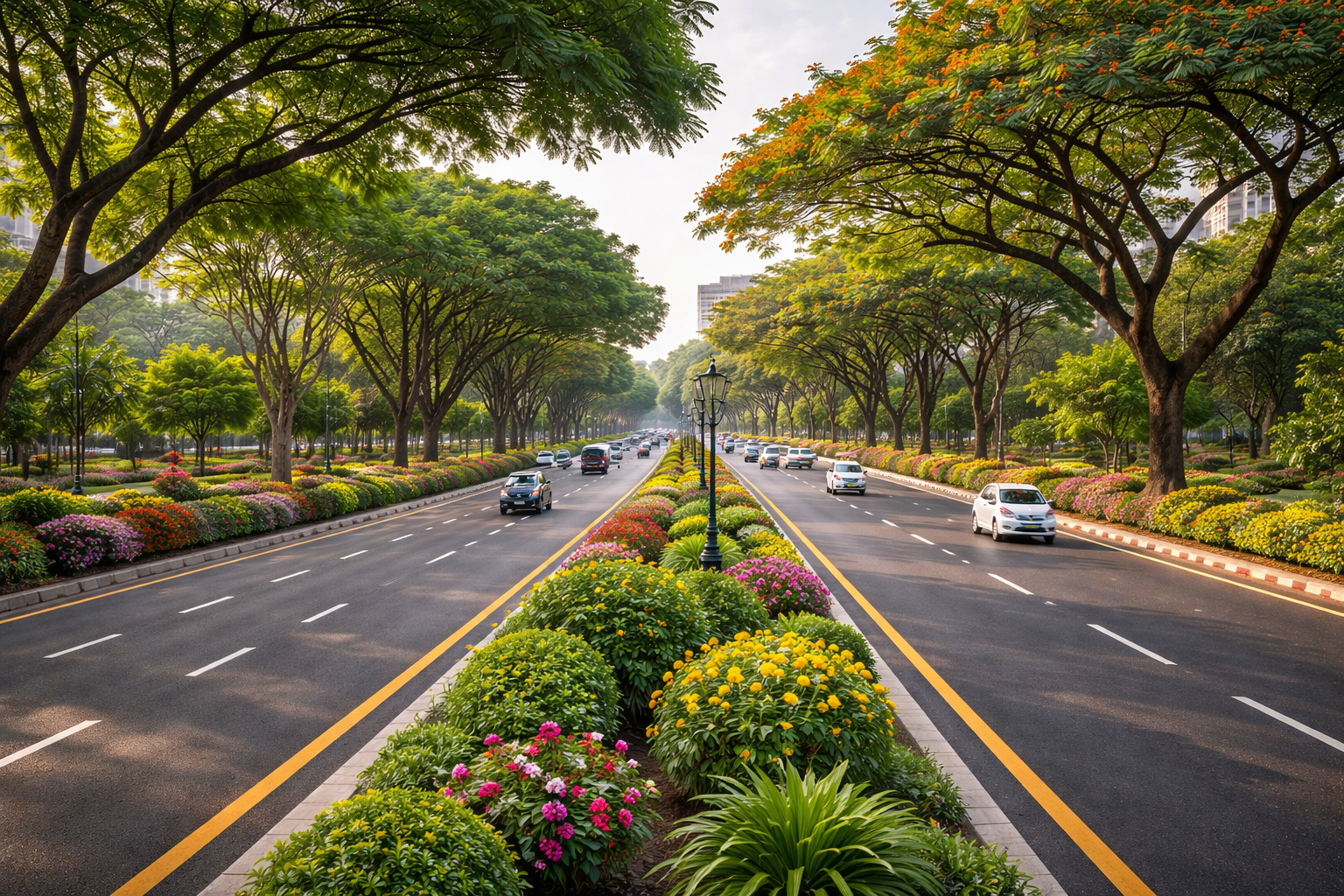
Boulevards have long been a symbol of urban elegance and functional planning in cities around the world. In India, their potential to transform roads into attractive, sustainable, and people-friendly spaces is only beginning to be realised. Boulevards do more than separate lanes or guide traffic; they enhance aesthetics, provide shade, reduce pollution, and create a sense of civic pride. Indian roads, whether in small towns or large cities, could benefit immensely if boulevards were incorporated as a standard feature rather than being limited to highways or expressways.
Traditionally, boulevards consist of wide streets lined with trees, ornamental plants, and flowers, often with pedestrian paths, seating areas, and sometimes cycling tracks. In India, common boulevard trees include neem, gulmohar, rain tree, and amaltas, chosen for their resilience to heat and drought. Flowering plants such as hibiscus, bougainvillea, marigold, and jasmines add colour and fragrance, while low shrubs and hedges help separate traffic from pedestrian spaces. These plantings not only beautify the cityscape but also improve air quality, provide cooling shade, and reduce urban heat islands.
The concept of boulevards has a rich global history. In Paris, the grand boulevards of Baron Haussmann in the 19th century reshaped the city, combining traffic management with architectural elegance. New York’s Park Avenue, London’s The Mall, and Melbourne’s St Kilda Road showcase how boulevards create iconic city imagery while offering practical benefits such as improved traffic flow and pedestrian spaces. Globally, well-designed boulevards contribute to urban identity, tourism, and the overall quality of life.
In modern India, boulevards have been gradually introduced since independence in 1947. Early efforts in cities such as New Delhi focused on major avenues like Janpath and Rajpath, blending ceremonial grandeur with functionality. Mumbai, Bangalore, and Chennai also saw boulevards integrated along key arterial roads. However, these developments have largely been confined to elite neighbourhoods or prominent city centres, leaving most urban and semi-urban areas without the benefits of shaded, landscaped streets. Expanding boulevards beyond these zones is essential for inclusive urban development.
Implementing boulevards across Indian cities requires strong municipal planning, political will, and dedicated funding. Constructing a boulevard is not simply about planting trees; it involves careful road design, soil preparation, irrigation planning, lighting, maintenance, and community engagement. Municipal bodies need to allocate substantial budgets, coordinate with horticultural experts, and ensure that planting choices are suited to local climates. Public-private partnerships and urban greening schemes could further support sustainable boulevard development.
Boulevards also contribute to safety and social well-being. They naturally slow traffic, provide clear lanes for pedestrians and cyclists, and discourage informal encroachments. Well-maintained boulevards become spaces for community interaction, morning walks, and recreational activities. Their presence transforms ordinary streets into vibrant public spaces while protecting local biodiversity and enhancing the city’s visual appeal.
To truly elevate India’s urban environment, boulevards must be integrated into city planning at every level. From small towns to metropolitan cities, no area should be denied access to green, tree-lined roads. With careful planning, adequate funding, and sustained municipal commitment, boulevards can become more than an aesthetic feature—they can be a defining element of India’s urban identity, promoting beauty, safety, and sustainability in equal measure.
Subscribe Deshwale on YouTube


