











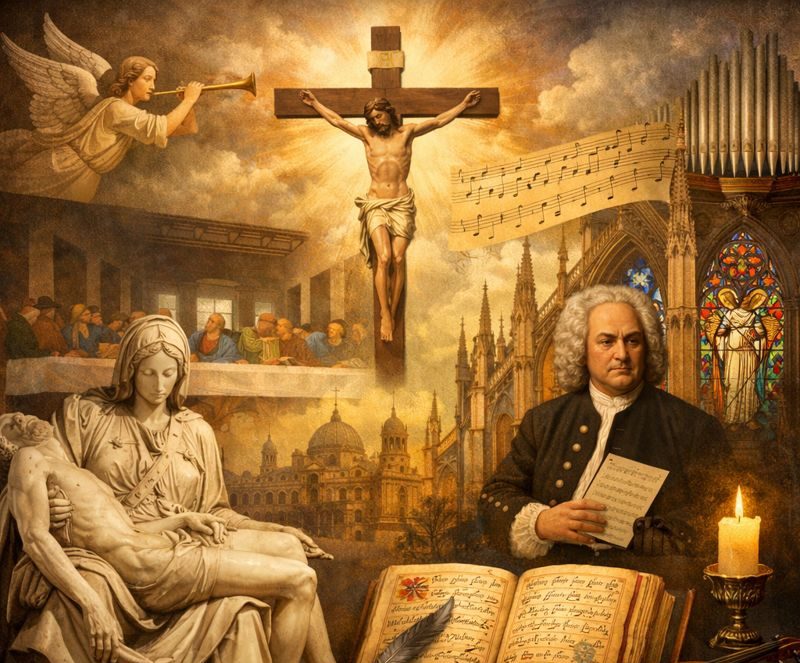
Christianity has been a powerful catalyst in shaping human creativity for nearly two thousand years. Its impact extends far beyond religious doctrine, deeply embedding itself in art, music, literature, and culture across the globe. This profound influence has left a lasting legacy, molding some of the most iconic works of human expression and continually evolving in response to changing times.
Christianity and the Evolution of Art
In its earliest days, Christianity was a persecuted faith, and believers used art as a discreet language to express their beliefs. Symbolic imagery such as fish, anchors, and vines appeared in Roman catacombs, serving both as signs of faith and secret communication tools. These early symbols laid the foundation for a rich tradition of Christian art that would flourish once the religion gained acceptance.
With Christianity’s rise to prominence, artists found an expansive canvas in biblical narratives. Paintings and sculptures became visual sermons, illustrating stories of faith, redemption, suffering, and salvation. Renaissance masters like Michelangelo and Leonardo da Vinci transformed religious art by combining anatomical precision with deep spiritual symbolism. The Sistine Chapel ceiling stands as a testament to this blend of artistry and theology, depicting biblical scenes with extraordinary emotional depth and technical mastery.
Christian iconography also humanized divine figures, emphasizing their emotions and struggles. This approach made religious stories accessible and relatable, helping spread Christian teachings through compelling imagery.
The Enduring Legacy of Christian Architecture
Christianity’s influence on architecture is arguably one of its most visible legacies. Early Christian worship spaces began as simple basilicas, but over centuries, these evolved into monumental structures like Romanesque and Gothic cathedrals. These buildings were not just places of worship; they were “sermons in stone,” designed to educate and inspire.
Gothic cathedrals, with their pointed arches, flying buttresses, and stained glass windows, directed worshippers’ gaze heavenward, symbolizing spiritual ascent. The vibrant stained glass windows illustrated biblical stories, allowing even illiterate congregations to engage with scripture visually. This fusion of art, architecture, and faith created immersive environments that shaped spiritual experiences.
Christian architecture also adapted to local cultures worldwide. In India, for example, churches incorporated regional styles such as Kerala’s sloping roofs and Indo-Gothic blends seen in Kolkata, showing Christianity’s ability to harmonize with diverse cultural landscapes.
Music and Literature: The Sound and Story of Faith
Christianity profoundly influenced Western music, creating forms and structures that have endured for centuries. Gregorian chants introduced a meditative, disciplined approach to worship through melody and silence. Over time, polyphonic music added harmony and complexity, with composers like Johann Sebastian Bach elevating music itself to a form of worship. The vocabulary of classical music—masses, requiems, hymns—still carries Christian roots, reflecting the faith’s lasting imprint on musical traditions.
Literature, too, bears Christianity’s mark. Early works like Augustine’s Confessions explored faith and morality deeply, setting precedents for narrative forms focused on sin, redemption, and salvation. Medieval morality plays dramatized Christian ethics for public audiences, reinforcing social values. Even as societies secularized, Christian themes continued to influence writers and thinkers, framing stories about human nature, sacrifice, and hope.
Christianity Today: Transformation, Not Decline
In many Western countries, traditional church attendance is declining, and younger generations often identify as “spiritual but not religious.” However, this shift does not signal Christianity’s demise but rather its transformation.
Globally, Christianity is growing rapidly in Africa, Latin America, and parts of Asia. These vibrant communities emphasize emotional worship, local leadership, and social engagement, reflecting a faith deeply connected to everyday life. This global south expansion is reshaping Christianity into a more multicultural, multilingual, and diverse religion.
Technology also plays a critical role in Christianity’s evolution. Digital platforms now enable sermons, prayers, and worship services to reach people beyond church walls. Online faith communities provide connection and support, democratizing access to religious life and challenging traditional hierarchical structures.
Furthermore, younger Christians often reject rigid doctrines but embrace core values like compassion, justice, and inclusivity. Faith is increasingly expressed through social action—education, healthcare, advocacy—rather than dogmatic assertion. This shift highlights a Christianity focused on lived experience and service, aligning ancient teachings with contemporary concerns.
A Living, Evolving Faith
Christianity’s influence on art, music, literature, and culture is undeniable and enduring. It shaped human creativity by embedding spiritual narratives into the very fabric of cultural expression. While institutional forms may be challenged in parts of the world, Christianity as a living faith is adapting, evolving, and expanding.
The transformation seen today marked by globalization, technological integration, and a focus on social justice reflects Christianity’s resilience and relevance. Far from fading away, it continues to inspire, provoke, and guide millions in new and profound ways.
In understanding Christianity’s timeless influence, we recognize not only its past contributions but also its ongoing role in shaping human thought, creativity, and values in an ever-changing world.
Subscribe Deshwale on YouTube


