









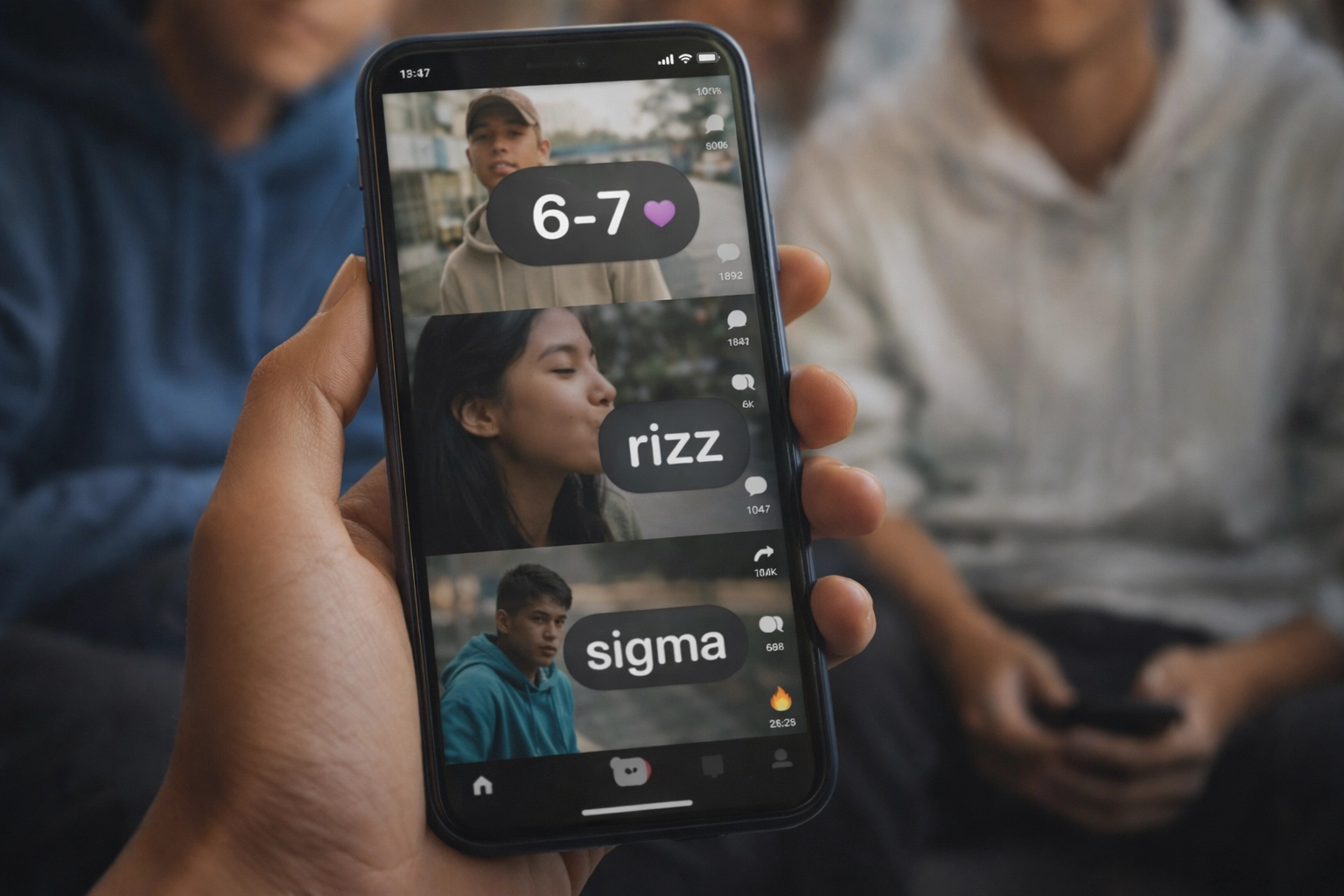
Language has always changed with time. Every generation creates its own words and expressions. But in the age of social media, the speed of change has become much faster. A slang word can appear suddenly, become popular across the internet, and disappear within months. The recent example of the phrase ‘6-7’ shows how quickly Gen Alpha trends rise and fall.
The Rise of ‘6-7‘
‘6-7’ became popular among younger internet users, especially Gen Alpha, the generation born roughly after 2010. The phrase began spreading through online videos, memes and music clips. Like many internet expressions, it did not have one clear meaning. In many cases, it was used simply as a playful or random phrase that sounded funny.
Young users repeated it in comments, captions and short videos. Soon it started appearing across platforms such as TikTok, Instagram and YouTube Shorts. The phrase became part of the constantly changing vocabulary that younger users share online.
One reason for its rapid spread was the way social media works. Short videos, memes and remixes make it easy for a phrase to travel quickly across thousands of accounts. When something sounds catchy or amusing, users repeat it in their own content. Within days, a random phrase can become a widely recognised internet joke.
The TikTok Effect
Platforms such as TikTok play a major role in shaping modern slang. Short videos allow trends to spread faster than ever before. A single clip with a catchy phrase can be shared, copied and recreated by thousands of users.
Gen Alpha spends a large part of its online time on platforms that rely on short and fast content. As a result, language on these platforms evolves quickly. Words and phrases often begin as small inside jokes in one community and then spread to millions of viewers.
Memes also help accelerate this process. A meme format can be reused again and again, with each user adding their own twist. When the same phrase appears in hundreds of meme videos, it quickly becomes part of the online conversation.
Gaming culture has also influenced this trend. Many young users discover slang through gaming streams, commentary clips and online communities. These spaces often create their own vocabulary, which then moves to other platforms.
Slang as a Shared Code
For young users, slang is more than just a set of funny words. It also works as a kind of shared code within their generation. Using the same phrases helps them recognise others who are part of the same online culture.
In earlier decades, slang usually spread slowly through schools, neighbourhoods or music scenes. Today, the internet allows it to spread globally within hours. A phrase that starts in one country can become popular with teenagers around the world in a very short time.
This rapid spread also means that slang changes much more quickly than before. New words appear constantly, while older ones disappear just as fast.
When a Trend Becomes ‘Too Mainstream’
One of the interesting patterns in internet culture is that a slang word often begins to lose its appeal once it becomes widely known. When a phrase moves beyond its original community and appears in mainstream media or everyday conversations, younger users may stop using it.
This is exactly what seems to be happening with’6-7′. As more people started discussing the phrase online and in media reports, some younger users began treating it as outdated.
For many members of Gen Alpha, slang works best when it feels new and exclusive. Once parents, teachers or news websites start explaining the meaning of a phrase, the sense of novelty often disappears.
The Fast Life of Internet Trends
The story of ‘6-7’ reflects a broader change in how internet culture works today. Online trends move at an extraordinary speed. A joke, sound clip or phrase can become viral in days, reach millions of users, and then fade away just as quickly.
This fast cycle is partly driven by the algorithms used by social media platforms. These systems constantly promote new content to keep users engaged. As a result, fresh trends appear all the time, pushing older ones out of the spotlight.
For Gen Alpha, this rapid change is simply part of everyday online life. They are used to discovering new phrases and memes almost every week.
A Language That Never Stands Still
Despite how quickly slang words appear and disappear, they remain an important part of youth culture. They show how young people experiment with language and use humour to connect with one another.
The rise and fall of ‘6-7’ is a reminder that internet culture moves quickly. What feels new and exciting today may feel old tomorrow. But even as one phrase fades away, another will soon take its place.
In the fast-moving world of online trends, the life cycle of slang has never been shorter. And for Gen Alpha, that constant change is exactly what keeps the internet fun.
Subscribe Deshwale on YouTube


