



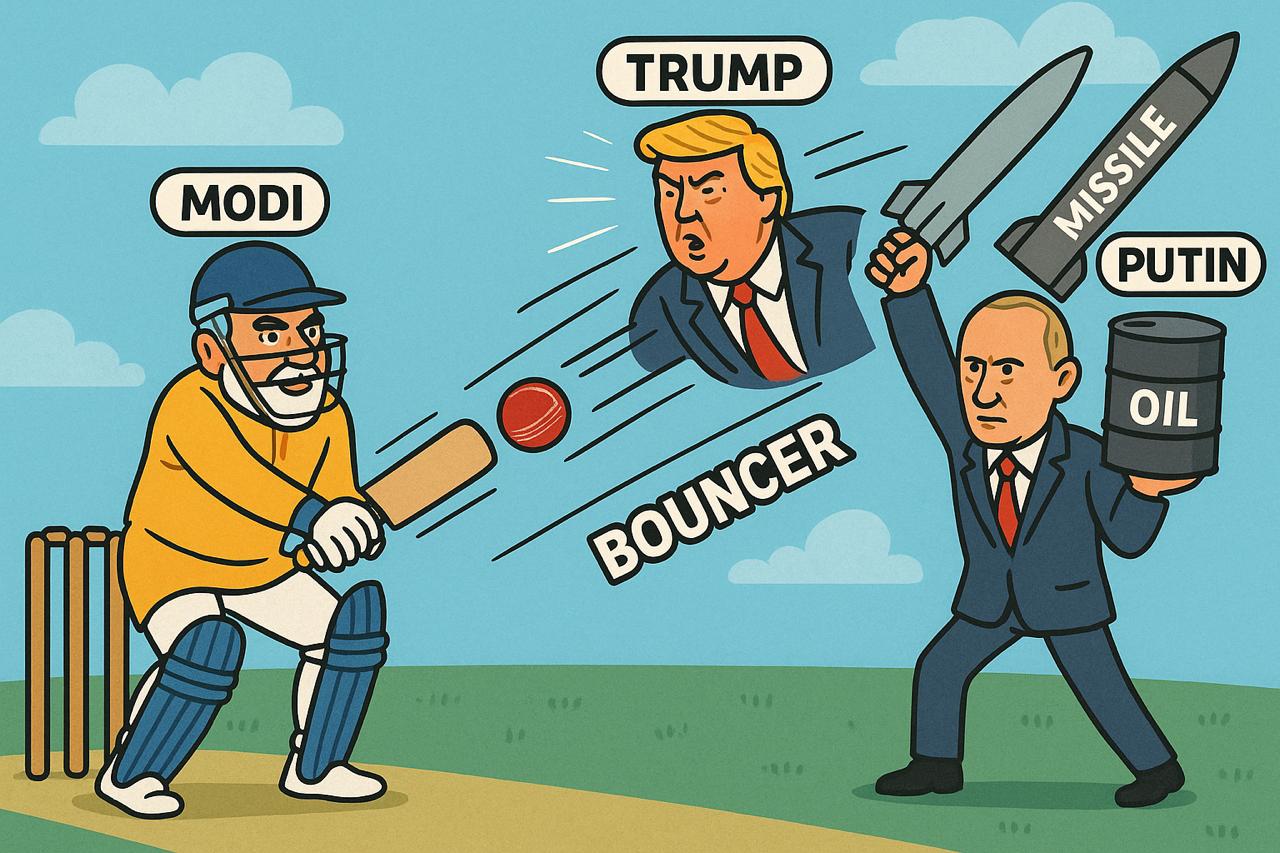
In the final over of a tense global match, the world’s eyes are fixed on India. The bowlers are powerful — the United States, the European Union, and other economic heavyweights — each delivering aggressive bouncers of tariff threats and deceptive spin balls of conditional trade deals. The scoreboard shows pressure, but the Indian side has something far deeper than runs — commitment, composure, and conviction.
India is not batting just to survive this over. It is determined to knock the global economic power centers out of their comfort zones and redefine the rules of the game itself.
The Pitch: Global Pressure, National Clarity
The diplomatic field has turned into an economic battlefield. The world expects India to play by their timing, their pitches, and their formats. Yet, under Prime Minister Narendra Modi’s captaincy, India is demonstrating that strategic patience is also a winning stroke.
Commerce and Industry Minister Piyush Goyal’s firm statement — “India will not negotiate with a gun to its head” — was not mere rhetoric. It was a front-foot drive straight down the ground — an assertive reminder that India will no longer play under the shadow of fear or favour.
And then came a powerful act of clever diplomacy at the ASEAN Summit in Malaysia — PM Modi attending virtually, while External Affairs Minister Dr. S. Jaishankar represented India in person. By avoiding a direct meeting with former US President Donald Trump, Modi subtly reshaped the diplomatic pitch. It was not avoidance — it was strategy. It sent a quiet but firm message: India decides its timing, its format, and its partnerships.
This is diplomacy in motion — a power game of silence and signal, showing that India will not play second fiddle in any superpower’s orchestra.
The New Playbook: From Survival to Supremacy
India’s trade philosophy is evolving from reactive defence to strategic counterattack.
- No Deadline Diplomacy: India refuses to rush into any deal that undermines its autonomy. A poor trade agreement done fast is worse than a good one done late.
- Tariff Immunity Mindset: “If there’s a tariff, there’s a tariff.” The era of fear-based compliance is over. India is learning to play off the back foot — calmly absorbing pressure and hitting back through diversification and domestic resilience.
- Sovereignty in Strategy: Energy, defence, or food — India will source where it suits national interest, not foreign approval. The independence in buying Russian oil or resisting Western trade conditioning marks a clear statement: India bats for India first.
Modi’s Global Power Game: Positioning India at the Centre of Multipolar World
- The world is watching India not as a participant, but as a pivot.
- BRICS 2026 Summit: India will host the next BRICS Summit — a stage that will define global economic dialogue. With President Putin visiting India in December, and the Ukraine–Russia conflict at peak intensity, India’s role as a balancing power is undeniable.
- Yuan as BRICS Currency – India’s Clear No: While China pushes the yuan-based trade settlement under the BRI framework, India stands firm — no compromise on currency sovereignty. India believes in BRICS cooperation, not currency dependency.
- China’s BRI Expansion: As China builds corridors for control, India is building alliances for autonomy — from the India–Middle East–Europe Corridor (IMEC) to strategic Indo-Pacific logistics routes.
- QUAD on Standby: The QUAD group — India, US, Japan, Australia — remains an open card. India keeps it on the table, using it as leverage, not liability.
- ASEAN Diplomacy: By sending Jaishankar and attending virtually, Modi has ensured presence without pressure, and influence without interference.
Each move — quiet, calibrated, and calculated — is reshaping how global powers read India’s playbook.
Economic Diplomacy Rooted in Domestic Strength
- Behind every diplomatic stroke lies India’s domestic foundation. Modi’s long-term commitment is not just global positioning — it is grassroots protection.
- Farmers: Ensuring MSP safety nets, agri export incentives, and domestic buffer stocks keep India’s food security non-negotiable.
- Dairy & Poultry: Refusing trade deals that threaten Indian dairy and poultry markets — especially against heavily subsidized Western imports — shows Modi’s loyalty to rural livelihoods over global applause.
- Defence Independence: “Make in India” in defence is no longer a slogan — it’s a shield. Indigenous missile systems, drones, and naval tech underline India’s new self-reliance doctrine.
India’s message is crystal clear: Economic independence and national dignity are not for sale.
| Sector | Pressure Faced | Strategic Response |
|---|---|---|
| Spices, Nuts, Agri Products | High US tariffs up to 50%. | Expand into Middle East, ASEAN, and Eastern Europe. Strengthen brand India with GI-based premium positioning. |
| Textiles & Apparel | Lost tariff parity with Vietnam/Bangladesh. | Move up value chain — technical textiles, fashionwear, and sustainable cotton clusters. |
| Pharmaceuticals | Regulatory bottlenecks in the West. | Build API self-reliance, focus on Africa and Latin America partnerships. |
| Marine & Processed Foods | Tariff and sustainability barriers. | Diversify with ready-to-cook and value-added certified products. |
| Gems, Jewellery, Ceramics | US import duties remain high. | Target luxury markets in Middle East and ASEAN; use e-commerce for direct global reach. |
| Engineering Goods | Contracting demand from Western partners. | Forge joint ventures in developing markets; innovate in product customization. |
The Last Over is Ours
The last over of this match will not decide whether India survives — it will decide how India leads.
By rejecting pressure, maintaining discipline, and choosing vision over validation, India has already shown that it is not playing on others’ terms anymore. The nation’s bat is steady, the eyes are on the ball, and the boundary line — the global economic order — is about to witness a new power hit.
The crowd may still be watching, but the momentum has shifted. India is no longer batting for survival — it is batting for history.
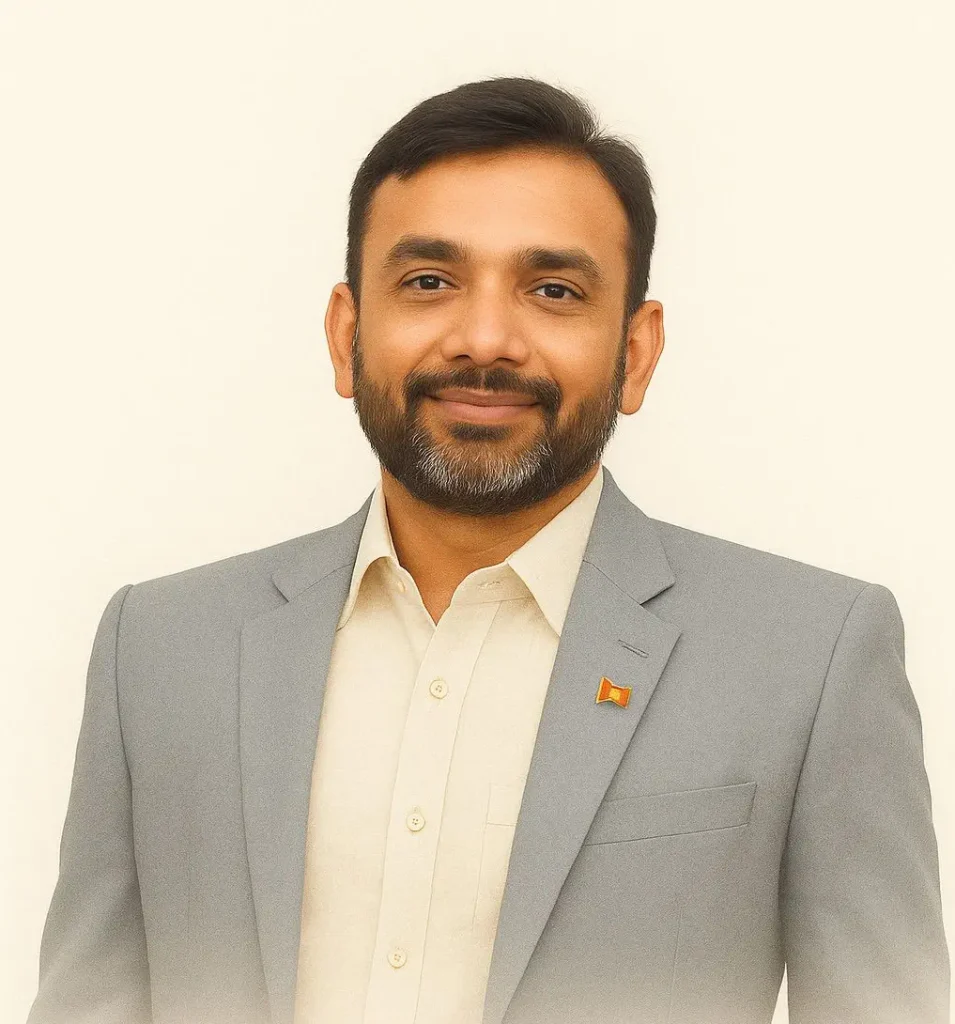
Secretary – International Business Foundation, PhD (Pursuing)
Subscribe Deshwale on YouTube
