



By: Hiren Gandhi
As geopolitical tensions continue to reshape global energy markets, India is emerging as one of the key beneficiaries of a rapidly changing oil landscape. Rising tensions in the Middle East, ongoing friction between Iran and the United States, and uncertainty surrounding the Strait of Hormuz have once again highlighted the importance of energy security in international relations.
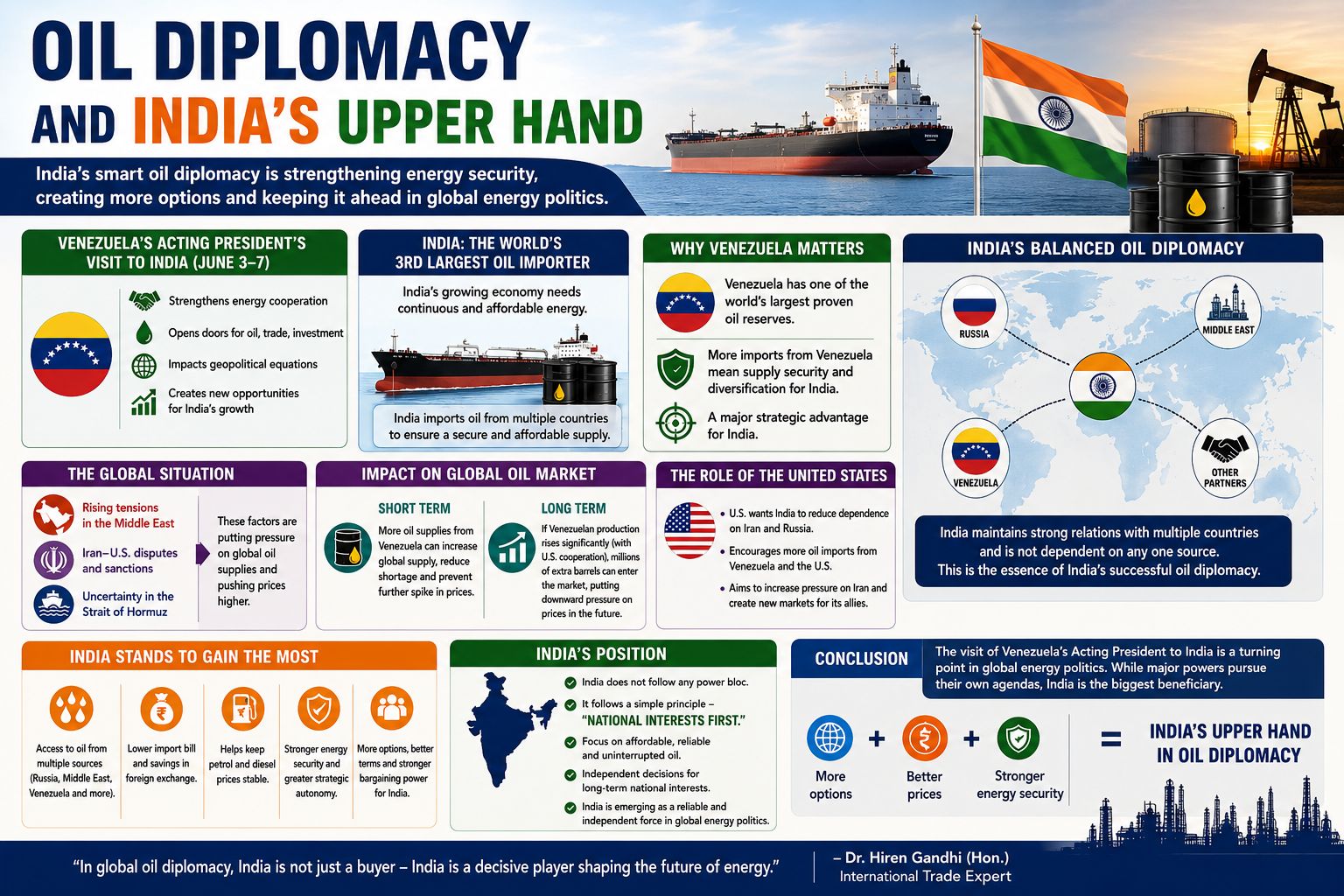
Against this backdrop, the visit of Venezuela’s Acting President Delcy Rodríguez to India from June 3 to June 7 assumes considerable significance. The visit goes beyond conventional diplomacy and reflects the growing importance of energy partnerships, trade relations, investment opportunities, and geopolitical strategy.
India is currently the world’s third-largest importer of crude oil. As one of the fastest-growing major economies, the country requires a stable and affordable supply of energy to sustain growth. Traditionally, India’s oil imports have been sourced largely from the Middle East, Russia, and a number of other producing nations. However, changing global dynamics have encouraged New Delhi to diversify its energy supply chain and reduce dependence on any single region.
Venezuela’s role in this strategy is particularly important. The South American nation possesses some of the world’s largest proven oil reserves. Greater energy cooperation between India and Venezuela could provide India with an additional source of crude oil while strengthening long-term supply security.
India’s Balanced Energy Strategy
The evolving energy equation is also influenced by the strategic interests of the United States. Washington has consistently encouraged India to reduce its dependence on Iranian and Russian oil while expanding imports from alternative suppliers, including Venezuela and the United States itself.
Despite these pressures, India has maintained an independent and pragmatic foreign policy. Rather than aligning exclusively with any one power bloc, New Delhi has pursued a diversified energy strategy. India continues to import oil from Russia, maintains strong ties with Middle Eastern producers, and is now exploring deeper engagement with Venezuela.
This balanced approach has become one of the defining features of India’s oil diplomacy.
Potential Impact on Global Oil Markets
The implications of stronger India-Venezuela energy ties extend beyond bilateral relations. Global oil markets remain sensitive to developments in the Strait of Hormuz, a crucial shipping route through which a significant portion of the world’s oil supply passes.
Concerns over potential disruptions have contributed to elevated Brent crude prices in recent months. Increased Venezuelan exports to major consuming nations, including India, could help ease concerns about supply shortages and bring additional stability to international markets.
The long-term impact could be even more substantial. With some of the largest oil reserves in the world, Venezuela has the potential to significantly increase production if investment and international cooperation improve. Additional supplies entering global markets could place downward pressure on oil prices and improve overall market stability.
India Poised to Benefit
For India, the advantages are considerable. Access to oil from Russia, the Middle East, Venezuela, and other suppliers strengthens the country’s negotiating position while reducing vulnerability to geopolitical disruptions.
A diversified import portfolio can help contain the country’s energy import bill, conserve foreign exchange reserves, and support price stability for consumers. More importantly, it enhances India’s overall energy security at a time when global uncertainty remains high.
India’s ability to maintain productive relationships with competing geopolitical actors has become one of its greatest strengths. Rather than relying on a single supplier, the country continues to build a broad network of energy partnerships.
A Growing Influence in Energy Politics
The current situation also reflects broader shifts in global energy politics. While the United States seeks to preserve its influence in energy markets and Venezuela looks to expand its export opportunities, India is focused on securing affordable and reliable energy supplies that serve its national interests.
This approach has helped position India as a credible and independent player in international energy diplomacy. The country is increasingly viewed not merely as a major consumer of oil, but as an influential actor whose decisions can shape global demand patterns and market dynamics.
The visit of Venezuela’s Acting President to India highlights the growing importance of energy diplomacy in an uncertain world. While major powers continue to pursue their strategic interests, India appears well positioned to benefit from changing geopolitical realities.
With greater diversification of supply sources, stronger bargaining power, and an expanding network of energy partnerships, India is steadily strengthening its energy security.
In today’s complex energy landscape, India is no longer just an oil importer. It is emerging as a strategic force capable of influencing the direction of global energy markets. The country’s balanced and independent approach to oil diplomacy may well prove to be one of its most significant geopolitical advantages in the years ahead.

Secretary — InGlobal Business Foundation (IBF)
Director — ReNis Agro International LLP, Ahmedabad, India
Subscribe Deshwale on YouTube
