



There is a question that nobody in Raisina Hill asks out loud, but which sits, unspoken, at the centre of every major Indian foreign policy decision of the last two decades. It is not a complicated question. It goes like this: can India actually do what it wants, or does it need to check first?
In March 2026, that question stopped being rhetorical.
India, the world’s fifth largest economy, a country of 1.4 billion people that routinely describes itself as a Vishwaguru and a rising civilisational power, formally approached the Trump administration to ask for permission to buy liquefied natural gas from Russia. Not to ask for military support. Not to seek diplomatic cover on a contested border. To buy gas. The kind that keeps stoves lit and cylinders full in homes across Patna and Pune and Palakkad.
The fact that this required an American nod at all is the story. Not the LNG deal. Not the sanctions. Not the Russia angle. The story is that India has arrived at a moment where its most basic sovereign act, deciding where to source the energy that heats its food and powers its factories, is subject to the approval of a foreign government. And the further, harder story is that India got here not through conquest or coercion but through a long series of choices made by its own political and institutional establishment.
How the Hormuz Crisis Forced the Question
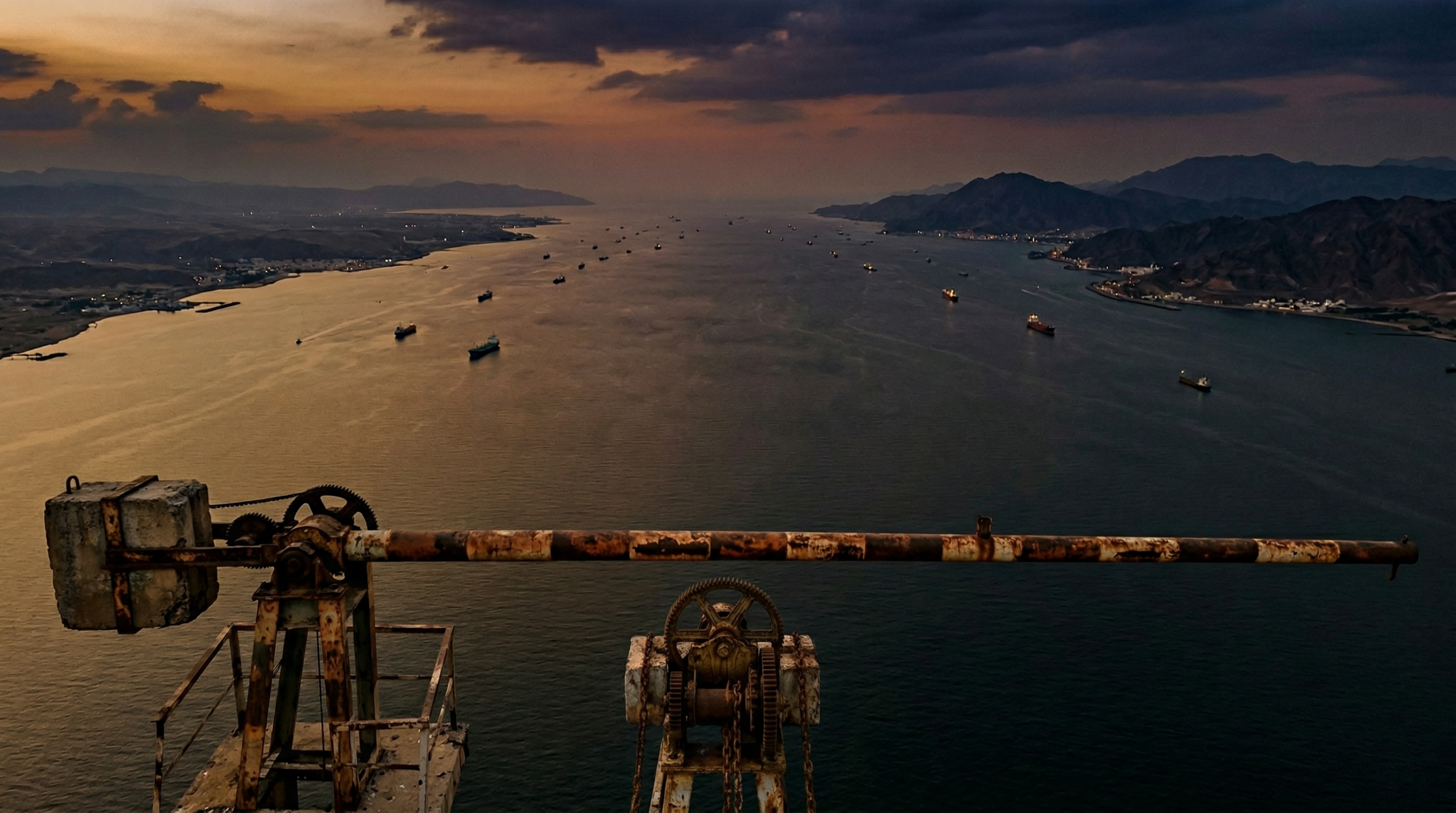
On 28 February 2026, the United States and Israel struck Iran. Tehran retaliated by targeting ships in the Strait of Hormuz, the narrow waterway through which roughly half of India’s daily crude oil and a substantial share of its LNG imports pass. Queues formed outside petrol stations in Indian cities. Some restaurants ran short of cooking gas.
The disruption exposed something that energy economists had flagged in policy papers for years, and which had consistently failed to trigger serious structural action. India’s energy supply is overwhelmingly routed through a single geographical chokepoint that it has no capacity to defend, no alliance to secure and no alternative to replace at scale. When the Strait sneezes, India’s energy bill catches pneumonia.
India’s immediate response was to turn to Russia. On 19 March, Russian Deputy Energy Minister Pavel Sorokin met Petroleum Minister Hardeep Singh Puri in New Delhi. A verbal agreement was reached to negotiate direct Russian LNG sales to India, the first such arrangement since the Ukraine war began. Russian crude purchases, which India had quietly reduced in January as a concession to Washington during trade negotiations, were also set to double back up to at least 40 per cent of India’s total imports within weeks.
And then India did the thing that revealed its actual position in the world. It went to Washington to ask if it was allowed.
The Permission Economy
Let us be precise about what a sanctions waiver is and is not.
It is not, in formal international law, a mechanism through which one sovereign state controls another’s trade decisions. The United States does not own the global oil market. It does not have a legal right to determine who buys Russian energy. What it has is something more practical and, in some ways, more insidious: it has constructed a financial architecture, centred on dollar-denominated global trade, correspondent banking networks and extraterritorial sanctions law, that makes defying its preferences extraordinarily costly for any country integrated into the global economic system.
If an Indian public sector bank processes payment for Russian LNG without a waiver, it risks being cut off from the SWIFT interbank system and from dollar clearing through American correspondent banks. That is not a theoretical risk. It is an operational one that the Reserve Bank of India and the Finance Ministry understand in detail. So India asks. Not because it agrees that Washington has the right to decide. But because the cost of not asking is higher than the cost of the humiliation.
This is how sovereignty erodes. Not through a dramatic rupture but through the slow accumulation of situations in which the formal right to decide and the practical ability to decide quietly diverge. India retains the constitutional and legal authority to purchase energy from any country it chooses. It has simply allowed a situation to develop in which exercising that authority, without prior American clearance, is functionally very difficult.
How Did We Get Here
This is the part that requires some honesty, and some discomfort.
India did not become dependent on American financial approval because Washington forced it. It became dependent because, over thirty years of economic liberalisation and integration into globalised markets, successive Indian governments made choices that deepened that integration without building the structural buffers that genuine sovereignty requires.
The decision to keep Indian trade almost entirely dollar-denominated, rather than seriously developing rupee-trade arrangements with alternative partners, was a choice. The failure to build strategic petroleum reserves capable of buffering more than a few weeks of supply disruption was a choice, or more precisely, a non-choice made repeatedly across budget cycles. The preference for importing energy rather than investing at the scale required in domestic alternatives was a choice. Each individual choice seemed reasonable in its moment. Cumulatively, they constructed a dependency.
The political economy of this is not difficult to trace, though it is rarely traced in public. Indian conglomerates with significant exposure to American capital markets, Indian technology companies with American institutional investors on their boards, Indian banks with dollar-clearing relationships and Indian business families with assets, children and second homes in the United States all have structural reasons to prefer that India does not fundamentally antagonise Washington.
Consider the Indian information technology sector, which is not a peripheral player but one of the central pillars of India’s current account stability. India’s three largest IT exporters, taken together, derive more than half their total annual revenues from North American clients, according to their own published annual reports. They collectively employ hundreds of thousands of workers in the United States on work visas that require a cooperative bilateral relationship to function. Nasscom, the industry’s apex body, maintains an active Washington presence precisely because its member companies’ business models depend on the durability of smooth US-India relations. These companies are not conspirators. They are rational actors in the system as it exists. But their rationality, aggregated across the institutions and informal networks that shape Indian policy, produces a consistent institutional bias toward accommodation with American preferences. That bias does not require a phone call or a directive. It operates structurally, through the simple alignment of interests.
This is not unique to India. It describes the situation of most mid-sized economies in the post-Cold War international order. What makes India’s case worth examining more closely is the gap between the self-description and the reality. A country that invokes Chanakya in foreign policy speeches and positions itself as a leader of the Global South should, at minimum, be honest about the degree to which its own room for manoeuvre is constrained by the same structures it rhetorically critiques.
The Compromise Question
Are Indian political and corporate authorities compromised beyond redemption? The question deserves a direct answer.
Compromised in the sense of being secretly on someone else’s payroll? No credible public evidence supports that conclusion for the establishment as a whole. Compromised in the sense of being so structurally embedded in the dollar-based international order that they are institutionally incapable of pursuing policies that would meaningfully challenge it? That is not a matter of speculation. It is a matter of observable institutional design.
The senior officials who manage India’s energy and finance policy have, in large numbers, been educated at American and British universities, trained in institutions integrated with the dollar system, and built careers within a policy consensus that treats deeper globalisation as an unqualified good. Their professional networks, their intellectual frameworks and, in many cases, their post-retirement options run through the same financial architecture their decisions are supposed to independently evaluate. This does not make them corrupt in the legal sense. It makes them captured in the structural sense, which is both more pervasive and harder to fix than ordinary corruption.
At the political level, the pattern holds across parties. The Congress-era finance ministry that opened India’s capital account in stages and the BJP-era commerce ministry that deepened trade integration with the dollar bloc shared the same fundamental orientation. The rhetoric changed. The institutional plumbing did not. A government that speaks about energy sovereignty while keeping every significant energy transaction settled in dollars is not being hypocritical in the ordinary personal sense. It is reflecting the genuine limits of what its own institutional machinery is oriented to produce.
That is not redemptionless. But it is structural. And structural problems do not yield to changes in personnel. They yield to changes in incentive architecture, and those changes have to be deliberate, funded and sustained across election cycles. India has not done that. The establishment, across its political and corporate wings, has not chosen to do that. That is the honest answer.
The Rupee Question Nobody Wants to Answer
India and Russia have, since 2022, made intermittent attempts to settle energy trade in rupees rather than dollars. The results have been awkward. Russia accumulated large rupee balances it could not easily deploy because the rupee is not freely convertible and there is a limited range of Indian goods and services that Russia wants to import at the scale required to absorb those balances.
This is not a trivial technical problem. It is a fundamental one. The rupee is not an international reserve currency. It is not freely convertible. It is not, therefore, a practical instrument for large-scale bilateral energy trade unless India is willing to make structural commitments, to convertibility, to bilateral currency swap arrangements, to alternative payment rails, that it has consistently stopped short of making.
Why has India stopped short? Partly because full rupee convertibility carries genuine macroeconomic risks for a country with India’s current account dynamics. And partly because the people making these decisions are not willing to be outside the dollar system. The dollar system is, among other things, the system in which their own institutional wealth, their foreign exchange reserves and their credibility with international rating agencies is held. That is not a suspicion. It is a structural fact about where Indian institutional interests currently sit.
The rupee question is not unanswerable. India could, over a decade of deliberate policy, build the conditions for meaningful alternatives. It has not chosen to do that at serious scale. That is a choice.
Sovereignty Is Infrastructural
Sovereignty is not a declaration. It is not a constitutional article or a speech at the United Nations. Sovereignty is infrastructural. A country is as sovereign as its ability to sustain its basic functions without requiring the permission of another state. By that definition, which is the only definition that holds up under pressure, India’s sovereignty in energy is currently incomplete.
This is fixable. India has one of the largest solar resource bases on the planet, significant wind capacity on its coastlines, and the engineering talent to build a fundamentally different energy architecture over a determined decade of investment. The cabinet secretariat note of 20 March did not need to spell out the irony. Officials who drafted it understood, without writing it down, that every percentage point of inflation risk traceable to a foreign waterway is a percentage point that a different energy architecture would have made irrelevant. The numbers in that document are not a crisis report. They are an invoice for three decades of deferred decisions.
What India Should Actually Do
Three things. Not a list of aspirations. Three hard decisions.
First, build strategic petroleum reserves that cover 90 days of import disruption, not the current single-digit effective cover in usable storage. This requires capital and political will across budget cycles. It is not technically complicated. Second, accelerate the domestic renewable transition as a national security project, not an environment one. Frame it, fund it and staff it accordingly. Every gigawatt of domestic solar capacity is a reduction in the volume of energy that can be held hostage by a foreign waterway. Third, construct the rupee trade infrastructure with genuine institutional commitment, dedicated payment rails, bilateral swap lines and a willingness to accept short-term friction in exchange for long-term operational independence.
None of these steps require American permission. They require Indian decision. The distinction is the entire argument.
The Answer to the Permission Question
So why should India take permission from the United States before buying oil from Russia, or Iran, or anyone else?
It should not have to. And it would not have to, if it had built the structural conditions for genuine energy sovereignty over the last thirty years. It has to now because it did not then.
That is not a moral failure unique to any one government or party. The Congress-led governments of the 1990s and 2000s made these choices. The BJP-led governments of the 2010s and 2020s compounded them while speaking a louder language of national pride. The institutional continuity across governments produced this dependency regardless of which party held the keys to South Block.
The family in Patna waiting on a cooking gas cylinder is not interested in any of this analysis. They just need the cylinder. But they are also, without knowing it, sitting at the precise human endpoint of every strategic non-decision, every deferred infrastructure investment and every budget cycle in which energy sovereignty was treated as a second-order concern.
That is the distance between geopolitics and the kitchen.
It is also the distance between sovereignty on paper and sovereignty in practice.
India sits, right now, somewhere in the middle of that distance. The question of whether it moves toward genuine self-determination or continues managing its dependence with increasing sophistication is not being answered in Washington or Moscow.
It is being answered, quietly and consequentially, in New Delhi. By the same establishment that created the problem.
