



Ask a man in his thirties how he is doing, and you may often hear a familiar answer: “Bas theek hoon, chal raha hai.” Fine. Managing. For many men, these words have become an everyday way of describing life.
But there is a positive change taking place. More Indian men are beginning to talk about stress, anxiety, pressure and emotional well-being. The idea that men must always appear strong is slowly giving way to a healthier understanding of what strength can mean.
“Mard ko dard nahi hota” may be a popular film dialogue, but the idea behind it has existed in many forms for generations. Boys often grow up hearing messages about being strong, staying calm and handling problems on their own. These lessons can build resilience, but they can also make it harder to talk openly about emotions.
The Changing Meaning of Strength
Indian men often carry several responsibilities at different stages of life. Work, family, finances, ageing parents and raising children can all bring new challenges.
For many, being dependable is an important part of their identity. They want to support their families and find solutions when problems arise. That sense of responsibility is valuable.
At the same time, men can benefit from having spaces where they can simply say that something is difficult.
Saying “I am having a tough day” does not take away from a man’s strength. In many cases, recognising a difficult moment is the first step towards handling it better.
Learning the Language of Emotions
One reason some men find emotional conversations difficult is simple: they may not have grown up discussing feelings openly.
Boys are often encouraged to express themselves through activities such as sports, hobbies, work and friendship. These spaces can provide strong emotional support, even when nobody directly talks about feelings.
Today, that conversation is becoming wider.
Men are increasingly finding ways to describe experiences such as stress, loneliness, anxiety and burnout. Learning this emotional vocabulary can make everyday communication easier and can strengthen relationships with friends, partners and family members.
A New Conversation Around Mental Health
Mental health conversations in India have changed significantly in recent years. Therapy and counselling are becoming more familiar concepts, including among younger men.
Support is also taking many forms. Some men find comfort in professional counselling, while others prefer conversations with close friends, family members or trusted colleagues.
Peer-support groups are also creating new spaces for men to connect. In some communities, friendships built around sports, hobbies, work or local activities can become important sources of emotional support.
Public conversations also help. Indian actors, athletes and other public figures have spoken about anxiety, depression, stress and burnout. Their openness can remind people that emotional challenges can affect anyone.
Sometimes, Talking Happens Naturally
A serious conversation about emotions does not always need to begin with, “We need to talk.”
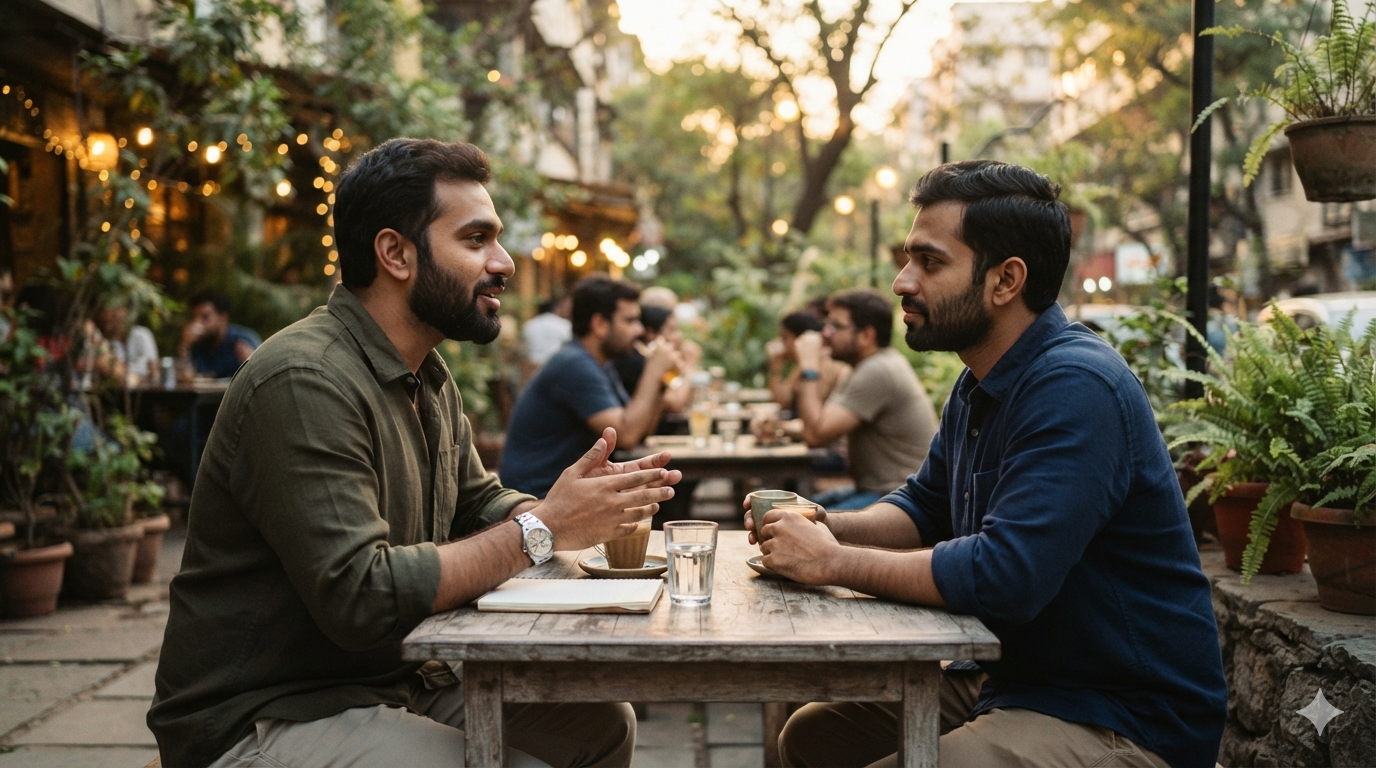
For some men, conversation feels easier when it happens naturally. A long drive, an evening walk, a cup of tea or a shared hobby can create a comfortable setting.
These everyday moments can make it easier to open up without pressure.
If you want to check on a father, brother, partner or friend, a simple “How have you really been?” can be a good starting point. There is no need to demand an immediate answer.
Sometimes, giving someone time and showing that you are willing to listen can make all the difference.
Listening Can Be More Important Than Fixing
When someone finally talks about a difficult experience, the natural response may be to offer advice.
However, not every conversation needs an immediate solution.
Sometimes, a person simply wants to know that someone understands. Listening without judgement can create a sense of trust. Once that trust grows, the person may feel more comfortable discussing what they need.
Sharing your own experiences can also help. When one person openly talks about a difficult day, another may feel more comfortable doing the same.
Building a Healthier Idea of Masculinity
The conversation around men and emotions does not need to reject strength. Instead, it can expand the meaning of strength.
Being responsible, supporting others and staying resilient can all remain important qualities. So can asking for support, expressing emotions and taking care of one’s mental well-being.
A father who tells his son that it is okay to feel sad teaches an important lesson. A friend who checks in without waiting for a crisis strengthens a friendship. A man who chooses to speak to someone when life feels overwhelming is also showing courage.
Change does not always arrive through major campaigns or dramatic moments. Often, it begins with small conversations at home, among friends and within communities.
The goal is not to make men less strong. It is to create a world where they do not have to hide every difficult feeling to prove that they are strong.
Perhaps the next generation can grow up with a different message: Mard ko dard hota hai, aur dard ke baare mein baat karna bhi strength hai.
Subscribe Deshwale on YouTube
