



Editor’s Note: Quotes from protesters, marchers, locals, and public figures in this analysis are representative, drawn from witness accounts, on-ground reporting, and multiple public sources covering the events.
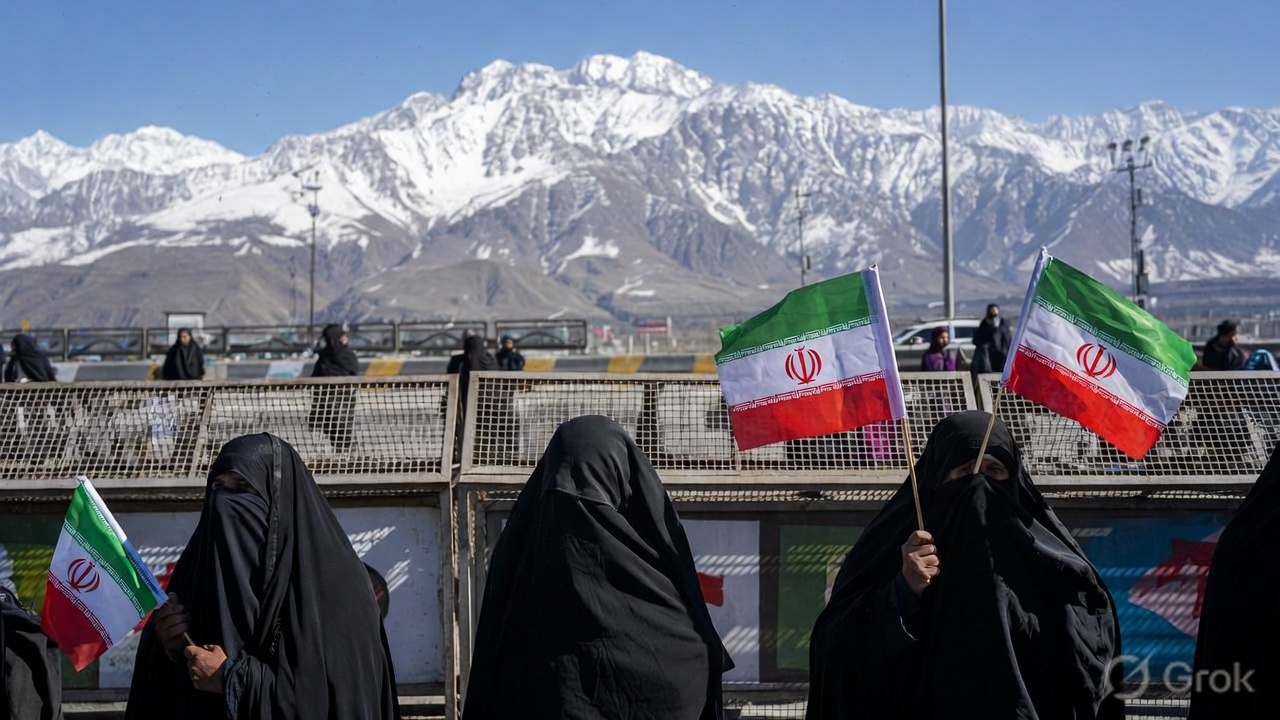
The assassination of Iran’s Supreme Leader Ayatollah Ali Khamenei on March 1, 2026, in a joint US-Israel airstrike has sent shockwaves far beyond the Middle East. In India’s Kashmir Valley, it triggered the largest street demonstrations since the revocation of Article 370 in 2019. Thousands, mostly from the Shia community, took to the streets of Srinagar and northern towns like Sumbal and Pattan, waving Iranian flags and chanting against what they see as imperial aggression. Security forces responded with barricades, internet slowdowns, and school closures, turning a day of mourning into a tense standoff. As the Valley simmers under restrictions for a third day, these events expose deep fault lines: sectarian divides, fragile communal ties, and the long shadow of global conflicts over local lives. This is not just about one man’s death; it’s a mirror to Kashmir’s unresolved grievances and India’s delicate dance in a volatile world.
Geopolitical Shockwaves: How Iran’s Loss Hits Home in South Asia
Khamenei’s killing comes at a perilous moment in the escalating Israel-Iran war, where Tehran has already retaliated with missile barrages on Israeli targets. The US involvement, through precision strikes on Iranian leadership bunkers, has drawn accusations of a broader assault on Muslim sovereignty. For India, straddling alliances with Washington and Tel Aviv while nurturing economic ties with Tehran – like the Chabahar port project that eases trade routes to Afghanistan-this episode tests diplomatic tightropes.
In Kashmir, the fallout feels immediate and personal. The Valley’s Shia pockets, long sympathetic to Iran’s revolutionary ethos, view Khamenei as a bulwark against Western dominance. Protests erupted spontaneously on the day of the news, with demonstrators at Srinagar’s Ghanta Ghar clock tower holding aloft posters of the slain leader. But beneath the slogans lies strategic calculus. Pakistan, Iran’s uneasy neighbour and Kashmir’s perennial backer, has stayed mostly mute so far, perhaps wary of inflaming its own Sunni-Shia tensions. Beijing, too, watches closely; its Belt and Road investments in both nations could snag if the conflict widens.
India’s official response has been measured silence from South Block, a nod to its non-aligned roots amid Quad commitments. Yet, the unrest underscores a risk: how foreign flare-ups can amplify domestic separatist whispers. Analysts point out that Kashmir’s geography – sandwiched between nuclear-armed rivals – makes it a tinderbox for proxy influences. If Iran’s hardliners push for asymmetric reprisals, from cyber ops to Houthi-style disruptions in the Arabian Sea, New Delhi might face pressure to recalibrate its Iran policy. It’s a reminder that in this neighbourhood, no border is truly sealed. The protests, small as they are, signal that global realignments have local echoes, forcing India to balance empathy for Muslim sentiments with ironclad security.
One can’t ignore the irony here. India’s ongoing engagement on Chabahar – despite US sanctions pressures and a conditional waiver extended only till April 26, 2026—highlights the tightrope walk. Recent discussions with both Washington and Tehran continue amid uncertainty, even as budgetary allocations for the project were slashed in the latest Union Budget. And in Kashmir, where unemployment remains a persistent challenge (with the overall rate at 6.7 per cent in 2024-25, nearly double the national average of 3.5 per cent, according to the Periodic Labour Force Survey), such global distractions only deepen the sense of alienation from bread-and-butter priorities.
Grief in the Shia Enclaves: Community Bonds Under Strain
For Kashmir’s Shias, who make up about 10 per cent of the Valley’s Muslims, Khamenei’s death is a gut punch. In Bandipora’s Pattan, a historic Shia stronghold, women in black chadors led marches on March 3, their voices hoarse with dirges for a figure they revered as a spiritual anchor. “He stood for the oppressed,” one protester told local reporters, her words carrying the weight of generations tied to Iran’s Twelver Shiism.
These communities have deep historical links to Persia, from medieval migrations to cultural exchanges that shaped Kashmiri poetry and cuisine. Yet, the protests reveal sharper edges at home. Sunni participation has been negligible, with many in majority areas like downtown Srinagar staying indoors. It’s a bit odd, really, how silence can speak volumes. Long-standing suspicions linger: numerous Sunnis see Shias as informants for Indian authorities, a perception rooted in the dirty wars of the 1990s insurgency. Shias, in turn, point to their loyalty amid chaos-few have joined militant outfits like Jaish-e-Mohammed or Lashkar-e-Taiba, which draw almost exclusively from Sunni ranks and Pakistani handlers. To balance the picture, many Sunnis in Kashmir have shown loyalty to Indian authorities over the years, serving in civil services or security forces. But it’s also true that a significant number have joined the ranks of militant outfits, driven by dreams of secession from India or merger with Pakistan, fuelling the long insurgency.
This divide isn’t new, but Khamenei’s killing lays it bare. In mixed neighbourhoods, whispers of betrayal circulate, eroding the fragile harmony Lt Governor Manoj Sinha urged in his appeal for calm. For Shia families, the grief mixes with fear; their demonstrations, while peaceful at heart, invite scrutiny in a region where any crowd spells risk. One young marcher in Sumbal, nursing a bruise from a baton charge, shrugged it off: “We mourn quietly most days. Today, we just had to shout.”
The Kashmiri Shia community mobilised through established religious bodies. Anjuman-e-Sharie Shian, a leading Shia organisation, announced 40 days of official mourning, with its president Aga Syed Hassan Al-Moosavi Al-Safavi describing Khamenei as a “spiritual guide” and “patron of the oppressed.” He called for black flags at mosques and imambargahs, plus dedicated sermons on Muslim unity. Influential cleric Maulana Masroor Abbas Ansari appealed for peaceful protests and local congregations, warning against law-breaking. Other voices included Aga Syed Muntazir Mehdi and Imran Ansari, who expressed sorrow and backed mourning observances. The broader Mutahida Majlis-e-Ulama (MMU), encompassing various Islamic groups, condemned the killing as US-Israeli aggression and urged a voluntary strike for peaceful expression of grief.
Clampdown and Caution: Security’s Heavy Hand in a Fragile Peace
Authorities moved swiftly, as they often do in Kashmir. By March 4, concertina wires snaked through Srinagar’s arteries, CRPF troopers in riot gear patrolled junctions, and Ghanta Ghar became a ghost zone. Schools shut till March 7, a move officials called precautionary, but one that strands 300,000 students in limbo. Mobile internet crawls at dial-up speeds, prepaid SIMs go dark in hotspots – echoes of the 2019 blackout that lasted months.
At least 14 were hurt in Sumbal clashes on March 3, including six security men, underscoring the thin line between control and confrontation. Sinha’s high-level huddle at the Police Control Room set the tone: heightened alert, zero tolerance for provocation. Police statements urge restraint, promising action against “instigators,” a broad net in a place where dissent blurs into threat.
Human rights groups, though, see red flags. These curbs, they argue, disproportionately hit minorities like Shias, reviving memories of overreach post-Article 370. In a Valley where assembly is a right on paper but a gamble in practice, such measures breed resentment. Vendors in Pattan lose daily wages; children miss exams. It’s the quiet toll that stings most. One shopkeeper, peering over a barricade, muttered, “Peace? Sure, if you mean the peace of the graveyard.”
Yet, for all the criticism, officials insist it’s calibrated response. No deaths reported, no arson-progress, they say, from bloodier eras. Still, as curbs linger, the question hangs: does iron fist forge stability, or just forge grudges? What stands out, too, is how these Indian protests have stayed largely peaceful, with zero fatalities so far-a far cry from the violence across the border.
The Digital Firestorm: Misinformation Fuels the Flames
Social media turned the spark into a blaze. Clips of Tehran strikes went viral on WhatsApp groups by noon on March 1, morphing into calls for Valley-wide shutdowns. Platforms like X buzzed with unverified footage-grainy videos of alleged Israeli jets over Iranian skies, captioned with pleas for “Muslim unity.”
But here’s where it gets messy. Cyber police in Srinagar slapped FIRs on National Conference MP Aga Syed Ruhullah Mehdi-the Srinagar Lok Sabha representative and a prominent Shia voice from Budgam with deep family roots in the community’s religious traditions-and former mayor Junaid Azim Mattu, a Sunni politician known for his outspoken critiques across sectarian lines. Authorities accused them of peddling “fabricated narratives” under new Bharatiya Nyaya Sanhita sections. Mehdi’s post, decrying the strike as “Zionist barbarism,” drew 50,000 views before takedown. He fired back online: “The people of Srinagar did not elect their MP to recite government-approved condolences. They elected him to speak truth.” Mehdi’s personal ties add layers; his second wife, an Iranian scholar he married in Tehran in 2024, underscores his cultural affinity to Persia, though no evidence links him directly to Tehran’s political establishment beyond shared Shia heritage and advocacy for strong India-Iran bonds.
Mattu faced similar heat for sharing protest photos, tagged with hashtags like #JusticeForKhamenei. Authorities claim such posts risked “societal disharmony,” a charge critics call censorship by another name. In Kashmir, where broadband is a lifeline and a rumour mill, throttling access hits hardest. Prepaid bans sideline the poor; speed caps hobble activists.
You have to wonder, though-does cracking down on tweets douse the fire, or pour oil? Misinfo spreads anyway, underground. And in this echo chamber, truth becomes the first casualty.
Shadows of 2019: When History Repeats in the Streets
These marches mark a grim milestone: Kashmir’s biggest stir since August 2019, when Delhi’s Article 370 axe unleashed fury. Back then, lakhs flooded roads, pelting stones and facing pellets. Today’s turnout, while smaller-thousands, not lakhs-carries similar undercurrents. Lal Chowk, once a 1989 militancy cradle, now barricaded again, feels like deja vu.
Yet differences stand out. The 2019 rage was pan-Kashmiri, Sunni-led, fused with azadi cries. Khamenei’s protests skew Shia, more ritual than revolt, less about plebiscite dreams than pan-Islamic solidarity. Still, parallels nag: both born of perceived injustice, both met with the state’s familiar playbook-curbs, closures, calls for calm.
Dig deeper, and older ghosts stir. The 1990s saw Shia enclaves as relative oases amid Sunni insurgency; their restraint earned quiet nods from Delhi, but also Sunni scorn as collaboration. Few Shia boys picked up AKs for Islamabad; most stuck to books or business. That history colours today’s caution-protests flare but fizzle, contained by community elders wary of blowback.
It’s not all repetition, mind. Post-2019 integrations—like smoother pilgrimages to Iran-have softened some edges. But as boots thud on Srinagar pavements once more, the lesson endures: unresolved wounds invite easy ignition.
One quick note on the numbers: official tallies put injuries low, but locals swear it’s undercounted. Anyway.
Ripples Worldwide: Muslim Unity and the Kashmiri Diaspora
Khamenei’s end has cleaved the global Muslim response. In Tehran streets, some Iranians popped champagne, hailing it as liberation from clerical grip-a stark contrast to the dirges in Lucknow’s Shia processions or Delhi’s Jamia Millia sit-ins. Pakistan’s Imran Khan called it “martyrdom,” urging OIC unity; Hezbollah vowed vengeance. India’s Muslims, scattered from Kerala mosques to Canadian gurdwaras, lean mournful, seeing echoes of Palestine’s plight.
Wider solidarity emerged across the country. In Lucknow, large gatherings at historic sites like Bara Imambara and Chhota Imambara saw Shia mourners hoist black flags, hold condolence meetings, and announce three-day mourning periods, with clerics like Maulana Yasoob Abbas condemning the strikes. Similar protests and prayer rallies unfolded in Delhi at Jantar Mantar, in Hyderabad’s Purani Haveli, Bhopal, and parts of Karnataka-thousands carrying Khamenei’s portraits, chanting against US and Israel, underscoring pan-Indian Shia grief beyond Kashmir.
But in Pakistan, the grief turned deadly. At least 23 Shias were killed by authorities in clashes across cities like Karachi and Larkana, where protesters-outraged over the US role-tried to storm the American consulate in Karachi, breaching its outer walls before dispersal. These demonstrations, unlike the peaceful ones in Indian Kashmir with no deaths, spiralled into violence, prompting curfews and over 100 injuries. Leading the charge were figures from Shia outfits like Allama Raja Nasir Abbas of Majlis Wahdatul Muslimeen (MWM), alongside leaders from the Shia Ulema Council and Anjuman Haideria, who organised rallies decrying the strike as an assault on Islam.
For Kashmir’s diaspora-over a lakh in Gulf states and the UK-these protests hit close. Exiles in Dubai’s labour camps forwarded Valley videos, fundraising for “solidarity marches” back home. In London, Kashmiri cafes hosted iftars laced with debate: is this pan-Islamism, or just sectarian flex? One emigre, a Bandipora native now in Toronto, emailed kin: “We’re all hurting, but let’s not let it divide us here.”
Such voices amplify the Valley’s cry, but also highlight fractures. Sunni expats, many from Pakistani-administered Kashmir, stayed aloof online, their feeds silent on Shia-led demos. Global ummah talk rings hollow when local suspicions-Shias as Delhi’s eyes-persist. Yet, in this digital age, borders blur; a tweet from Birmingham can rally a Srinagar crowd.
As Iran’s succession drama unfolds, with hardliners circling, the diaspora watches warily. Will this bind Muslims tighter, or snap old threads? In Kashmir, at least, the grief transcends, if only for a moment.
In the end, these protests may fade with the weekend, but the questions they raise linger. Can Kashmir heal its internal rifts while the world burns? India’s leaders, from Delhi’s corridors to Srinagar’s bunkers, must grapple with that. For now, the Valley holds its breath, barricades glinting under Himalayan snow.
Subscribe Deshwale on YouTube
