









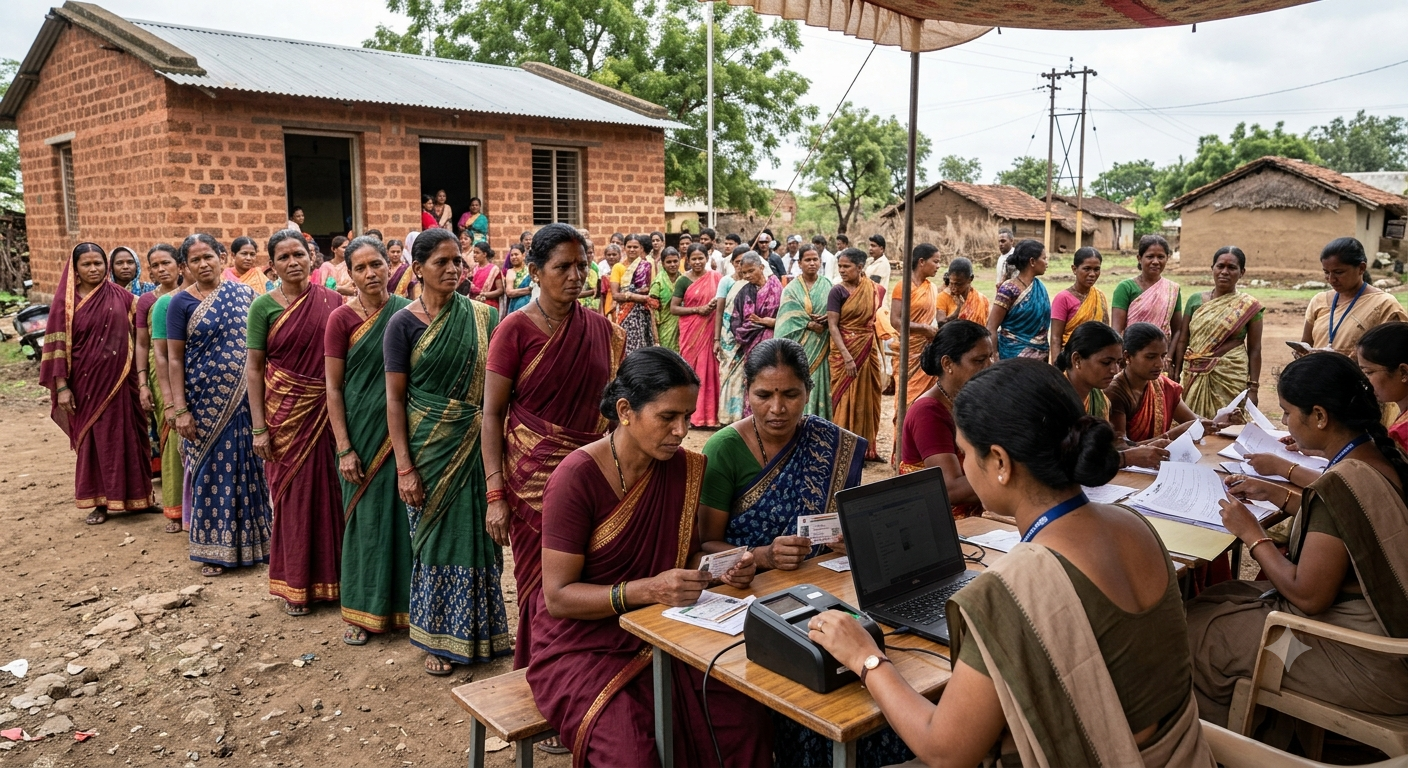
Mumbai: Maharashtra’s flagship Mukhyamantri Majhi Ladki Bahin Yojana has come under scrutiny after a statewide verification and e-KYC drive led to a sharp drop in the number of beneficiaries. RTI data has revealed that nearly 82 lakh women were removed from the scheme, including around 62 lakh beneficiaries who failed to complete the mandatory e-KYC process.
According to information obtained through the Right to Information (RTI) Act by activist Jeetendra Ghadge of The Young Whistleblowers Foundation, the number of active beneficiaries has fallen from nearly 2.48 crore at its peak to 1.65 crore after the verification exercise. The figures have also raised concerns over the exclusion of eligible women and payments made to ineligible beneficiaries.
One of the biggest reasons for the reduction was incomplete e-KYC. Around 62 lakh women were removed from the beneficiary list after failing to complete the digital verification process. Ghadge claimed that women living in remote villages, tribal areas and regions with limited digital access may have been disproportionately affected. He urged the government to introduce an offline KYC system to ensure genuine beneficiaries are not left out.
With the revised beneficiary count standing at around 1.65 crore, the scheme is estimated to cost the state government nearly Rs 2,484.92 crore every month, translating to an annual expenditure of about Rs 29,819.10 crore.
The RTI data has also flagged concerns over payments made to allegedly ineligible applicants. More than 4.5 lakh government-linked entries were identified, including around 4.42 lakh self-declared government-linked applicants and 8,000 verified government employees. Estimates suggest unauthorised payouts could range between Rs 600 crore and Rs 800 crore.
Despite earlier assurances that money paid to ineligible beneficiaries would be recovered, the RTI response stated that the department has not received reports from district offices regarding recovery from government employees who were found ineligible.
The RTI response has also raised transparency concerns after district-wise beneficiary data was not provided. The absence of regional figures makes it difficult to determine where the highest number of exclusions occurred, how many beneficiaries were declared ineligible in each district and whether recovery proceedings have been initiated.
The findings have triggered fresh questions over the implementation of one of Maharashtra’s largest welfare schemes, with activists calling for greater transparency, an independent audit and improved access to verification processes for eligible women.
Subscribe Deshwale on YouTube


