







By:- Ragini Chaubey
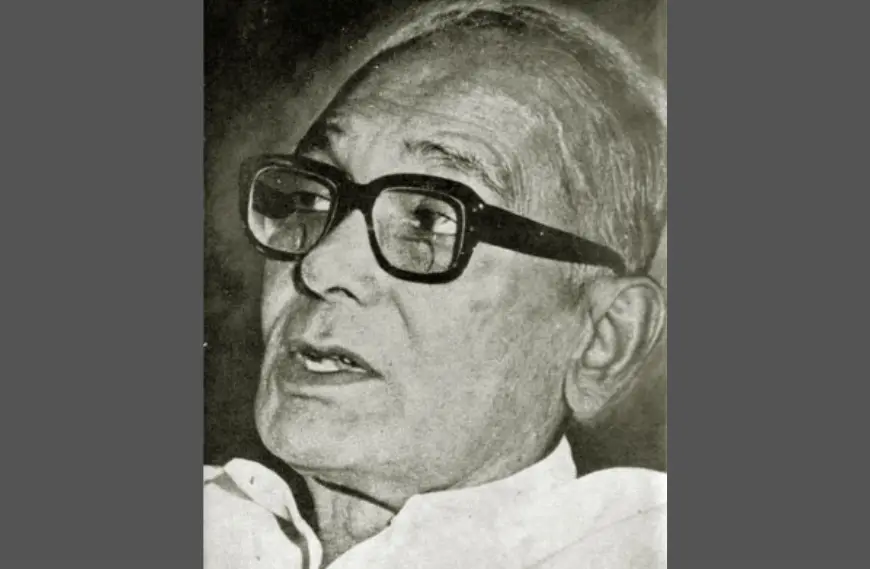
Jayaprakash Narayan, fondly called JP, was a towering leader in India’s independence movement and a champion of democracy. While many know him for his role during the Emergency of 1975, his life was full of fascinating, lesser-known episodes. Here’s a look at some interesting facts:
1. Honored after his death
JP was awarded India’s Bharat Ratna in 1999, recognizing his lifelong service to the nation. He also received the Ramon Magsaysay Award for public service in 1965.
2. Childhood by the Ghaghara river
His family home was near the flood-prone Ghaghara River. Frequent floods forced the family to move, and the new settlement later became known as Jayaprakash Nagar, Uttar Pradesh.
3. Family background
JP was the fourth child of Harsu Dayal and Phul Rani Devi. His father worked as a junior official in the canal department, traveling often for work.
4. Early education
At nine years old, JP left his village to join the seventh class in Patna, starting his formal education away from home.
5. Formative hostel days
JP stayed at Saraswati Bhawan, a student hostel with older boys, many of whom became Bihar’s future leaders, including Krishna Singh and Anugrah Narayan Sinha.
6. Marriage and gandhian influence
In October 1918, JP married Prabhavati Devi, daughter of independence activist Brajkishore Prasad. Since living together in Patna was difficult, Gandhi invited Prabhavati to stay at Sabarmati Ashram.
7. Inspired by Maulana Abul Kalam Azad
JP attended a speech by Maulana Abul Kalam Azad on Gandhi’s non-cooperation movement. Inspired, he left Bihar National College just 20 days before exams to join the Bihar Vidyapeeth, a Gandhian college founded by Rajendra Prasad.
8. Studies in the United States
At 20, JP went to the United States for further studies. To support himself, he worked as a grape-picker, dishwasher, and garage mechanic, gaining firsthand insight into working-class struggles. He was also active in the Hindustan Association of America and chaired its 1923 national convention.
9. Return as a Marxist
In 1929, JP returned to India as a Marxist, joined the Congress on Nehru’s invitation, and had Mahatma Gandhi as his mentor. He shared a house in Patna with his close friend Ganga Sharan Singh.
10. Imprisonment and socialist leadership
In 1930, JP was jailed for civil disobedience in Nasik Jail, where he met leaders like Rammanohar Lohia and Achyut Patwardhan. After release, he became General Secretary of the Congress Socialist Party, a left-wing group in the Congress.
11. Standing up against the emergency
During the 1975 Emergency, JP called for Indira Gandhi and state leaders to resign and urged the military and police to disobey unconstitutional orders. He gathered 100,000 people at Ramlila Grounds, reciting the poem “Singhasan Khaali Karo”. Detained in Chandigarh, his health deteriorated due to kidney failure.
12. Formation of the janata party
JP guided the formation of the Janata Party, uniting opposition forces. The party won the 1977 elections, forming India’s first non-Congress central government. He was even proposed as President of India but refused, letting Neelam Sanjiva Reddy take the post.
13. Final years and death
JP passed away in Patna on 8 October 1979, just three days before his 77th birthday, due to complications from diabetes and heart disease. In March 1979, his health confusion caused erroneous reports of his death, which led to widespread mourning across the country.
Also Read: Lesser-Known Facts About Gandhi Ji
Subscribe Deshwale on YouTube