









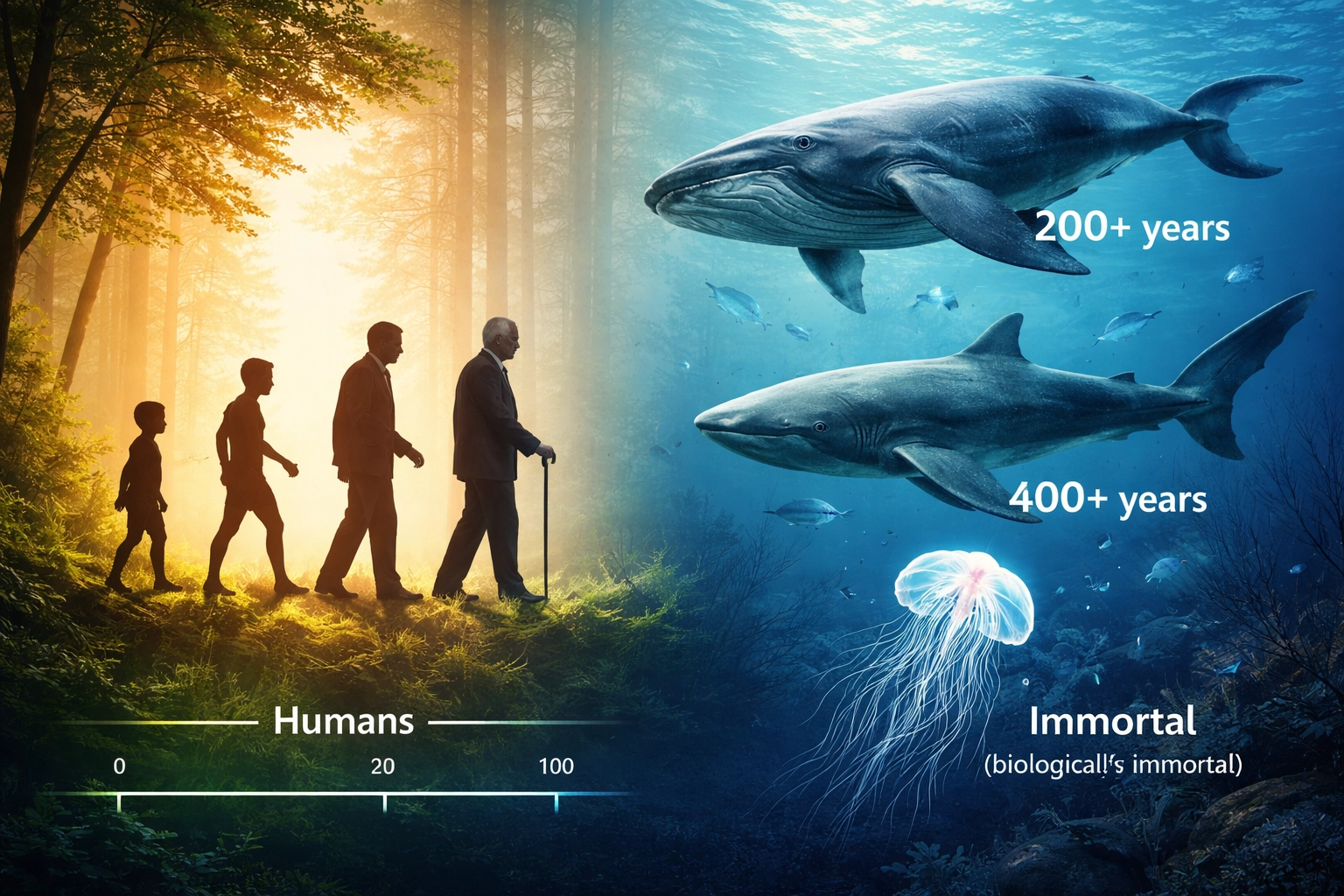
While these lessons are valuable, there are clear biological boundaries we cannot cross.
We cannot slow our metabolism to the level of deep-sea animals without compromising essential bodily functions. We cannot replicate the genetic mutations that allow bowhead whales to resist cancer. We cannot transform into earlier life stages like certain jellyfish.
Most importantly, humans are complex organisms with intricate organs and systems that inevitably wear over time. Even under ideal conditions, cellular damage accumulates. Modern medicine can delay, treat and manage many diseases, but it cannot yet halt the fundamental processes of aging.
Nature’s longest-lived creatures evolved their longevity over millions of years under specific environmental pressures. Humans evolved for adaptability, intelligence and social cooperation not for multi-century lifespans.
The Real Goal: Healthspan, Not Just Lifespan
Perhaps the most meaningful lesson from nature is not about living forever, but about maintaining function for as long as possible. Many long-lived species remain relatively stable in health until late in life, declining rapidly only near the end.
For humans, the equivalent aspiration is not merely adding years, but adding healthy, active years. A life that extends into the 80s or 90s with mobility, mental clarity and social engagement may be more valuable than a longer life marked by prolonged frailty.
Lifestyle choices, preventive healthcare and supportive communities all influence this ‘healthspan.’ Nature shows that longevity without vitality is rare; resilience and maintenance go hand in hand.
A Perspective Beyond Biology
There is also a philosophical dimension. Creatures that live for centuries do not measure time as humans do. Their longevity is a product of adaptation, not ambition. Humans, however, live in social and emotional worlds where meaning often outweighs duration.
Our relationships, creativity, learning and contribution define the richness of life. Even if science one day extends maximum lifespan modestly, the essential question will remain: How well are those years lived?
Nature’s longest-lived beings inspire awe, but they also remind us of balance. Life is not only about stretching time, but about inhabiting it fully.
The Quiet Wisdom of Long Lives
In the end, the creatures that outlive centuries do so not through conquest or speed, but through harmony with their environments, efficient biology and resilience to stress. Humans cannot become Greenland sharks or immortal jellyfish. But we can cultivate steadier rhythms, protect our bodies from avoidable harm, and build societies that support long, healthy lives.
The dream of extreme longevity may persist, but nature’s deeper message is simpler: live in ways that your body can sustain. Within that boundary lies the true art of ageing well.
Subscribe Deshwale on YouTube


