



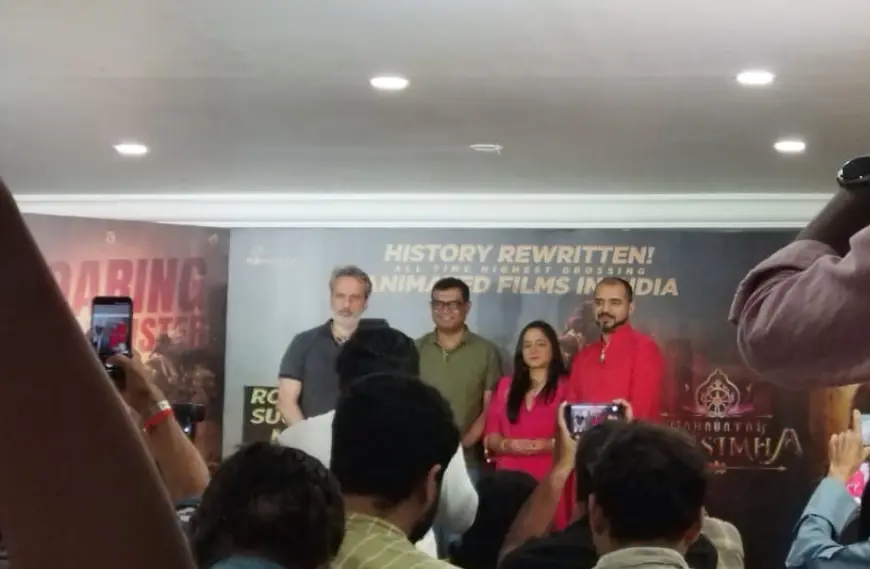
In a remarkable moment for Indian cinema, the team behind Mahavatar Narsimha celebrated their film’s sweeping success in a way that broke industry traditions and embraced cultural values. Rather than choosing a lavish banquet hall or trendy hotspot, the creators hosted their official party within the tranquil and sacred atmosphere of the Iskcon Temple at Juhu in Mumbai this Friday. The choice marked a shift in how achievements are honoured in the world of film, echoing the spiritual essence and mythological roots of the movie itself.
As guests arrived, there was a palpable sense of anticipation. Instead of glimmering tuxedos and cocktail dresses, attendees were guided by the invitation to don their finest traditional attire, filling the venue with vibrant sarees, graceful kurtas, and earnest smiles. A cinematic celebration woven into a spiritual setting!
The director, Ashwin Kumar, whose debut effort as filmmaker was nothing short of a triumph, greeted his team and supporters with warmth. Throughout the event, he spoke passionately about Lord Vishnu and the deep mythology that inspired this animated epic. His words carried more than gratitude—they pulsed with a promise, as he announced his intention to continue creating animated films dedicated to the avatars of Vishnu. In this way, Mahavatar Narsimha is not a standalone achievement, but the first instalment in a planned seven-part Mahavatar Cinematic Universe. The event felt less like a closing chapter and more like the hopeful start of a new creative era.
Also present were the talented technicians. The film’s voice over artists received heartfelt appreciation and applause from both filmmakers and attendees, which further underlined the collaborative spirit that powered the film’s success.
Mahavatar Narsimha first premiered at IFFI in November 2024, making a much-anticipated cinematic release on 25 July, 2025. What made its achievement noteworthy was its ability to stand tall against fierce box office competition, notably Saiyaara, a sleeper hit from one of India’s major studios. Yet, Mahavatar Narsimha not only held its ground, but flourished, drawing audiences across age groups and backgrounds, and demonstrating the power of mythological storytelling in modern animation.
At its core, the film centres on the Narsimha avatar’s epic journey, blending the values of righteousness, faith, and hope in a format that appeals to family audiences and animation lovers alike. Written by Jayapurna Das and produced by Kleem Productions and Hombale Films, the film’s creative origins lie in a passionate respect for tradition and a vision for more ambitious, locally rooted storytelling.
The event at the temple echoed what Mahavatar Narsimha itself symbolises—a movement towards recognising and celebrating Indian heritage through the medium of cinema. By choosing such a spiritual and heartfelt venue for their gathering, the filmmakers not only honoured their film’s thematic core but also offered a glimpse into the growing significance of culture in contemporary cinematic achievements.
As conversations drew to a close, it was clear to everyone present at the do that the movie had marked more than a record-breaking release. It challenged norms and reminded all that success can be celebrated with dignity, gratitude, and a genuine connection to the roots of the story. Within the temple’s hallowed walls, it became evident that Indian film can embrace both commercial triumph and cultural pride, setting the stage for more stories—and celebrations—that take tradition as their foundation.
