



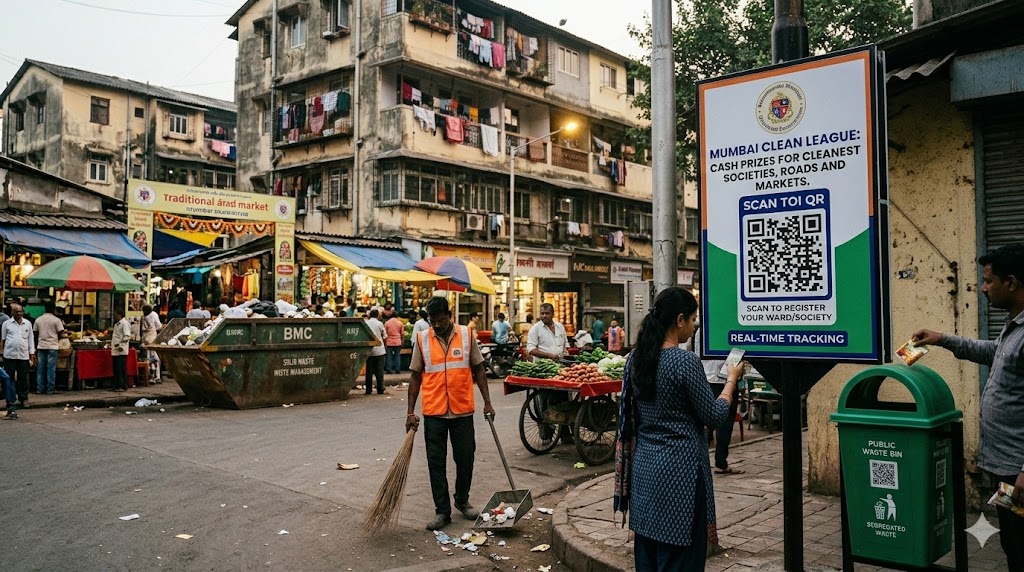
Mumbai has seen plenty of drives to keep the city tidy. Yet, the streets still fight a daily battle against litter and neglect. Now, the Brihanmumbai Municipal Corporation has rolled out something fresh. It calls the effort the Mumbai Clean League. The idea is simple, on paper: offer real cash to the cleanest wards, societies, roads, and markets. The launch happened this week at the civic headquarters. The actor, Akshay Kumar, stood as brand ambassador. That alone turned heads in a city that adores its stars.
How the prizes actually work
The competition covers many parts of life here. Residential complexes, slum clusters, shops, hospitals, schools, and public toilets all qualify. Even gardens and roads get their own categories. Registration opened straight away on the BMC portal. An independent agency will judge entries to keep things fair. Winners take home prizes from Rs. 1.5 lakh up to Rs. 25 lakh for the top ward. The final awards come in December. It feels like a big bet on ordinary Mumbaikars stepping up.
The highest amount goes to the cleanest administrative ward. That makes sense, because one ward can touch lakhs of lives. Lower sums reward housing societies and commercial spots. Markets and roads sit in the middle. The BMC says the goal is to spark genuine participation. Past efforts stayed small, mostly limited to garden contests where societies won for pretty rooftop terraces or bio walls. This league widens the net; it pulls in the whole city. Solid waste officials hope real-time online tracking, including QR codes for monitoring, will stop any favouritism.
Yet, one practical detail stays fuzzy. Suppose a crowded market, such as Crawford Market or Bhuleshwar, wins. Who pockets the money? Does it land in the savings account of the traders’ association? Or, do individual stall owners share it? The same question hangs over societies. Will the cheque go to the treasurer for common repairs? Or, does it vanish into some general fund? The civic body has stayed largely silent on these mechanics so far. Statements focus on categories, independent judging, and transparency tools. That gap leaves room for confusion later, and it sharpens the debate on whether such prizes truly empower communities or just create new questions.
Politics and protocol at the launch
The event drew the usual crowd of local leaders. Mumbai BJP chief, Ameet Satam, welcomed the actor and recalled how the idea first came up during outreach talks. He seemed pleased the concept grew into a full league. Not everyone stayed happy, though. A Shiv Sena leader wrote to the commissioner about the seating order; the deputy mayor from his party ended up in fourth place. It felt like a small storm in a teacup. These things crop up often in Mumbai politics. They remind us how even a cleanliness drive can get tangled in protocol.
Lessons from other corners of the world
Europe has run similar contests for years. Take, for instance, the European Green Capital Award. Cities like Heidelberg or Lahti have won in recent cycles, often with €350,000 to €600,000 attached, depending on the year. That cash helps roll out more green projects or sustain cleanliness efforts. Judges look at real results, not just promises. It shows cash can push cities forward when paired with clear rules and long-term vision.
Africa offers a different picture. Kigali, in Rwanda, tops many cleanest city lists on the continent. Residents take part in monthly umuganda days, where everyone, from officials to schoolkids, sweeps streets and clears drains. No big cash prizes here. The force comes from community pride, strict local rules, and a shared sense of ownership. Markets stay organised because the culture demands it. In other spots, like Lilongwe in Malawi, sanitation weeks bring people together for mass clean-ups. Again, the push is collective effort rather than individual rewards, though small incentives sometimes appear for groups.
Latin America tries its own twists. Curitiba, in Brazil, started a clever swap decades ago: people hand in sorted garbage and receive food vouchers or bus tokens in return. The streets stay cleaner because the incentive touches daily needs. It works without handing out lumps of cash to winners. Other cities experiment with business rewards for tidy shop fronts or community points systems. The common thread is that money alone rarely does the full job. Local habits, enforcement, and, sometimes, non-monetary perks matter more.
Does cash really light the fire for Mumbaikars?
Here is where the debate gets interesting. Mumbai already runs on hustle. Fishermen in Versova wake before dawn. Mill workers in Lower Parel juggle shifts. Slum dwellers in Dharavi manage tiny spaces with remarkable dignity. Yet, garbage piles up because collection lags and some simply do not care. The league bets that Rs. 25 lakh or so will change behaviour. It might. A society that wins could fix its compound lights or plant more trees. A road stretch that stays spotless might earn residents some breathing space.
But the bigger wonder stays: do we need money to care about cleanliness? Swachh Bharat showed that pride and shame can move mountains when people feel ownership. In Mumbai, the suburban trains run packed, yet stay reasonably tidy inside because users respect their shared space. Markets in Bandra or Andheri sometimes look better because traders know tourists notice. Cash might help in the short run; over time, it risks becoming just another handout. The real test will be whether the habit sticks once prizes end.
What this means for the daily grind
Think of a typical housing society in Andheri East. Dust from construction coats the cars; wet waste overflows bins. The league gives residents a reason to organise better collection and nag the BMC for timely pick-up. In slum pockets, the challenge runs deeper. Shared toilets and narrow lanes need constant watch. A cash win could fund basic upgrades that last.
Roads tell their own story. The coastal stretch from Marine Drive to Worli already looks sharper thanks to recent work. Extend that care to inner lanes in Girgaum or Sion, and the city breathes easier. Markets hold special weight. They feed millions, yet often drown in plastic and leftover vegetables. A winning market might inspire stall owners to pool resources for better bins and signage.
The human side of keeping Mumbai liveable sits with ordinary folks. A vegetable vendor who sweeps her patch every evening; a watchman who reminds residents to segregate waste; a school child who picks up litter on the way home. These small acts already happen without prizes. The league simply shines a light on them. It asks whether cash can multiply that spirit across wards.
The prize distribution ceremony sits months away. By then, we will know which societies stepped up and which markets stayed ahead. The real story will unfold in the lanes between now and December. Will cash spark lasting change, or will it fade once the cheques clear? Mumbai has surprised us before. It just might do so again with this league. The maximum city has always found ways to negotiate its chaos; perhaps, this time, the negotiation includes a cleaner tomorrow for everyone.
