



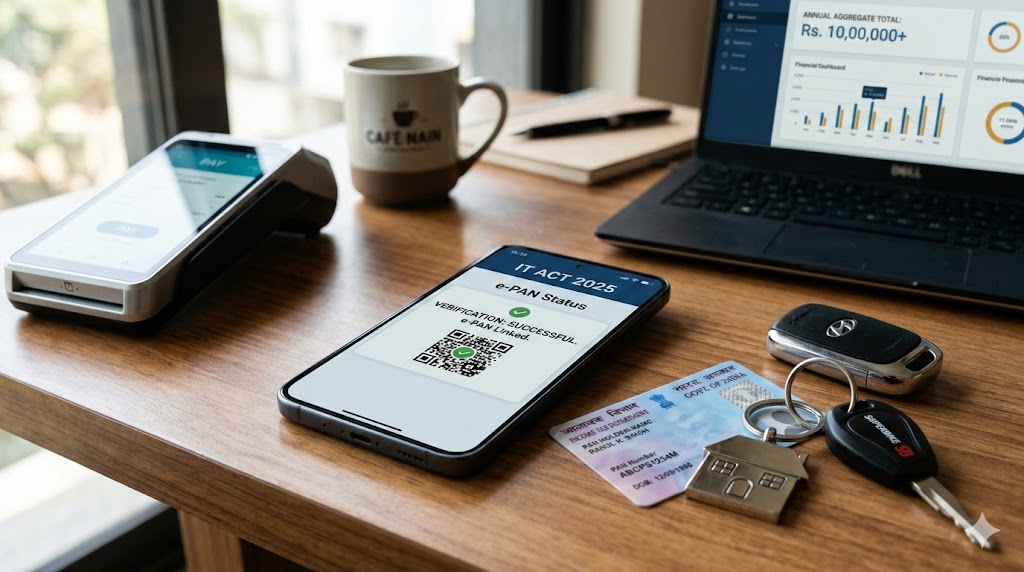
Key Milestone: These changes are slated to go live on April 1, 2026, coinciding with the implementation of the new Income Tax Act, 2025, which replaces the legacy 1961 framework.
The landscape of financial compliance in India is set for a historic shift. As the government prepares to roll out the Income Tax Act, 2025, the rules for PAN card usage are being overhauled to support a broader Digital India mission. The goal is simple: reduce physical paperwork for everyday citizens while leveraging automated, high-tech systems to track significant financial trails.
Cash Deposits and Withdrawals: The Annual Aggregate
The new rules move away from monitoring single-day actions to a more holistic annual view. Previously, a PAN was mandatory for a single cash deposit above Rs. 50,000. Under the 2025 Act, PAN will be required for total deposits or withdrawals exceeding Rs. 10 lakh in a financial year.
For ordinary savers, this offers significant relief from daily reporting. However, businesses with frequent cash flows must now monitor their cumulative activity across all accounts to ensure they remain compliant with this new Rs. 10 lakh annual threshold.
Property Transactions: Adjusting for Inflation
Real estate compliance is being streamlined to better reflect modern property values. The draft rules propose doubling the mandatory PAN quoting threshold from Rs. 10 lakh to Rs. 20 lakh. This change acknowledges rising inflation and aims to ease the burden for those purchasing smaller plots or modest homes, ensuring that the tax department’s focus remains strictly on high-value transactions.
Buying Cars and “Superbikes”
In a nuanced shift for the automotive sector, the new rules simplify the buying process for the majority. Currently, PAN is a standard requirement for nearly all motor vehicle purchases. From April 2026, PAN will only be mandatory for vehicles valued above Rs. 5 lakh.
Interestingly, this introduces a specific “Superbike” nuance: while budget two-wheelers remain exempt, high-end motorcycles exceeding the Rs. 5 lakh mark will now require PAN quoting. For the average commuter, however, the paperwork at the dealership is about to get much lighter.
Hotel, Restaurant, and Event Bills
To keep pace with contemporary spending, the threshold for high-value cash payments at hotels and events is doubling. The earlier limit of Rs. 50,000 is rising to Rs. 1 lakh. This ensures that regular dining and standard family functions don’t trigger unnecessary reporting, reserving PAN requirements only for extravagant, cash-heavy occasions.
Insurance: Mandatory Digital Onboarding
While other sectors see a relaxation of limits, the insurance sector is tightening its digital integration. Previously, PAN was required only if an annual premium exceeded Rs. 50,000. Under the new digital-first framework, PAN will be required at the commencement of any account-based relationship with an insurer, regardless of the premium amount. This ensures that every policy is linked to a digital identity from day one.
The Big Picture: Digital-First Compliance
Overall, these changes represent a strategic pivot toward automated tracking. By raising thresholds for daily activities and mandating PAN for relationship-based services like insurance, the government is leaning into AI-powered monitoring. This reduces the “compliance pinch” for the common man while improving the transparency of the entire financial system.
As we approach next April, staying informed and keeping your PAN details updated will be the best way to ensure a seamless transition into this new era of Indian taxation.
