



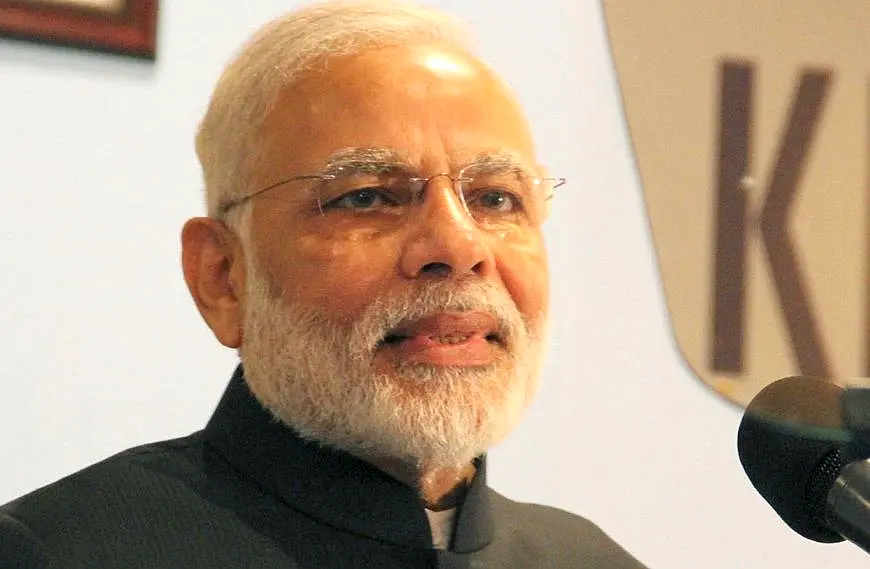
Prime Minister Shri Narendra Modi inaugurated Semicon India 2025 at Yashobhoomi, New Delhi, setting the stage for India’s next big leap in the semiconductor revolution. The event, designed to catalyse the country’s semiconductor ecosystem, brought together top global CEOs, technology leaders, investors, entrepreneurs, and students from across India and abroad. Addressing the audience, the Prime Minister expressed his joy at being among innovators, scientists, and industry experts who are shaping the future of chips and digital technologies. He also acknowledged his recent visits to Japan and China, sharing how his discussions with global leaders reaffirmed the trust the world places in India’s technological ambitions.
The Prime Minister welcomed delegates from over 40 countries, underlining the message that the world not only trusts India but is also ready to build the semiconductor future with the country. He pointed out that this unique mix of global expertise, India’s innovation, and youth power sends a strong signal: India has arrived as a trusted partner for building next-generation technology. He emphasised that Semicon India is not just a platform for dialogue but also a gateway for shaping India’s role as a global semiconductor hub.
Highlighting India’s economic resilience, Shri Modi reminded the audience that India achieved 7.8 percent GDP growth in the first quarter of the year, surpassing forecasts at a time when many economies face global uncertainty. He stressed that this rapid growth across manufacturing, services, agriculture, and construction reflects India’s ability to transform challenges into opportunities. He reiterated that India’s growth story is directly tied to its ability to innovate, and semiconductors are central to this journey. Referring to the famous saying that “oil was black gold, but chips are digital diamonds,” he said chips are the true driving force of the 21st century economy.
The Prime Minister drew attention to the speed of India’s progress in this field. He recalled that the Semicon India programme was launched only in 2021, yet within just four years, multiple semiconductor plants have been approved, and ten projects worth over ₹1.5 lakh crore are now underway. With five new approvals in 2025 alone, he emphasised that this reflects the growing global trust in India’s capability to deliver on advanced technology commitments. He announced that pilot plants from CG Power and Kaynes are already operational, while test chips from Micron and Tata are under production, with full-scale commercial manufacturing set to begin this year.
Shri Modi underlined that India’s strategy is based on speed, simplicity, and support for investors. With the National Single Window System, approvals are available through one streamlined platform, cutting paperwork and accelerating project timelines. He highlighted that semiconductor parks are being developed with world-class infrastructure including land, power, connectivity, and skilled talent, making India an attractive destination for investors. He further noted that India is offering end-to-end support through schemes like the Production-Linked Incentive and Design Linked Incentive programmes, ensuring the country moves from being a backend service provider to a full-stack semiconductor nation.
The Prime Minister also stressed the importance of building a complete ecosystem rather than focusing on isolated facilities. India is working on designing, manufacturing, packaging, and advanced devices within the country, ensuring self-reliance and global competitiveness. He spoke about cutting-edge design centres in Noida and Bengaluru that are working on chips with billions of transistors, powering immersive technologies and artificial intelligence applications of the future. He also mentioned the National Critical Mineral Mission, which is ensuring domestic availability of rare minerals essential for semiconductor production.
Encouraging start-ups and young entrepreneurs, Shri Modi highlighted that India already contributes 20 percent of the global semiconductor design workforce. He urged innovators to come forward, assuring them of strong government support through initiatives like the restructured Design Linked Incentive Scheme and the Chips-to-Startups programme. He stressed that India’s intellectual property in this sector will be developed through strategic research partnerships supported by the National Research Fund. He also pointed out that many states have launched their own semiconductor policies and urged them to compete positively in attracting investments and building ecosystems.
Concluding his address, Shri Modi said India’s semiconductor journey reflects the mantra of Reform, Perform, and Transform, and the country is now entering the next phase of reforms. He called upon investors to see India not just as a short-term opportunity but as a long-term partner in building the semiconductor future. With a confident vision, he declared that the day is not far when the world will proudly say: Designed in India, Made in India, Trusted by the World.Union Ministers Shri Ashwini Vaishnaw and Shri Jitin Prasada, along with Chief Ministers and dignitaries from various states, were present at the inauguration. Semicon India 2025 is a three-day conference running from 2nd to 4th September, featuring over 20,000 participants, 2,500 delegates from 48 countries, 150 speakers, and 350 exhibitors. The event will showcase India’s semiconductor progress, R&D innovations, international collaborations, and the future roadmap for this transformative sector.
