









A railway ticket tells you where you are going. It should also tell you what kind of journey to expect. Indian Railways does the first well. On the second, it still has a long way to go.
I learnt this on the night of 27 September. I had booked two tickets from Rajkot to Borivali on the Humsafar Express, an overnight journey. Both tickets were RAC.
I knew what that meant, or thought I did. RAC stands for Reservation Against Cancellation. You are allowed to board and you get a reserved place, but only a sitting one. In practice it is usually half of a side-lower berth, shared with another RAC passenger, until a full berth falls vacant. Indian Railways’ own reservation rules say RAC passengers are “provided reserved sitting accommodation initially” and are “likely” to get berths that become vacant through last-minute cancellations. Likely, not certain.
Fine. But it’s 2026, and I began that night wondering whether this is really the best the railway can offer.
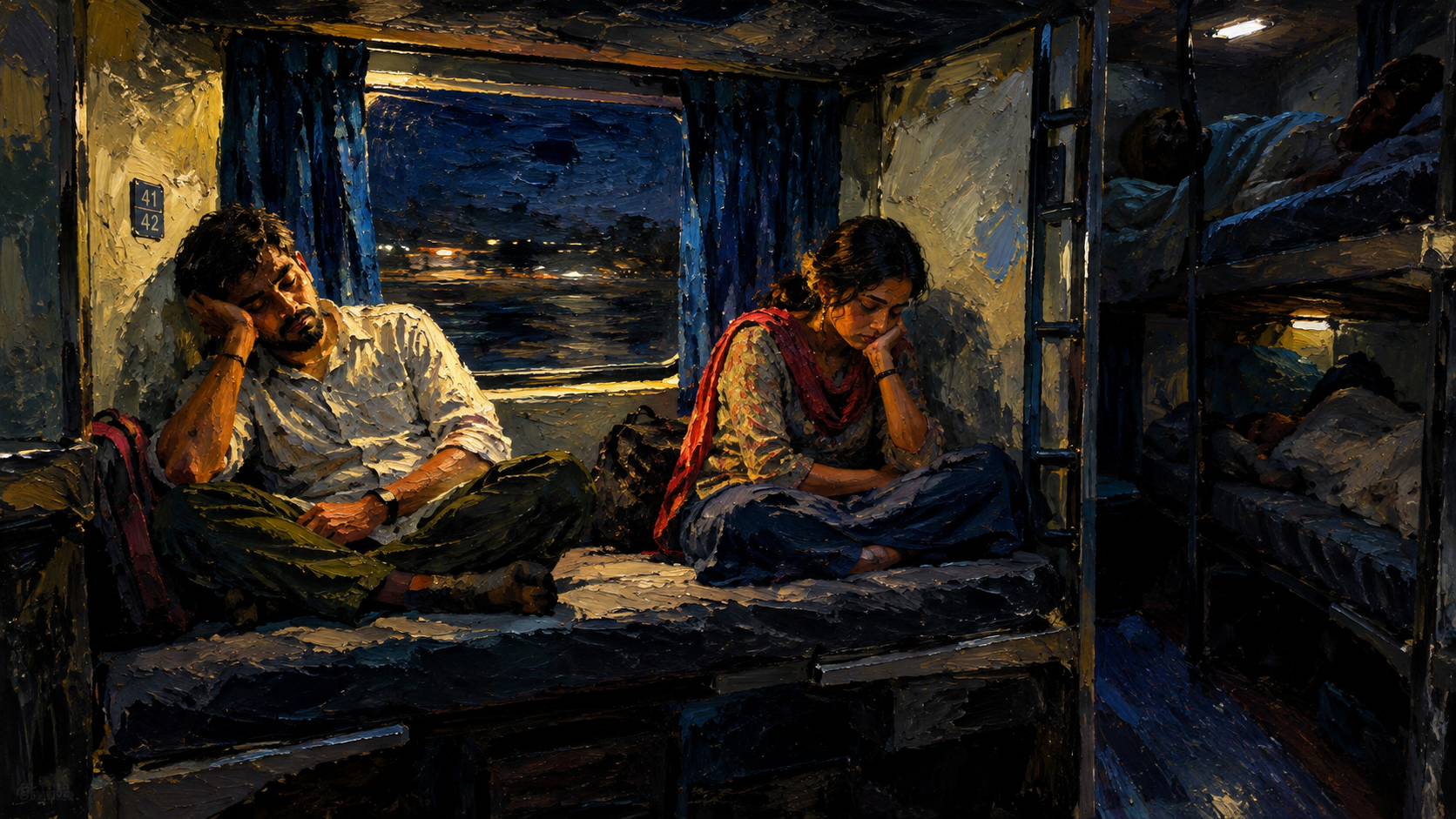
Just before 2 am we reached Ahmedabad. Several passengers from our coach got down, and I felt a small surge of hope. This was our moment. Instead, almost as many people boarded right behind them. We stayed RAC. We spent the rest of the night sitting, drifting into sleep in patches, never properly resting. It was sleep that felt like no sleep at all. Somewhere in that half-sleep I stopped being irritated about my own ticket and started thinking about the system behind it.
RAC was a clever answer to a real problem, back when the train was the only serious way to cross the country and every empty berth was a waste. That India is gone. Today there are airlines, better highways, comfortable inter-city buses and a car in many driveways. Plenty of us, when a train can’t promise us a berth, now start checking flight prices. Yet the reservation philosophy still seems to revolve around one question: how many more passengers can we fit on this train?
A better question is: what kind of journey are we selling them?
RAC tells you your status but not your prospects. You may know you are RAC 17, and you may know your coach and your train. What you don’t know is the one thing that matters: how likely am I to actually get a berth? If I am travelling four hours in daylight, I may not care. If it is 12 or 14 hours overnight, I care a great deal.
The railway has decades of reservation data. It knows cancellation patterns, which sectors fill up, and where passengers board and alight. It could easily tell me more than “RAC”. Imagine a message that said: “Your ticket is RAC 17. Based on past data for this train and sector, the estimated chance of a full berth is 70 per cent. This is an estimate, not a guarantee.” With that, I could decide for myself whether to travel, take another train if possible, or pay more for a flight. That is what informed choice looks like. Parliament’s Standing Committee on Railways made a similar point in a 2021 report, suggesting a way for RAC passengers to track berth confirmation without chasing ticket examiners down the corridor.

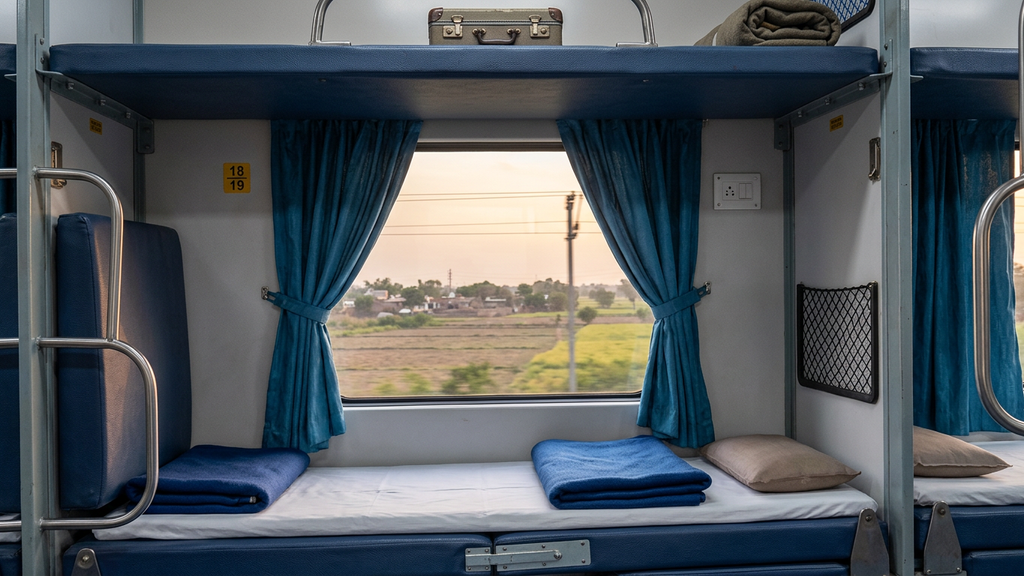
Information is only the first step. Suppose a train carries a heavy RAC load not just at Diwali or in the summer holidays, but all year round. At that point RAC has stopped being an exception and become a pattern. The railway already adds coaches when demand is high, so it could ask whether a permanent extra coach, a change in rake composition or an additional service is justified. Yes, that costs money. But the extra coach also carries passengers who have already paid, and the real test is whether the added cost is worth the added revenue and the better journey. RAC should work as a pressure signal. It should not be a permanent substitute for building capacity.
I have seen what the other attitude looks like.
On a July morning in 2018, a little after nine, I was at Guangzhou South station with friends. We had tickets to Wuzhou South, a journey of about four hours, and we had reached the station late and missed the train. I assumed the day’s plans were finished: new tickets, a hefty new expense, a long wait. A local friend, Ram, took us to the counter, showed our passports and explained the situation in Mandarin. The woman at the counter looked at it, and a few minutes later we were holding tickets for another train leaving in about 20 minutes! In our case there was no extra charge, no argument and no “come tomorrow”. I remember thinking that this is what service feels like when the system is designed around the passenger’s problem. I know it was one counter on one day. It has stayed with me anyway.
The same trip taught me a second lesson. We later travelled from Wuzhou to Yiwu, almost 1,400 kilometres by train, and for the first time I saw how many kinds of tickets a railway can sell: hard seat, hard sleeper, soft sleeper, and even standing. Standing is its own openly sold category. And no standing passenger, throughout our 16-hours journey, even stared at our coveted hard seat. No one even tried to sit in our place when we stood up to stretch our legs or go to the washroom. The lesson wasn’t the fare, since standing tickets there are generally priced like hard seats. It was the honesty of the label. Nobody buys a standing ticket by mistake, and nobody boards expecting a bed and finding a corridor.
That brings me to the money. If I remain RAC through an entire overnight journey, why should I pay exactly what a passenger with a full berth pays? I am not claiming the current rules provide a refund in such cases. They don’t. I am saying the question deserves an answer. One passenger sleeps flat through the night, another sits through it, and both pay the same. A partial refund or travel credit for passengers who stay RAC through a long overnight run would be a fair place to begin.
The principle is simple: charge for what you deliver.
None of this means RAC should disappear. Peak seasons will come, some trains will always be oversubscribed, and some passengers will always prefer a seat on the train to a costlier flight. The problem lies in how it is presented. A passenger who chooses RAC knowing the odds has made a decision. A passenger who finds out at 2 am, somewhere past Ahmedabad, has only learnt his ticket status.
A railway ticket is more than permission to travel. It is a promise about the journey. And if the railway can’t keep that promise, it should at least tell us honestly what it can’t promise.
Subscribe Deshwale on YouTube


