 Deshwale
Recipes That Carry Family History: The Taste of Memories That Never Fade
In brief · AI summary Family recipes often preserve memories of relatives, places and shared experiences, passed down through observation and handwritten notebooks rather than formal instructions. As families grow smaller and busier, many of these recipes risk disappearing unless they are written down, recorded or prepared together across generations. The article suggests that cooking together with older relatives is one of the best ways to keep these memories and traditions alive.
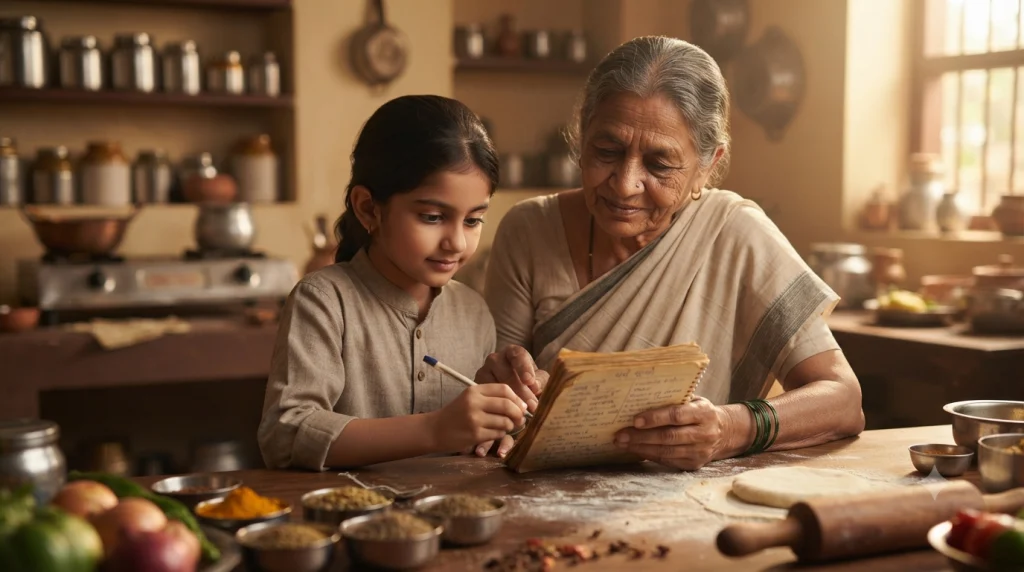
Sometimes, a familiar smell coming from the kitchen can take us back several years in an instant. It may be the aroma of a sweet prepared by our grandmother, the taste of a particular homemade pickle or a simple meal that reminds us of childhood. We may have forgotten many things about those days, but the taste remains in our memory. Interestingly, some of our strongest family memories are not preserved in photographs or diaries. They are preserved in recipes.
Every family has at least one dish that feels special. It may not be available in restaurants, nor may it appear in any cookbook. Yet, nobody in the family can prepare it quite like the person who first made it. The secret may be a particular combination of spices, a cooking technique or simply the experience of knowing when something is ready without measuring every ingredient.
A family recipe is often more than a list of ingredients. It is a record of the people, places and experiences that shaped a family.
Think about the handwritten recipe notebooks found in many homes. Their pages may be stained with oil, marked with small corrections or filled with measurements such as a handful of flour, a pinch of turmeric or a little extra sugar. These notebooks may not be perfectly organised, but they hold something valuable. They preserve knowledge that was often passed from one generation to another through observation rather than written instructions.
For many people, learning to cook began by standing beside a mother or grandmother in the kitchen. Children watched how vegetables were cut, how spices were roasted and how dough was prepared. Nobody necessarily explained every step. The knowledge was absorbed gradually through observation and participation. Years later, when those children prepare the same dishes in their own homes, they realise that they have carried forward much more than a cooking method.
This connection between food and family history is not limited to India. Italian families often pass down traditional pasta and sauce recipes, while Japanese households preserve their own approaches to preparing familiar home-cooked meals. In Middle Eastern families, recipes for traditional breads, rice dishes and sweets often carry memories of family gatherings and celebrations. Across cultures, food becomes a way of remembering where we come from and the people who helped shape our lives.
Food also tells the story of migration and changing circumstances. Families moving from one city or country to another often carry their culinary traditions with them. When familiar ingredients are unavailable, they find substitutes. Cooking methods change, portions are adjusted and new influences enter the kitchen. Yet, the effort to recreate a familiar dish continues because food can provide a sense of belonging in an unfamiliar place.
There is something equally interesting about how recipes change with time. Younger generations may use healthier ingredients, modern kitchen appliances or different cooking methods. Some may reduce the amount of oil or sugar, while others may introduce new flavours. Does this mean the original tradition is disappearing? Not necessarily. Sometimes, adapting a recipe is another way of keeping it alive. A tradition does not always have to remain unchanged to remain meaningful.
Perhaps the most emotional part of family recipes is the memories they preserve of people who are no longer around. Someone preparing a dish according to a late grandmother’s instructions may remember her voice, her habits and the little things she used to say while cooking. A familiar taste can bring back conversations around a dining table, celebrations with relatives and ordinary afternoons that once seemed unimportant.
However, these traditions are not always being preserved. As families become smaller, people move away for education and work, and daily schedules become busier, fewer young people get the opportunity to learn traditional cooking methods. Many recipes remain dependent on the memory of one family member. When that person is no longer there, the recipe can disappear with them.
Fortunately, preserving these culinary memories does not have to be complicated. Families can write down recipes, record elderly relatives explaining their cooking methods, photograph old recipe notebooks or make short videos together in the kitchen. Children can ask grandparents about the origin of a particular dish, when it was prepared and why it became important to the family. Such conversations can reveal fascinating stories that might otherwise remain forgotten.
Perhaps the best way to preserve a family recipe is not simply to save it on paper but to prepare it together. Invite an older family member into the kitchen, learn the little details and let younger generations participate. In doing so, families pass on something that no cookbook can fully capture: the experience, affection and memories behind the food.
In the end, ingredients can be purchased, cooking techniques can be learnt and almost any dish can be recreated. But the memories attached to a particular meal cannot be bought. They belong to the people who prepared it, the families who shared it and the generations who continue to remember it.
Sometimes, the most precious family heirloom is not jewellery, property or an old photograph. It is a recipe written in faded handwriting, carrying the taste of a home and the memories of people who made it special. And perhaps, the greatest gift we can give the next generation is to make sure that its story does not end with us.
Subscribe Deshwale on YouTube