



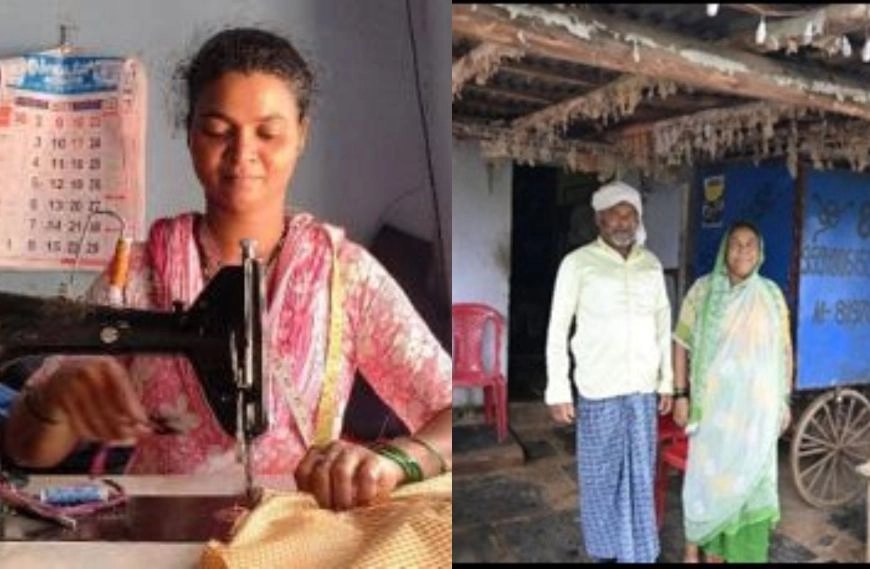
In the villages of Karnataka, quiet but powerful changes are taking shape. These changes are not driven by big factories or large investments, but by people who chose to take small, determined steps towards a better life. Two such journeys, from different corners of the state, reflect how skill-building and local support can transform lives.
At the centre of both stories is Manuvikasa, a non-governmental organisation working across Uttara Karnataka, Shivamogga, Haveri, Dharwad and Udupi districts. With support from the EdelGive Foundation, Manuvikasa focuses on community-led development by providing practical skills, mentoring, and access to markets.
In Hirehalli village of Mundgod block, the aroma of fresh dosas and pav bhaji now draws travellers to Baby Sumayya Fast Food, a small roadside eatery run by Noorjahan and her husband Nizamuddin. In their early sixties, the couple once struggled to sustain a small hotel located away from the main road. Business was slow and income uncertain.
The turning point came when Noorjahan enrolled in a catering and food entrepreneurship programme conducted by Manuvikasa. The training helped her sharpen her skills and, more importantly, rebuild confidence. Encouraged by continuous guidance, the couple shifted their outlet closer to the highway. The move proved decisive.
Today, their food joint earns around ₹2,000 a day and regularly caters to bulk local orders. Noorjahan manages to save nearly ₹500 daily. Named after their granddaughter, Baby Sumayya Fast Food has become a familiar stop in the area and an inspiration for neighbours who now see entrepreneurship as a real possibility, even later in life.
Several hundred kilometres away in Shirwada village, 38-year-old Rajamma Kumar Shiggavi has stitched together her own story of independence. With a husband working as a daily-wage mason and two children to raise, Rajamma had long wanted to become a professional tailor. Although she owned a basic sewing machine, her work was limited to simple blouses and petticoats, learned through trial, error, and online videos.
Her opportunity came when Manuvikasa introduced a 60-day tailoring programme in her village. Along with advanced stitching techniques, the training covered entrepreneurship basics, financial planning, and information about government schemes. “The details about schemes were very helpful,” Rajamma recalls. She learned to design blouses, churidars, uniforms, frocks, and more.
Soon after completing the course, Rajamma opened M.K.S. Ladies Tailor in a rented shop. Demand grew rapidly, drawing customers from different age groups. Her monthly income now stands between ₹8,000 and ₹10,000. To meet the workload, she hired another woman and invested in a speed sewing machine. Her shop has become a source of motivation for many women in the village who now see self-employment as achievable.
These stories underline a larger truth. When local organisations are empowered with the right resources and long-term support, communities gain the tools to build their own futures. EdelGive Foundation’s focus on strengthening grassroots institutions like Manuvikasa reflects a shift from short-term aid to sustainable ecosystem building.
For Noorjahan, Nizamuddin, and Rajamma, a single opportunity led to dignity, confidence, and financial independence. Their journeys show that lasting change often begins quietly, with skills, trust, and the courage to take that first step.
Subscribe Deshwale on YouTube
